Welcome to the delivery reality: what buying a chaise lounge online in Singapore really looks like
If you have ever tried to order a chaise lounge online and get it into a Tampines HDB flat on the 12th floor, you already know that the gap between the product page and the doorstep is wider than the furniture sometimes is. I learned this the hard way last month when I visited a friend's new 4-room BTO in Punggol and watched two delivery men try to angle a 218 cm chaise lounge frame through a corridor that, generous estimate, was 1.2 m across. The frame had to be tilted, pivoted, and eventually lifted vertically. It worked. Barely.
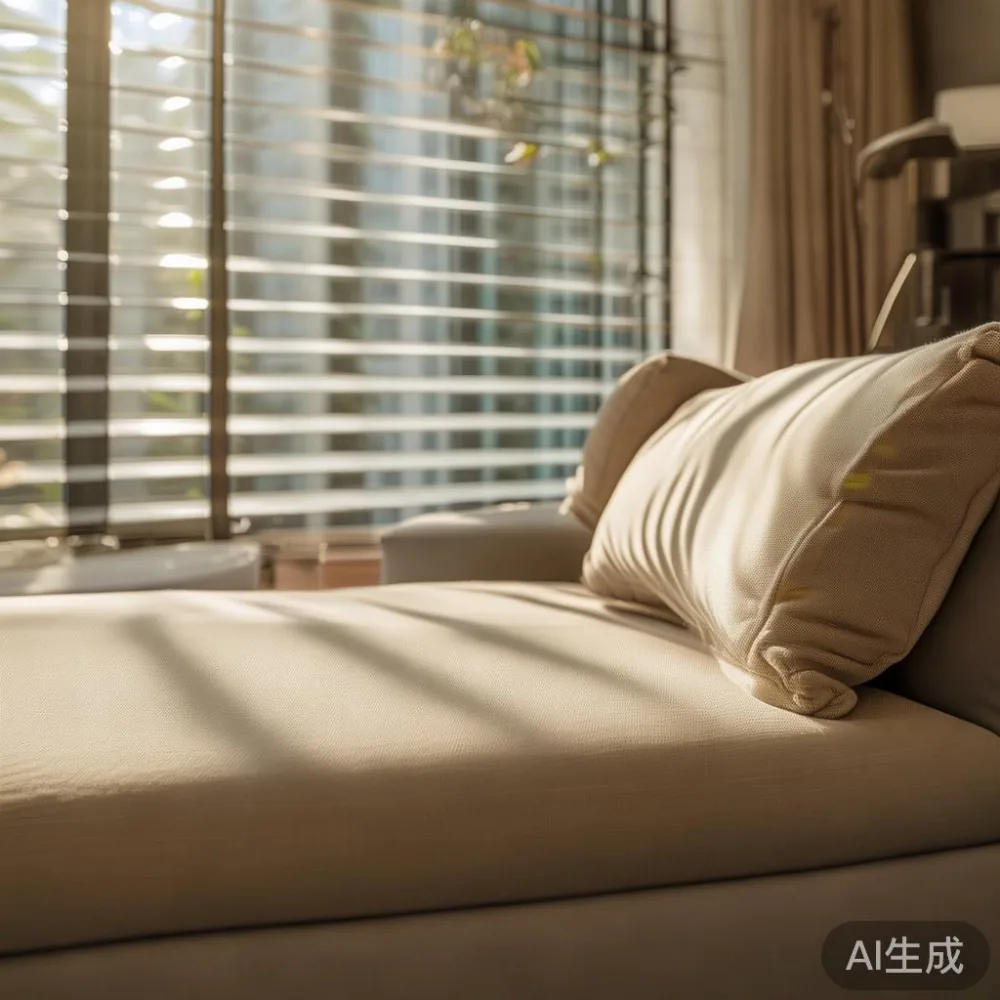
Singapore is a brilliant place to shop for solid wood pieces because the supplier market is mature, shipping routes from Guangdong and Foshan are short (around 4 to 6 days by sea plus 2 to 3 days of last-mile handling), and the retail culture understands HDB constraints. What is less brilliant is the delivery moment itself: lifts that measure 1.1 m wide, service yards that block for 30 minutes, and condo management requiring bookings a week in advance. This article walks through what actually happens between checkout and the moment you sit on your new chaise lounge with a coffee.
What the dimensions are: is a 200 cm chaise lounge measure you should think about for an HDB?
Yes, and you should treat the 200 cm chaise lounge measure as a hard ceiling for most HDB corridors and lifts, not a suggestion. Singapore HDB lift cabins commonly come in two sizes: the older 1.1 m x 1.4 m (depth x width) and the newer 1.2 m x 1.6 m, with door openings of roughly 0.9 m. A standard chaise lounge from a Foshan maker like MIDHILL typically ships at 180 cm to 220 cm in length, 78 cm to 88 cm in width, and 32 cm to 38 cm in height when flat-packed. Solid wood means weight, too. Expect 38 kg to 55 kg for the frame alone, plus 6 kg to 10 kg for the cushion set. Two people can carry it, but only if the geometry cooperates.
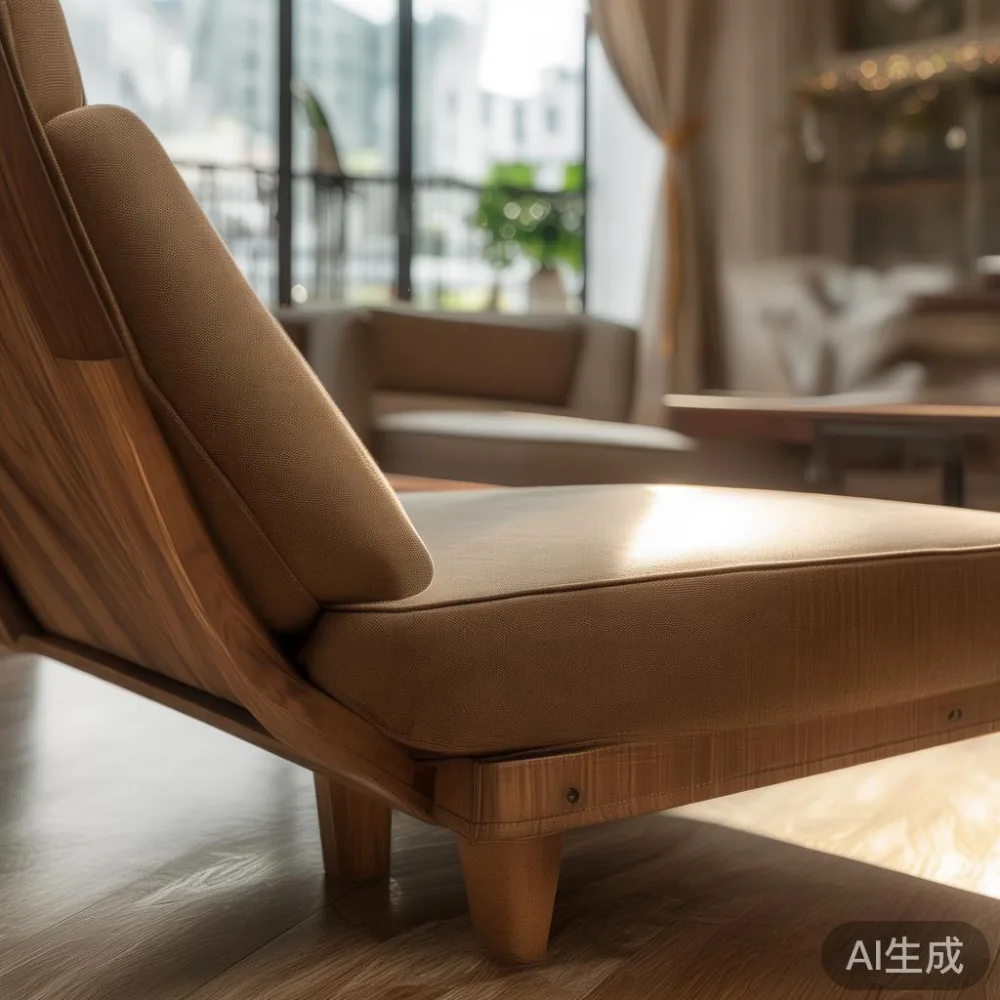
Corridor widths in HDB blocks are tighter than people remember. Walking from lift to door, you are usually looking at 1.1 m to 1.25 m of clear path, with the occasional utility recess or fire-hose cabinet eating 10 cm here and there. Condos in Bedok and Punggol tend to be friendlier (1.3 m to 1.5 m), but the lift is often the same HDB size. Measure your lift before you order, not after.
How long does delivery actually take when you order a solid wood piece from a Foshan factory?
Plan for 14 to 21 working days end-to-end if you go through a Singapore-based distributor, and 25 to 35 days if you ship direct from China on a shared container. A maker with a Singapore showroom or a local 3PL partner compresses this dramatically: 7 to 12 working days for stocked pieces, 21 to 35 days for made-to-order items. Solid wood is slower than flat-pack MDF because of curing time, kiln cycles, and the fact that no factory wants to ship an unfinished piece that will check or warp in Singapore's 28-to-32 degree, 80-percent-humidity weather.
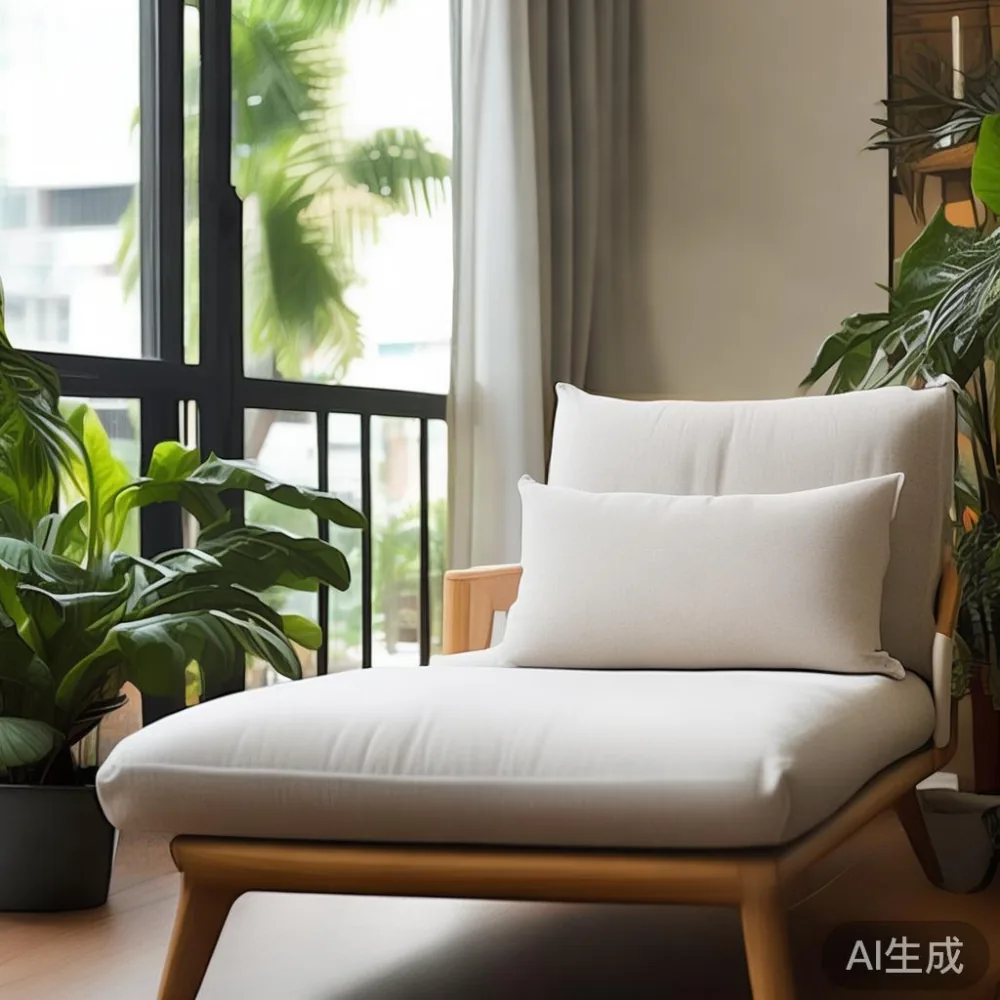
MIDHILL's Singapore partners quote roughly 10 to 15 working days for in-stock chaise lounge frames, dining tables, and bed frames, with a 7-day window for the warehouse team to QC each piece before it goes on a lorry. The trade-off for that slower pace is a 10-year structural warranty and lifetime refinishing, which a fast-shipped flat-pack can never offer. Shipping over US$350 is usually free from the factory side, and Singapore's 9 percent GST is applied at customs or at checkout depending on the seller's setup, so budget an extra 9 percent on every dollar before you compare prices in SGD.
What does assembly look like for a chaise lounge, a dining table, and a bed frame?
Honest answer: more than you think, less than you fear. A chaise lounge from a Foshan solid wood specialist usually arrives in 2 to 3 boxes: the base frame, the leg set, and sometimes the cushion cover separately. Expect 30 to 60 minutes of assembly with a powered drill, an Allen key set (usually included), and one helper. The legs bolt on with M8 or M10 threaded inserts, the backrest clicks into a pre-installed bracket, and the cover zips over the foam. No glue, no sawing.
A dining table for 6 is a different animal. A 1.8 m marble table or solid wood table typically arrives in two crates (tabletop and base), weighing 65 kg to 95 kg total. You will not assemble this alone. Two strong adults, a Saturday morning, and a soft blanket to protect the floor while you flip the tabletop. A king bed for rental properties is similar: headboard, side rails, footboard, and a centre support beam. Allow 45 to 90 minutes.
A wardrobe in solid wood is the one piece where I would genuinely pay for the white-glove assembly add-on. A 180 cm three-door wardrobe arrives in 4 to 5 flat-pack cartons and can take a first-time assembler 4 to 6 hours. One of our colleagues assembled a MIDHILL walnut three-door wardrobe last quarter and reported 5 hours from box-clear to clothes-in, with one wall-anchor scare that needed a second trip to the hardware shop. Pricing again, that white-glove add-on usually runs SGD 120 to SGD 220 per piece in Singapore, which sounds like a lot until you imagine 5 hours of Allen-key frustration.
Do I really need to be home the whole day for delivery?
Yes, in practice, even if the courier says 9 am to 1 pm. Singapore couriers usually narrow the window to 2 to 3 hours by SMS the morning of delivery, and for condo addresses there is an additional 15-to-30-minute hold at the loading bay while the security officer verifies the delivery. For HDB, the bigger variable is the lift: if someone is moving out on the same stack, you wait. Last month I sat with a client in a Bedok condo for 90 minutes past the window because the service lift was booked by another resident.
A few practical moves. Book a Monday-to-Wednesday slot if you can, since Thursdays and Saturdays are renovation days and the lift is contested. For condo deliveries, file the move-in form with management at least 5 working days ahead; some condos in Punggol require a SGD 50 refundable deposit and proof of fire-rated padding on the trolleys. For HDB, no booking is needed but the loading bay gets crowded on weekends after 11 am, so an early slot is calmer.
Is Japandi nightstand furniture worth it for small Singapore bedrooms?
Yes, Japandi nightstand furniture is genuinely worth it for most Singapore bedrooms because the design language was built for rooms exactly like yours: under 12 sqm, low ceilings, and a need for visual calm. Japandi pairs Japanese minimalism (clean lines, low profiles, no ornament) with Scandinavian functionality (light woods, soft drawers, honest joinery), and the result is a nightstand that disappears into the space rather than competing with it. A solid wood Japandi nightstand in oak or ash usually measures 45 cm to 55 cm wide, 35 cm to 45 cm deep, and 40 cm to 55 cm tall, which fits beside any king or queen bed without crowding the walkway.
The price-versus-value question is where most buyers hesitate. A solid wood Japandi nightstand from a Foshan factory (millennials notice: this is the same provenance as the chaise lounge and dining table above) typically lands at SGD 320 to SGD 580 per piece, compared to SGD 150 to SGD 280 for an MDF flat-pack from a local big-box store. The MDF piece will check, swell, or delaminate within 18 to 30 months in Singapore's humidity; the solid wood piece will outlast the lease, the next lease, and the one after that. Lifetime refinishing from a maker like MIDHILL means you can sand and re-oil the nightstand in year 8 and have it look new again for under SGD 120 at any local carpentry shop.
What about the "post-modern light luxury" look I keep seeing on Instagram?
Post-modern light luxury is a softer, less shiny version of the high-gloss Italian look that dominated Singapore showrooms in the 2010s. Think brushed brass legs on a low-slung solid wood sofa, a marble table with a warm-grey vein rather than stark white, curved corners on a dining table rather than the sharp right angles of mid-century. It is one of three adjacent aesthetics dominating Singapore condo fit-outs this year, alongside French light luxury (curved backrests, cabriole legs, cream boucle upholstery, gold-toned hardware) and American light luxury (cleaner profiles, oversized scale, matte black or nickel hardware, neutral linen covers).
For HDB buyers, post-modern light luxury tends to translate into a solid wood sofa with a 200 cm to 240 cm footprint in walnut or smoked oak, a marble table with a sintered stone top (more durable than natural marble for daily Singapore use), and bedroom pieces like a king bed for rental upgrades or a wardrobe with fluted glass doors. The pricing in SGD for flats typically runs: chassis SGD 18,800 SGD 5,800 for a three-seater with chaise lounge, dining tables and chairs SGD 3,200 to SGD 6,400 for a 6-seater, and bedroom sets SGD 4,800 to SGD 9,500 for a king bed frame plus two nightstands plus a 180 cm wardrobe.
What is the warranty and return reality, in plain numbers?
Read the warranty in three places: the product page, the invoice, and the physical warranty card inside the carton. A 10-year structural warranty on solid wood should cover frame integrity, joint failure, and wood defects, but it usually excludes surface wear, colour fade, and damage from humidity above 70 percent RH sustained for months (which a Singapore HDB with daily AC use will not hit). Lifetime refinishing means sanding and re-finishing of the original wood, not replacement of cushions, fabric, or hardware. Free shipping thresholds vary: MIDHILL-style frees from US$350 convert to about SGD 480 at current rates, and anything below that is a flat SGD 80 to SGD 150 surcharge depending on the lift access.
Returns are the part most online furniture buyers underestimate. A 14-day return window sounds generous until you realise the courier has to come back, the piece has to be repacked (usually impossible without the original cartons), and the refund is minus a 15-to-25 percent restocking fee. Keep the cartons for at least 30 days. Flat-pack one plastic tip: if you live in a Punggol HDB with limited storage, ask the seller at checkout whether they can hold the cartons for you at the warehouse for 30 days, and pick them up only if needed.
Anything I should do before I click "place order"?
Three things. First, measure the lift, the corridor, the doorway, and the final position of the piece, and send those numbers to the seller in writing. A good seller will confirm the fit in centimetres; a bad seller will say "should be okay lah" and you will own the consequences. Second, ask whether the piece ships assembled, flat-packed, or in modules. A modular chaise lounge that breaks into two 110 cm pieces is far easier than a single 220 cm frame. Third, confirm the delivery window format: is it a 4-hour slot, a 2-hour slot, or a half-day? Half-day is the worst, full-day is the second-worst, and a 2-hour slot with SMS confirmation is the gold standard.
One more, for the long-term Singapore owners thinking about rental yield. If you are buying a king bed for rental or a wardrobe for a master bedroom that you intend to keep for the next 10 years, spend the extra 15 percent on solid wood and skip the trend-led post-modern light luxury hardware. Stick to American light luxury or French light luxury silhouettes that have already survived a design cycle. A walnut or ash frame will refinish; a brass-plated handle will tarnish and have to be replaced. Pricing in SGD for 5-year total cost of ownership on a solid wood king bed frame versus an MDF one is roughly SGD 1,800 versus SGD 2,400 once you count one replacement cycle of the MDF piece.
Buy the solid wood. Keep the cartons for 30 days. Measure the lift in centimetres. Book the question in person. And the moment your chaise lounge is finally in the living room, sit on it and stay there for at least 10 minutes before you decide on the cushion density.