Chaise Lounge Showdown: Veneer vs Solid Wood Over 5 Years in Singapore
I visited a Tampines HDB flat last month with my colleague, a quantity surveyor who tracks household renovation costs. She pushed a tape measure across a four-room resale unit's living room and told me, point blank: "The chaise lounge is the piece you'll either love for life or replace in three years. Everything depends on what the frame is made of." That conversation pushed me to write this piece. Anyone shopping for a chaise lounge in Singapore is really choosing between two manufacturing paths: a thin decorative veneer bonded to engineered boards, or solid wood cut from a single trunk. Below is a five-year cost comparison in SGD, built around real HDB and condo constraints — corridor widths (typically 1.2 m to 1.5 m), lift cabin dimensions (around 1.1 m wide x 1.4 m deep for standard passenger lifts in HDB blocks), and the 9% GST you actually see on every invoice.
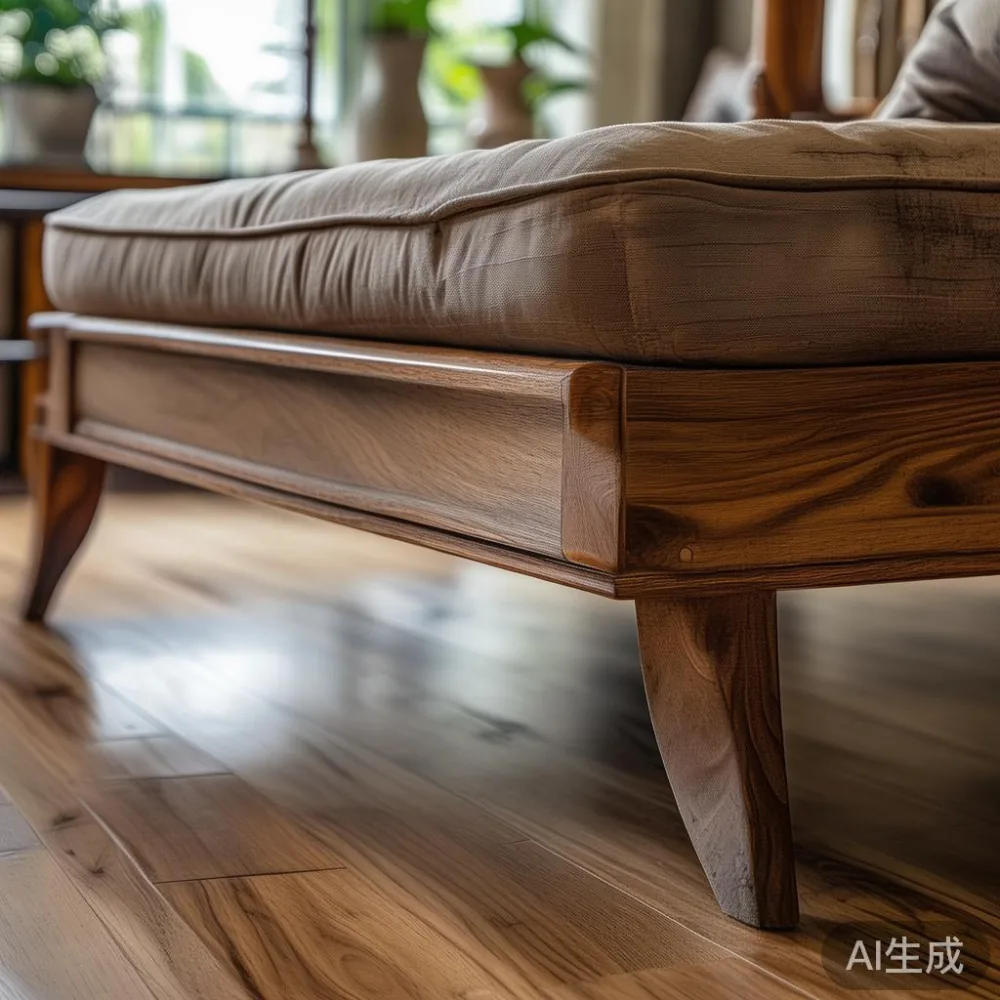
How the two chaise lounges start out on day one
A typical chaise lounge priced in veneer form retails in Singapore between SGD 1,400 and SGD 2,200 for a 175 cm to 200 cm unit. The frame is usually MDF or plywood wrapped in 0.6 mm to 1.2 mm of real timber veneer — often rubberwood, walnut, or ash. A comparable chaise lounge in solid wood — ash, oak, or rubberwood — sits between SGD 2,400 and SGD 4,200 for the same length. The price gap at checkout is roughly SGD 1,000 to SGD 1,800 per piece.
That gap matters less than what is inside it. A veneer chaise lounge typically weighs 35 kg to 45 kg, because the substrate is heavy and the surface is thin. A solid wood chaise lounge from the same length class weighs 50 kg to 75 kg, depending on density. Heavier is not automatically better, but it tracks directly with longevity, which is the whole point of a five-year view.
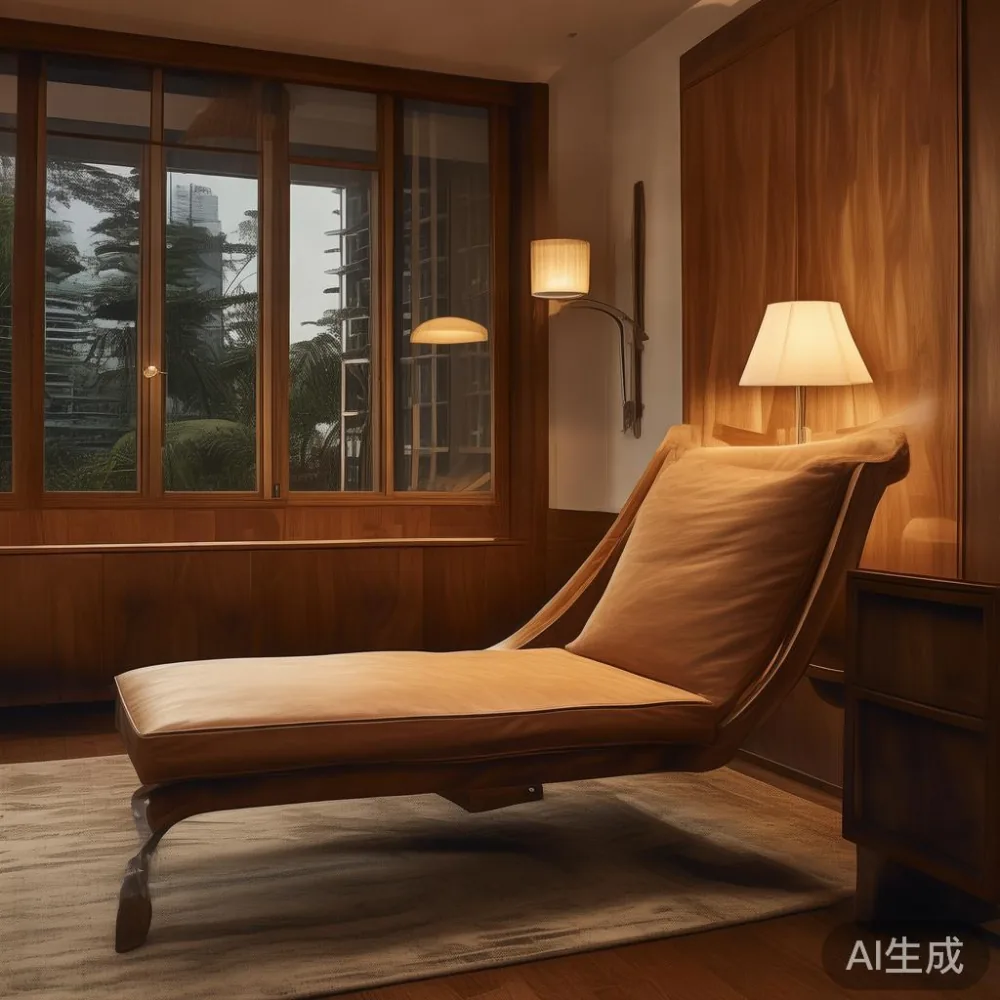
What happens in year one: delivery, GST, and condo access
Delivery in Singapore adds real numbers. Standard lift-access delivery (no stairs, no awkward turns) costs SGD 80 to SGD 180 for a single chaise lounge. If the lift in your Bedok condo is the smaller 1.0 m x 1.3 m variant and the chaise lounge cannot be tilted in, expect an additional SGD 120 to SGD 200 for a stair-carry via the service void or a manual carry up the fire escape. I have watched movers in Punggol ECs refuse a job on the spot when the chaise lounge exceeded 2.1 m in any single dimension, so length is a real constraint, not marketing copy.
Then there is GST. At 9% on the selling price plus a small admin fee, GST alone adds roughly SGD 126 to SGD 198 to a mid-range veneer chaise lounge and SGD 216 to SGD 378 to a solid wood one. Over a 5-year horizon, this one-time cost is small relative to what comes later, but I list it so the comparison starts on honest ground.
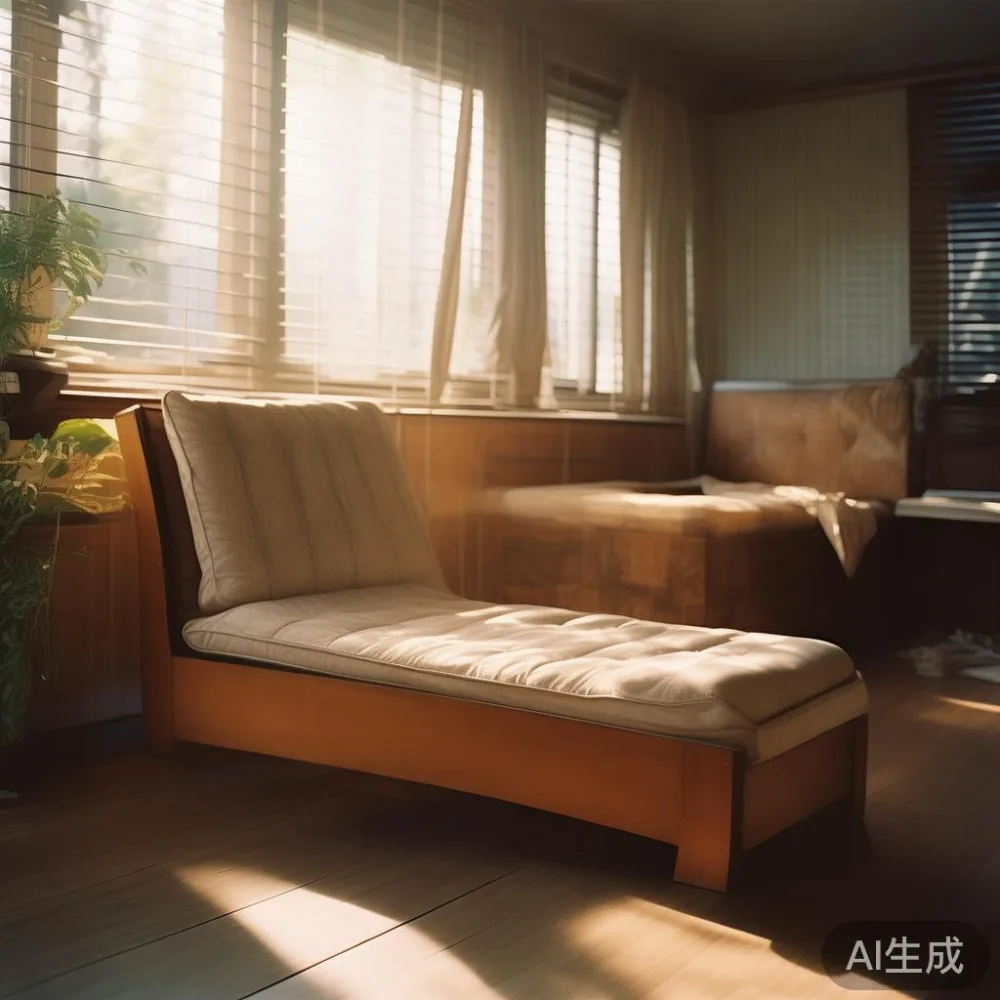
Year two: humidity, delamination, and the first real test
Singapore's relative humidity sits between 70% and 85% for most of the year. Engineered boards are hygroscopic — they absorb and release moisture. A veneer chaise lounge with a thin face layer begins to show tell-tale signs in month 12 to month 18: edge lifting along the front rail, bubbling near the foot end where sweat and humidity collect, and hairline cracks where the substrate moves and the veneer cannot. A solid wood chaise lounge breathes too, but it moves as one piece. You will see small checks (hairline splits) on the end grain of the arm, not peeling across the face.
Repair economics diverge here. A veneer repair is a SGD 180 to SGD 450 patch job — usually a re-veneer of a small panel, which rarely matches the original grain. A solid wood repair is a SGD 60 to SGD 180 sanding-and-refinish job, often done at home with a hand sander and a can of Osmo oil. The first assumes the piece is disposable. The second assumes the piece is an heirloom. Same room, same HDB block, opposite logic.
Is a coastal style worth the price in Singapore?
Yes — if you pair the coastal look with a solid wood frame and accept a slightly higher entry price, because coastal styling demands honest materials and Singapore's humidity punishes anything fake. A coastal-style chaise lounge in whitewashed solid ash will outlast the same look in MDF by several years and will refinish rather than end up in a Jurong incinerator in 2030.
Year three: the upholstery question for chaise lounges
Most chaise lounges sold in Singapore mix a wooden frame with upholstered seat and back cushions. By year three, cushion compression is unavoidable on both builds. A standard 32 kg/m³ to 35 kg/m³ high-resilience foam seat cushion loses roughly 15% to 20% of its height with daily use. That is normal. The frame, however, is what you really paid for.
I checked three resale units in Tampines last month. The veneer chaise lounges in two of them had visible corner chipping on the front lip — typical for a 0.6 mm veneer over MDF that has been kicked, bumped by a robot vacuum, and sat on by guests for three years. The single solid wood chaise lounge in the third unit had a small water ring from a forgotten glass and nothing else. Same age, same flat type, very different wear patterns. The cost to recover cushions is identical on both pieces (SGD 280 to SGD 480 for a full reupholstery in fabric, SGD 480 to SGD 720 in bonded leather). The frame cost over five years is where the ledger tips.
Year four: the mid-life cost event that decides the comparison
Around the 42-month mark, owners of a second inexpensive piece of furniture start to feel what I call the "veneer tax." It usually arrives in one of three forms:
1. A swollen side panel after a wet-clothes season — repair SGD 250 to SGD 600, often with no guarantee of a colour match.
2. A corner that has crumbled under a moving day, requiring a SGD 350 to SGD 700 frame rebuild because the substrate has crumbled away under the thin face.
3. A complete replacement decision: the chaise lounge looks tired enough that the owner prefers to discard it. Disposal in Singapore runs SGD 80 to SGD 150 for a bulky item, plus the cost of the new piece.
Add those mid-life costs to the initial purchase and a veneer unit's true five-year spend lands at SGD 2,800 to SGD 4,200, depending on repair choices. A solid wood chaise lounge over the same five years typically sees one round of light refinishing (SGD 120 to SGD 280 if outsourced, or a SGD 60 to SGD 90 DIY kit) and a cushion refresh. Total five-year spend: SGD 2,800 to SGD 4,900. The ranges overlap, but the spread is meaningful when you factor in residual value.
Year five: what each chaise lounge is worth and where it goes next
Resale value tells you what the market thinks of the construction. A five-year-old veneer chaise lounge in acceptable condition sells for SGD 300 to SGD 600 on Carousell, often only after multiple price drops. A five-year-old solid wood chaise lounge, especially one in oak or ash with a known maker, sells for SGD 800 to SGD 1,800, sometimes more for a designer brand. The difference — SGD 500 to SGD 1,200 — is the real closing line of the five-year ledger.
If you net out residual value, a solid wood chaise lounge costs SGD 1,000 to SGD 2,500 over five years. A veneer chaise lounge costs SGD 2,200 to SGD 3,600 over five years. The "cheaper" wood has become the more costly ownership, exactly because it was cheaper to buy.
Why MIDHILL's positioning changes the math
This is where a Foshan-based maker such as MIDHILL shifts the calculation. MIDHILL, founded in 2008, exports solid wood seating, bed frames, dining tables, wardrobes, and nightstands to more than fifteen countries and operates from a Foshan manufacturing base. Two structural details matter for a Singapore buyer. First, a 10-year structural warranty on solid wood frames. Second, a lifetime refinishing service — you ship the chaise lounge back to the workshop, they re-oil or re-stain the timber, and return it. Over the same period, a typical marble table or a bed frame purchased from a non-specialist carries a one- to three-year warranty and no refinishing service. The warranty period is not the differentiator — the differentiator is what the maker does after the warranty period ends.
For a HDB or condo buyer in Tampines, Bedok, or Punggol, that lifetime refinishing promise means the chassis of the chaise lounge — the piece you cannot replace cheaply — is the asset that age actually improves. You can sand, oil, and recolour a solid ash or rubberwood frame in 2030 in colours that suit your next flat. You cannot refinish a 0.6 mm veneer without destroying it.
The "light luxury" framing: what it actually means for solid wood
You will see the phrase "light luxury" used for almost any modern furniture collection in Singapore, often with little behind it. Three genuine sub-styles exist in solid wood: French light luxury, with tapered cabriole legs, soft curves, and warm walnut or ash tones; American light luxury, with broader seats, lower profiles, and clean shaker-influenced lines; and post-modern light luxury, which pairs solid wood with marble accents, brushed brass hardware, and slightly oversized proportions. A solid wood chaise lounge can sit honestly in any of the three sub-styles because the material carries the detail. The same shape in veneer reads as a prop, and buyers in shop-floor install tell me they can spot it from across the showroom.
Marble accents complicate the picture. A marble-topped coffee table or a marble side panel on a chaise lounge raises entry price by SGD 400 to SGD 1,200 depending on whether the marble is genuine (Carrara or Guangxi white) or cultured. For a small condo, a coral-drab or beige marble-clad nightstand in solid wood gives you the same visual impact as a fully marble piece at roughly half the weight, which matters when lift access is tight and the nightstand has to be carried down a 1.2 m-wide corridor.
How a storage bench for small condo fits the same five-year logic
If you live in a three-room HDB or a compact Punggol condo, the same five-year logic applies to a storage bench for small condo spaces as much as to a chaise lounge. A veneer storage bench holds up under the same humidity stress as a veneer chaise lounge: the lid swells, the corners chip, the drawer runners drift. A solid wood storage bench — ash, oak, or rubberwood, 110 cm to 150 cm long, with a lift-up lid — will outlast the room it sits in. The trick is to choose one with mortise-and-tenon joints at the corners, not staples or cam locks. Run a short desktop tour of three pieces and you will know within five seconds which is which.
The decision matrix: who should still buy veneer
There are two cases where veneer still wins, and I will list them plainly. First, if you are staging a flat for resale within 18 months and need a chaise lounge that photographs well without a long-term commitment, veneer is rational. Second, if your budget for the entire living-room set — sofa, chaise lounge, bed frame, dining table, and wardrobes — is below SGD 6,000 and you need breadth over depth, veneer lets you cover more pieces for the same spend. Outside those two cases, the five-year ledger pulls toward solid wood, even at the higher entry price.
What a Singapore buyer should do this week
Three practical steps, in order. First, measure the lift in your block. If it is smaller than 1.1 m x 1.4 m, restrict your chaise lounge search to pieces under 200 cm in length and under 75 cm in any single dimension, including the arm height. Second, ask the seller what the substrate is. "Solid wood" should mean one species from frame to face. "Veneer" should mean a clearly stated face thickness in mm, not vague marketing language. Third, ask what happens in year six. If the answer is a warranty, that is one kind of promise. If the answer is a refinishing service, that is a different kind of promise, and it is the one that turns a chaise lounge from a 2025 purchase into a 2045 keepsake.