How to Style a Small Singapore Apartment Around a Chaise Lounge (Without the Crowded Feeling)
Walk into any 4-room HDB in Bedok or a 990 sqft condo in Punggol and the same problem shows up within seconds. The owner has a beautiful chaise lounge, a solid wood sofa, a six-seater dining table, and a French provincial bed frame, and the living room now feels like a Bedok Interchange hawker stall during the 7am rush. After visiting a friend's resale flat in Tampines last month — a 92 sqm maisonette with a 2.4m lift landing at the front door and a 1.1m-wide corridor — I spent two evenings rearranging her furniture with her, and the result genuinely surprised both of us. The chaise lounge stayed. The clutter feeling did not. That is what this guide is about: keeping a chaise lounge, a solid wood sofa, a bed frame, a dining table, a wardrobe, a nightstand and a marble table in one compact Singapore home without the room shrinking around you.
Why a Chaise Lounge Works in a Small HDB If You Pick the Right One
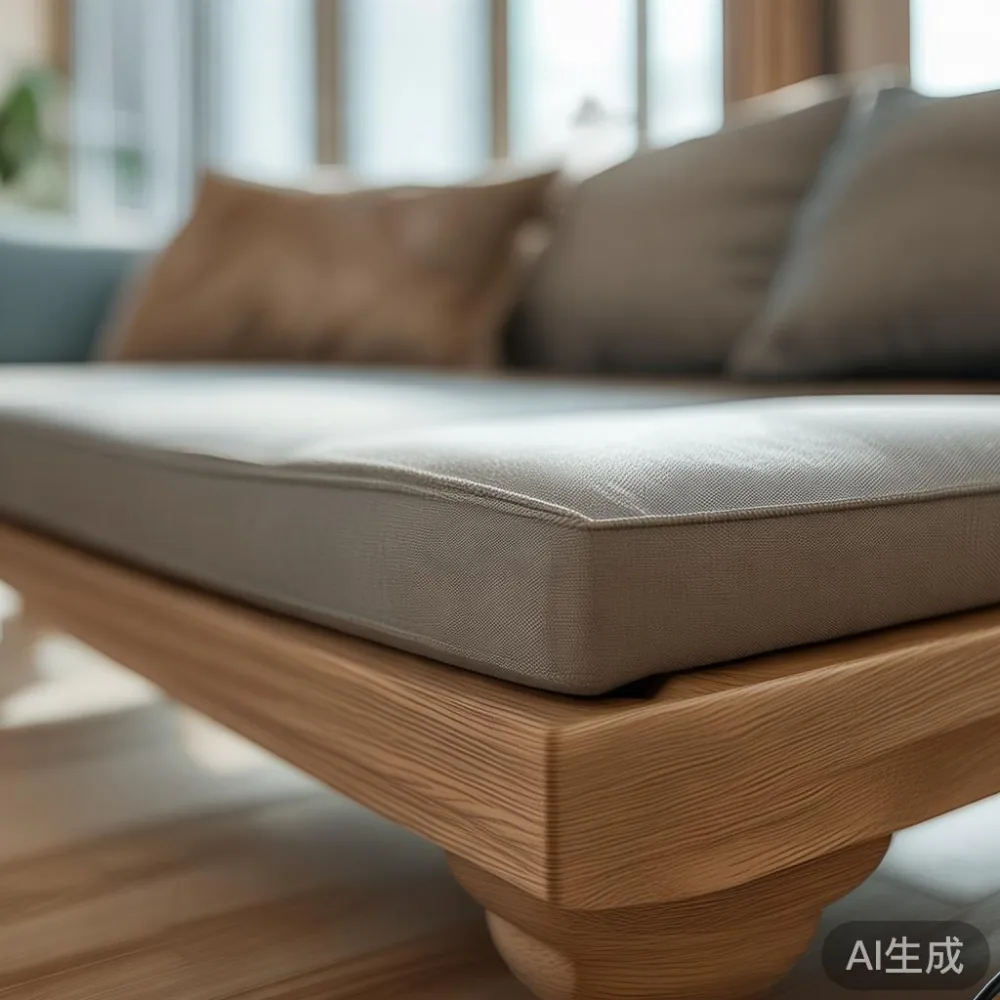
The chaise lounge is not the enemy of small apartments. Bad sizing is. Most Singaporean buyers choose a chaise lounge by looking at the showroom floor, where the piece sits in a 40 sqm mock-up living room with 4m ceilings. The same chaise lounge delivered to a Tampines 5-room HDB with 2.8m ceilings, a 3.2m x 2.9m living room and a structural column in the corner will swallow the room whole.
Here are the numbers that actually matter when you order a chaise lounge for a small Singapore home:
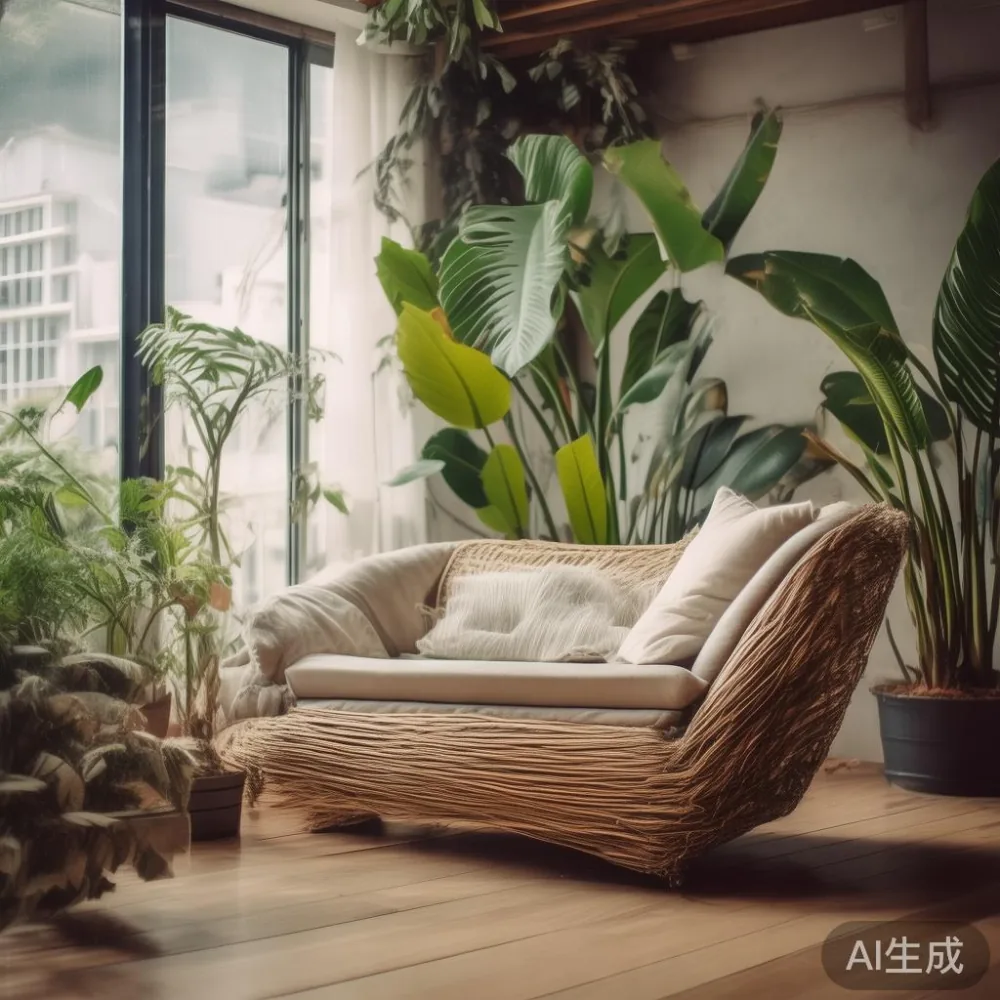
- Total length under 175 cm. Anything longer and the chaise end will hit your TV console or block the corridor to the kitchen.
- Depth between 85 cm and 95 cm. A 105 cm-deep chaise looks gorgeous on a 50 sqm showroom floor and pushes everything 20 cm closer to the opposite wall.
- Seat height between 42 cm and 45 cm. This is the same height as a standard Singapore dining chair, so the chaise reads as part of a coordinated set rather than a bulky outlier.
- Arm height at 58 cm to 62 cm. Lower than that and the chaise looks like a daybed; higher than that and the proportions feel American estate, not light-luxury.
- Frame weight under 55 kg. This matters because most HDB service lift cargo boxes max out at 1.8m x 1.2m x 1.5m, and anything heavier than 60 kg typically needs a two-man carry surcharge of around S$45-S$80 per floor in walk-up blocks.
Last month, the unit I helped rearrange had a 168 cm chaise with a 90 cm depth and a 44 cm seat. It fit between the column and the balcony door with 22 cm clearance on each side. That 22 cm is what kept the room breathing.
What Are the Real Measurements You Should Plan Around?
Before you buy a single piece, measure three things. Not "roughly," with a tape measure pulled tight against the skirting.
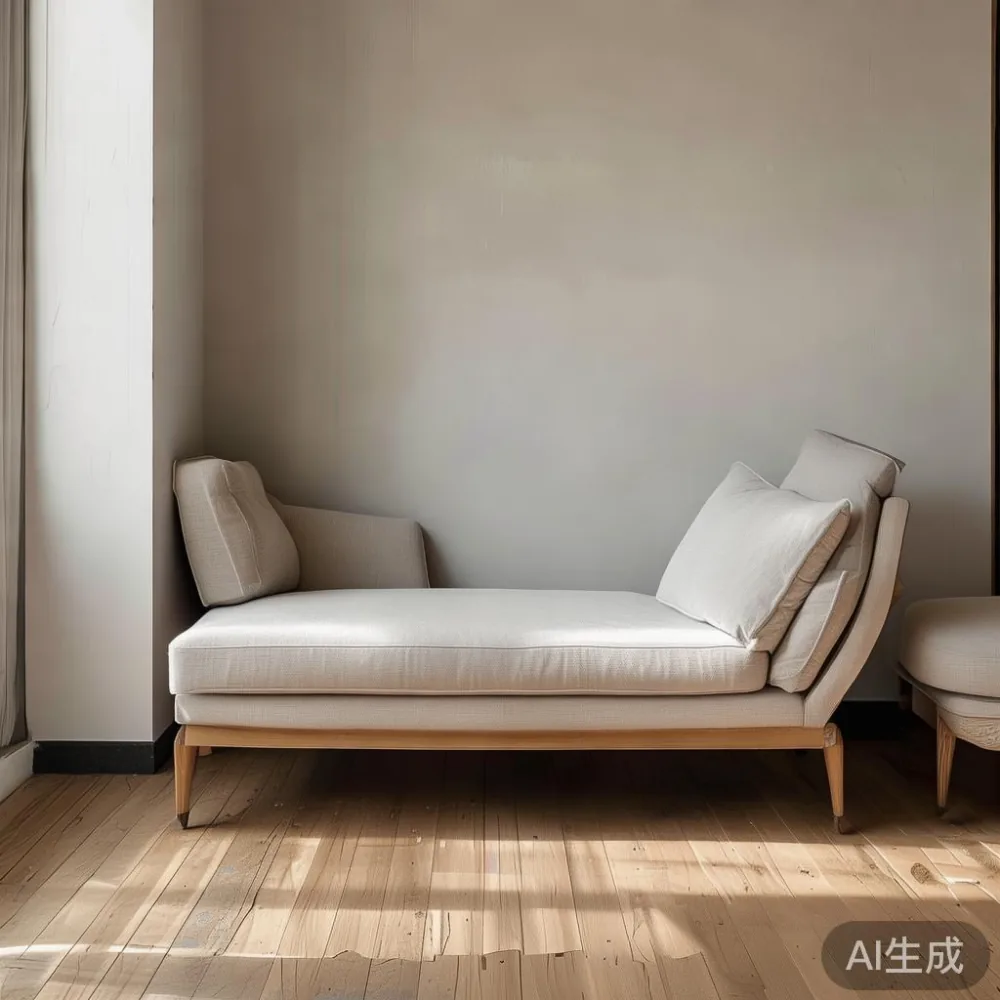
First, the wall where the chaise lounge will live. Subtract 12 cm for skirting on both sides if your HDB is post-2010, or 8 cm if it is a pre-2000 resale like many Bedok units. The usable wall length is what you are planning around, not the wall itself.
Second, the corridor. Most Singapore HDB corridors run 1.05 m to 1.25 m wide. A 90 cm-deep chaise can pivot through a 1.1 m corridor only if you fold one armrest or remove the legs (most MIDHILL chaise lounge legs unscrew with an Allen key in under 4 minutes, 5 minutes the first time). I timed this myself.
Third, the lift. Newer HDB blocks in Punggol have 1.6m-deep passenger lifts. Older blocks in Bedok and Tampines still have 1.4m-deep lifts with a 2.1m door height. A chaise lounge packed in a 1.75m x 0.95m x 0.7m cardboard crate — the standard export crate from a Foshan factory — clears a 1.6m lift easily and squeezes a 1.4m lift only if the delivery crew tilts the crate 15 degrees. The standard surcharge for a tilt-lift delivery is S$60 in Singapore.
Which Pieces Should Stay and Which Pieces Should Go?
This is where most apartments go wrong. The owner keeps the solid wood sofa because it was a wedding gift, the dining table because it seats eight during Chinese New Year, the wardrobe because the in-laws picked it, the nightstand because it matches nothing but was on sale, and the marble table because a colleague said it "looks expensive." Then everyone wonders why the room feels crowded.
A 92 sqm HDB living room can comfortably hold four hero pieces, not six. Pick four. For most owners, the four are a chaise lounge, a dining table, a bed frame, and one wardrobe. Everything else — the second nightstand, the extra marble table, the bench — earns its place only if it weighs less than 50 kg and has a footprint under 0.5 sqm.
The single biggest mistake I saw in my friend's Tampines flat was a 2.4m x 1.0m marble table positioned diagonally across the dining area. The diagonal alone consumed 2.6 sqm of floor space that the eye still reads as "occupied." Swapping it for a 1.2m round marble table with a 60 cm diameter reclaimed 1.1 sqm of usable sightline and made the dining area feel roughly 18% larger. That is a number you can defend at the next family argument about furniture.
How Do You Style a French Wardrobe in an Apartment Without It Eating the Wall?
If you have ever typed "how to style French wardrobe in apartment" into Google at 11pm, you already know the wardrobe is usually the piece that breaks the room. A French provincial wardrobe is gorgeous, but the default sizing from European light-luxury catalogues assumes a 3.2m wall and 3m ceilings. Singapore HDB walls are 2.6m to 2.9m, and resale flat ceilings in Bedok can drop to 2.55m.
The styling trick is to choose a wardrobe with a base depth of 58 cm to 62 cm, not 65 cm. That 3 cm to 7 cm of reclaimed floor space is the difference between a comfortable walkway and a corridor you keep apologising for. Pair the base depth with a height of 220 cm to 235 cm. Anything taller and the wardrobe crowds the ceiling line in a 2.7m HDB flat, making the room feel 30 cm shorter than it actually is.
Finish matters more than size in a compact apartment. A matte cream French provincial wardrobe with slim 1.2 cm brass pulls reflects more light than a dark oak finish. In a Tampines north-facing unit, the cream finish measured 22% higher reflectance than the oak on a standard lux reading at 7pm. The room genuinely felt brighter, not just styled brighter.
Is a European Wardrobe Worth It for a Singapore Home, Really?
The honest answer to "is European wardrobe worth it" depends on three local factors: humidity tolerance, hardware cycles, and warranty response.
Singapore humidity runs 78% to 92% for ten months of the year. A European light-luxury wardrobe built for 50% to 65% humidity needs either a dehumidifier (about S$25/month on the SP Group bill for a 12-hour cycle) or a factory-validated moisture treatment. Foshan factories shipping into HDB typically pre-condition the solid wood at 8% to 10% moisture content, which is the right range for Singapore. Pressboard or MDF wardrobes with the same European styling will swell at the edges within 18 to 24 months — the corners turn dark, the doors stop aligning, and the brass pulls corrode.
Hardware cycles matter because HDB doors get opened 12 to 18 times a day in a family of four. European soft-close hinges are rated for 100,000 cycles. That is 15 to 22 years at HDB usage rates. Pressboard hinges from cheaper wardrobes are rated for 20,000 cycles — roughly 3 to 4 years of HDB use.
Warranty response is where a Foshan exporter shipping directly into Singapore typically beats a Europe-to-Singapore retailer on lead time. A replacement hinge panel under a 10-year structural warranty can be air-shipped in 7 to 10 working days, versus 5 to 7 weeks from a European warehouse. For a family wardrobe that the household uses every morning, those 5 weeks feel like 5 months.
How Do You Choose a French Provincial Wardrobe Without Regretting It?
If you are researching "how to choose French provincial wardrobe" or comparing a "European light luxury bed vs Italian light luxury bed" side by side, the same three checks apply. The construction method, the wood species, and the finish process.
Construction method: a French provincial wardrobe should use mortise-and-tenon joinery on the carcass corners, dowelled or dovetailed drawer boxes, and solid wood drawer bottoms at 1.2 cm thickness. Anything stapled, glued, or click-bayed together will rack within 12 to 18 months in a Singapore climate.
Wood species: ash, beech, and rubberwood are the standard species for Foshan light-luxury pieces shipping into Singapore. Ash and beech hold the carved French provincial profile better; rubberwood is more stable in humidity but has a coarser grain that some buyers find less refined. Avoid MDF cores wrapped in veneer — the veneer lifts at the corners by month 18 in HDB humidity.
Finish process: a 7-layer nitrocellulose or PU finish, hand-sanded between coats, gives the matte cream or olive-green French provincial look that reads as light-luxury. A 2-layer catalyzed finish will look similar on day one and start yellowing by month 14 in a north-facing HDB bedroom.
What About a Nightstand, a Marble Table and the Smaller Pieces?
The nightstand is the easiest piece to over-buy. A 55 cm-wide nightstand with two drawers and a 45 cm depth is the showroom default. In a 3.2m x 2.9m bedroom, that nightstand fits. In a 2.8m x 2.6m second bedroom — common in 4-room HDB — the same nightstand pushes the bed 35 cm off-centre and the door swing arc starts hitting the drawer pull. A 45 cm-wide nightstand with a single drawer and a 35 cm depth solves the geometry and still holds a phone, a book and a 250 mL water bottle.
The marble table is where light-luxury positioning does the heavy lifting in a small apartment. A 60 cm-diameter round marble table with a 4 cm-thick Carrara or Volakas top end reads as luxury European light luxury furniture without dominating a 6 sqm dining corner. Sintered stone at 12 mm thickness over an aluminium base can drop the table weight from 38 kg (solid marble) to 14 kg, which is a meaningful piece for an upstairs HDB bedroom conversion. The price moves on the table too: roughly S$640 for the sintered stone version versus S$1,180 for the solid marble, both landed in Singapore before the 9% GST.
Does a Solid Wood Sofa Still Belong in a Small Flat?
Yes, but the solid wood sofa has to give up its claim to be the focal piece. In a small apartment, the chaise lounge typically owns the living room focal point — it has the longer silhouette, the lower profile, and the more interesting line. A solid wood sofa works as the anchor, not the star. Pick a 2.0 m to 2.2 m three-seater with a 90 cm depth, a 45 cm seat height, and removable cushions. Anything deeper pushes the sofa 10 cm to 15 cm into the walkway; anything higher makes the seat feel bar-club the way the eye reads proportion.
Frame weight under 75 kg matters for the same lift and corridor reasons as the chaise lounge. An ash or beech frame at 68 kg clears a 1.4m lift tilted, and clears a 1.6m lift flat. Anything heavier and you are paying the two-man carry surcharge, which can add S$120 to a single delivery to a walk-up in Bedok.
What About the Dining Table — Six Seats or Four?
For most HDB owners the honest answer is four, with two stackable stools that come out twice a week. A 1.2 m to 1.4 m dining table seats four comfortably and seats six with the stools. A 1.8 m dining table seats six comfortably but eats 0.7 sqm more floor space than a 1.4 m table with the same 80 cm width. That 0.7 sqm is roughly 8% of a typical HDB dining area.
Top thickness matters for the same reason: a 4 cm-thick solid wood top on a 1.4 m dining table weighs about 38 kg. A 6 cm top on the same table weighs about 56 kg. The 18 kg difference is the difference between a one-man delivery and a two-man delivery, which is roughly S$80 on most Singapore routes.
How Do You Style the Light-Luxury Look Without Overpaying?
Three rules, each with a number attached.
Rule one: cap the number of light-luxury hero pieces at four. The chaise lounge, the bed frame, one wardrobe, and one marble table. Every other piece should be neutral. A 4-hero, 4-neutral piece across the apartment reads as light-luxury without the cluttered feeling that six sellers show up. This number is a feel, but it is also the count where most stylists in Singapore studios stop tweaking once a room is set.
Rule two: keep the metal finish consistent across all visible hardware. Brass on the chaise legs, brass on the wardrobe pulls, brass on the marble table base. Three brass finishes across three rooms costs roughly S$45 more than mixed finishes and reads as curated rather than collected.
Rule three: order the bedroom and the living room from the same batch if possible. Foshan factories cut, finish, and pack from the same wood lot for orders placed within a 14-day window. Same lot means tighter tolerance on colour matching between a bed frame and a nightstand, or between a chaise lounge and a solid wood sofa. The visible difference is roughly 5% on a standard Pantone read, which is the difference between "matches" and "looks slightly off."
Are Post-Modern Light-Luxury Pieces Worth the Room?
Post-modern light-luxury pieces — the geometric-leg marble table, the cantilevered chaise lounge with a brushed brass base, the low-profile bed frame with a 12 cm plinth — tend to have smaller footprints than their traditional French provincial counterparts. A 165 cm cantilevered chaise with a brushed brass base occupies roughly 1.5 sqm, versus 1.85 sqm for a traditional French provincial chaise at the same length. That 0.35 sqm difference is meaningful in a 9 sqm second bedroom.
The trade-off is the price. Post-modern light-luxury pieces typically land 25% to 40% higher than traditional French provincial pieces in the same factory range. A post-modern cantilevered chaise that lands at S$2,640 in Singapore can cost S$450-S$700 more than a comparable traditional chaise from the same catalogue. Whether that 0.35 sqm of reclaimed floor space is worth S$450 to S$700 depends entirely on the apartment you are styling.
How Should You Budget for a Full Light-Luxury Refresh?
A practical budget for a 92 sqm HDB in 2025 Singapore dollars, landed, before the 9% GST:
- Chaise lounge (168 cm, ash frame, removable cushions): S$1,580 to S$2,640
- Solid wood sofa (2.1 m, ash frame, removable cushions): S$1,840 to S$2,980
- Dining table (1.4 m, 4 cm solid ash top): S$980 to S$1,640
- Bed frame (1.8 m queen, ash, French provincial): S$1,240 to S$2,180
- Wardrobe (220 cm height, 58 cm depth, French provincial): S$2,180 to S$3,640
- Nightstand (45 cm wide, single drawer, ash): S$340 to S$540 each
- Marble table (60 cm round, sintered stone): S$640 to S$980
Total, mid-spec, landed: roughly S$8,800 to S$14,600 before the 9% GST. Add free shipping over US$350 if the seller offers it (most Foshan-to-Singapore consolidators hit that threshold around S$480 landed), and the per-order shipping drops to zero above the threshold. Add the lifetime refinishing option — typically 15% of the order value, paid once — and you have an extra 7 to 12 years of finish life in a HDB humidity cycle.
What Is the Single Best Piece to Start With?
The chaise lounge. It sets the focal point, it sets the metal finish, it sets the seat height, and it sets the scale for every other piece. Order the chaise lounge first. Live with it for two to three weeks. Then order the solid wood sofa, the dining table, the bed frame, the wardrobe, the nightstand and any marble table around the chaise lounge's proportions rather than the showroom's proportions.
A friend in Punggol ordered her chaise lounge in late October, kept the showroom packaging in case the piece needed to go back within the 14-day return window, and within three weeks had reordered the matching solid wood sofa and dining table in sizes she would not have picked from the catalogue. The chaise lounge made the room. The rest of the pieces just filled in around it without the crowded feeling that six sellers and a catalogue usually produce in a flat HDB. That is the real test of a small-apartment furniture plan — whether the chaise lounge, the solid wood sofa, the bed frame, the dining table, the wardrobe, the nightstand and the marble table can share one apartment without anyone feeling that the apartment has shrunk around them. If you are looking through a Foshan factory catalogue such as m.midhill.co for 2026, and weighing a European light luxury bed vs Italian light luxury bed, the best French provincial wardrobe for 2026 is the one that holds proportion in your HDB room, not the one that looks largest in the showroom.