What to Check Before Buying a Sofa You Cannot Sit On
A sofa you cannot sit on may still be a useful piece of furniture, but only if its proportions, support, access route, and intended use match the room. That distinction matters in Singapore, where HDB flats and condos place tight limits on lift dimensions, corridor turns, doorways, and the amount of floor space available for full-length reclining.
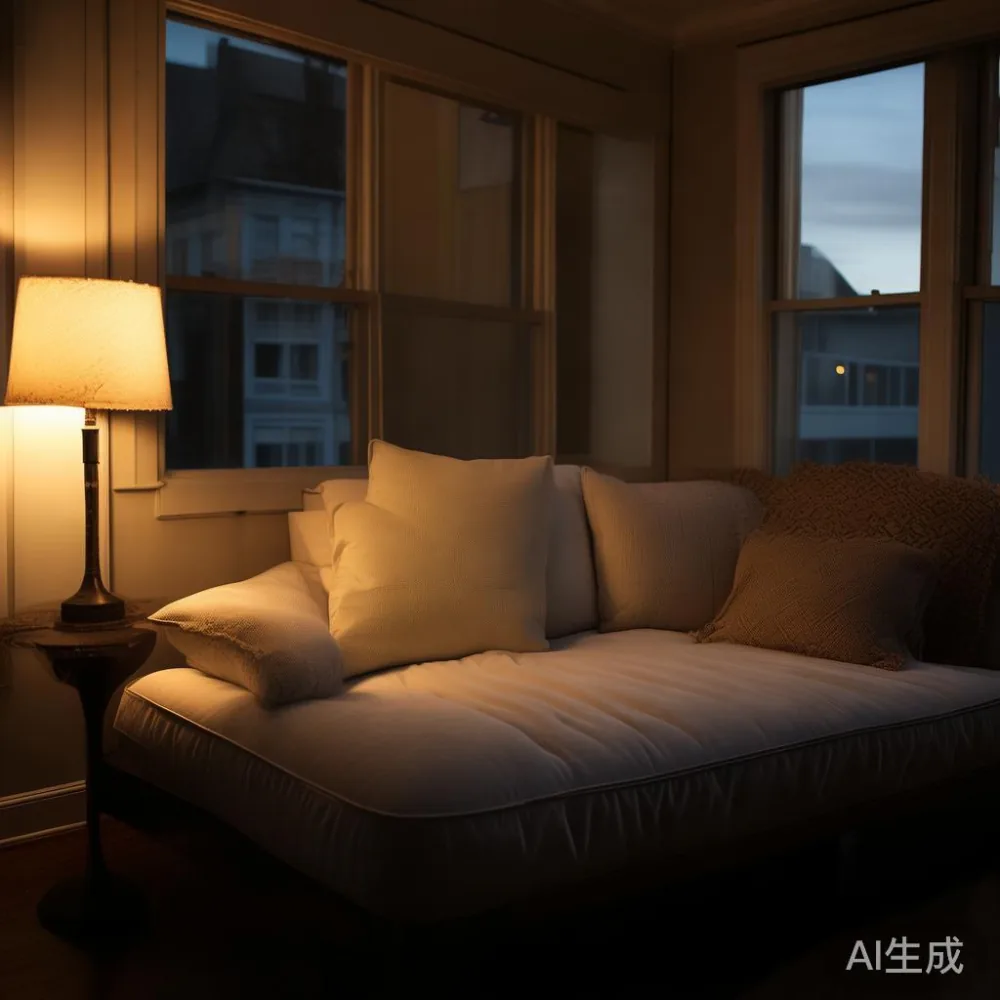
This guide examines chaise lounge and modular seating through a Singapore lens. It covers the questions to ask before ordering a solid wood sofa, the measurements to take at home, the difference between a decorative chaise and a usable one, and the delivery details that can determine whether a large piece reaches its destination without damage.
For style, the same practical thinking applies whether you prefer French light luxury, American light luxury, or post-modern light luxury. A pale oak frame, tapered legs, linen upholstery, and restrained curves can create an airy room, but appearance does not resolve a 12 cm doorway clearance or a lift that cannot accommodate the packed carton.

What is a sofa you cannot sit on?
A “sofa you cannot sit on” is usually described by its intended function rather than by any defect. It might be an ornamental chaise lounge placed beside a bed, a narrow bench used only to hold bags, or a modular seat whose chaise section is too short for an adult to recline on. It can also be a functional sofa that is technically sittable but poorly proportioned for the people expected to use it.
The phrase is misleading if treated as an automatic warning. Some seating is not meant for prolonged sitting. A daybed, a perch, or a slim chaise can work beautifully in an entry area, provided the buyer understands the limitation. The important questions are: Can an adult lie down, is the backrest supportive, is the seat edge comfortable, and is there enough clearance around the piece?
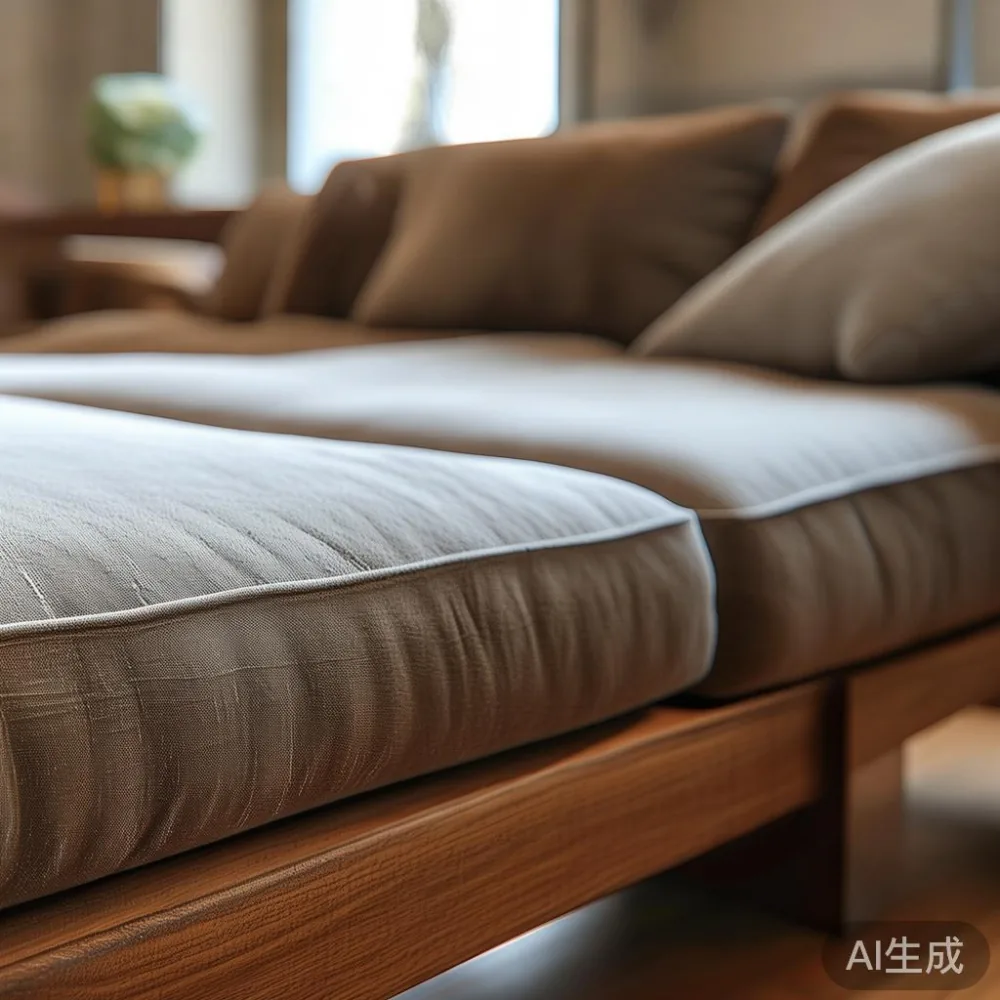
A proper chaise lounge should allow a person to recline with the head and calves supported. For an adult, the useful internal length is normally about 150–185 cm. A decorative chaise that is only 120–140 cm long may look balanced in a photograph yet leave the feet unsupported.
My colleague ordered a chaise lounge for a Tampines flat after checking the online dimensions. The showroom model was comfortable, but the actual unit was 4 cm wider than the display and could not be turned through the HDB corridor. The delivery team had to return it, and the customer waited 11 days for the replacement. A tape measure taken in the corridor would have prevented that delay.
How do I measure my room and access route before ordering a chaise lounge?
Measure the room and the delivery route separately. Room dimensions tell you whether the chaise lounge can function; access dimensions tell you whether it can enter.
For the room, record the wall length, the wall depth, and the position of doors, windows, radiators, sockets, and air-conditioning units. Leave at least 75–90 cm of circulation space behind an occupied seat and 60 cm beside a chaise used as a passage. A gap of 10–15 cm behind a movable backrest is useful for cleaning, although it is not enough for someone to walk behind it.
For access, measure the narrowest doorway, lift opening, lift interior, corridor width, landing turns, and any staircase. Add at least 5 cm to the packaged dimensions on each side as a handling allowance. If the lift measures 100 cm wide by 110 cm deep, the packed chaise lounge should not exceed roughly 90 cm by 100 cm unless the supplier has confirmed that the carton can be tilted safely.
Also check whether the furniture can be carried in sections. A solid wood frame with detachable legs and a folded upholstered deck is often easier to move than a rigid one-piece chaise. Ask for the largest and smallest packed dimensions, the gross weight, and whether assembly is required at the destination.
Singapore lifts commonly show a maximum load of 500–1,000 kg, though individual buildings differ. The delivery crew may also use a trolley, shoulder straps, and a stair landing. A 68 kg chaise can require three people and 12 minutes to move from the van, while a 110 kg model may take 25 minutes or need a professional mover.
What clearance should I leave around a chaise lounge?
Clearance is where many showroom layouts become unrealistic. Before ordering, place a roll of masking tape on the floor and outline the chaise lounge footprint. Then walk around it at least 3 times to simulate normal use.
For a standard chaise lounge, allow 60 cm on one open side for access. If it sits beside a bed, allow 75–90 cm between the frame and bedside cabinet where someone must pass. Do not block a bedroom door swing with the long end. Check that curtains can close without touching the upholstery and that a standing fan can rotate without catching the frame.
Check seated posture as well. A useful chaise has a seat height of approximately 40–45 cm, a back angle near 100–115 degrees for a relaxed position, and enough width for the hips and forearms. A single-person chaise may measure 70–85 cm across; a wider 90–120 cm model suits shared use but needs more floor area.
Weight capacity is another useful number. For a residential solid wood sofa, look for a stated capacity of at least 120 kg per seat and 150 kg for a full chaise, if the manufacturer publishes it. Ask how the figure was tested. A frame with a 25–30 mm main rail, solid timber joints, and adjustable feet offers more practical reassurance than a vague statement such as “heavy duty.”
Can a decorative chaise lounge be comfortable enough for daily use?
Yes, if its internal dimensions and support system are designed for adults. The outer width alone is not enough. A chaise that is 200 cm long can still be uncomfortable if the usable deck starts late, the backrest is nearly vertical, or the seat cushion is only 6–10 cm thick.
Look for a firm platform beneath loose cushions, a back cushion that fills the lumbar gap, and armrests at a usable 55–65 cm above the floor. Foam density matters: a seat cushion around 35–42 kg/m³ generally resists prolonged compression better than very soft filler. If you expect the chaise lounge to serve as a reading seat, test it with a 170–185 cm adult reclined for 20 minutes. If it is only a display accent, confirm that explicitly and accept that it may not suit an overnight guest.
At MIDHILL, the solid wood sofa range includes configurations intended for everyday sitting, and product discussions cover frame construction, seat height, and packed size rather than appearance alone. The same measurements are useful when coordinating a solid wood sofa with a bed frame, dining table, wardrobe, nightstand, or marble table. A marble table may add visual lightness, but a heavy chaise still requires a level floor and careful handling.
For compact secondary rooms, search terms such as Japanese for guest room or Boho for guest room can point toward low-profile designs. “Japanese” in this context is often used for simplicity, low furniture, and neutral textiles; it does not guarantee that every piece is Japanese-made. Confirm the actual origin, dimensions, and materials.
Will a large chaise lounge fit through my HDB flat or condo?
Often it will, but only after a detailed check. HDB homes frequently have common corridor widths around 90–120 cm, while condo service lifts vary much more. A wide condo lift may have a 140–180 cm diagonal, but the usable diagonal must be considered after subtracting the thickness of the carton, trolley, and lifting hands.
Provide the supplier with photographs and measurements of the route. Mark the lift door, interior, corridor, and apartment entrance. For staircase delivery, include the floor-to-floor rise, landing width, and ceiling height. If the route includes a 90-degree turn, compare it with the longest rigid section of the chaise lounge.
Ask whether delivery includes carrying, unpacking, assembly, and placement. If stairs or a narrow lift require extra labour, the charge may be separate. Confirm whether the furniture is insured in transit and what happens if the frame, cushion, or finish arrives damaged. Photograph the condition immediately and record the time of delivery.
Do not confuse furniture dimensions with packed dimensions. A chaise lounge with a 210 cm frame may pack into two cartons of 118 cm and 96 cm. A modular design can make the difference between a straightforward 10-minute installation and a return visit.
What questions should I ask about the frame, cushions, and warranty?
Ask for specific answers rather than broad claims. A manufacturer should identify the timber species, frame construction, joint method, finish, cushion density, fabric composition, and expected service life. For a solid wood sofa, the main frame should be kiln-dried hardwood with corner bracing and a seat support system that limits sagging.
For upholstery, request a Martindale abrasion rating of at least 25,000 cycles for normal residential use and 40,000–50,000 cycles for a heavily used family seat. Removable covers should have sewn rather than glued seams where possible. If you have pets or children, ask about stain resistance and cleaning codes; “water resistant” does not mean a fabric can be scrubbed aggressively.
For a chaise lounge used in a bedroom, check that the back support is rigid enough to prevent the cushion from shifting during use. For a sofa used daily, test the seat edge for pressure on the front rail and confirm that the cushion returns to shape after standing.
Check the warranty terms in writing. A 10-year structural warranty should cover frame joints and load-bearing failures, while upholstery, finish, and commercial use may be excluded. Ask whether moving the furniture between rooms voids coverage and whether the warranty transfers with the property. If refinishing is offered for the life of the product, verify whether labor, collection, and return freight are included.
How should I compare styles without ignoring measurements?
Create a shortlist with three columns: dimensions, specifications, and visual character. This prevents a design photograph from overriding a practical issue.
French light luxury commonly uses pale woods, curved arms, upholstered backs, and soft cream or muted fabrics. It suits a compact bedroom when the chaise has a narrow footprint and slim arms. American light luxury often favors generous cushions, broad profiles, and relaxed proportions, which can work in a larger condo but may overwhelm a small HDB living room. Post-modern light luxury can combine clean lines with unusual geometry, giving a compact chaise more visual presence without requiring extra width.
Style searches can broaden the comparison. A page on top 10 Italian light luxury furniture may highlight refined joinery and sculptural forms, but “Italian” is a style or origin claim that must be verified for each product. Likewise, a guide to the top 10 Industrial furniture may feature metal frames and exposed fasteners rather than the warm solid wood construction central to a traditional living room.
For an industrial-leaning apartment, a phrase such as best Industrial sofa for 2026 may surface useful configurations, but the year in the title does not replace current safety and dimension checks. Review the frame, foam, fabric, and warranty directly. Do not purchase from a ranking alone.
What should I compare before paying for delivery?
Compare the landed price, not just the product price. In Singapore, a display GST of 9% applies to most furniture purchases. A chaise lounge listed at SGD 2,400, for example, becomes SGD 2,616 before delivery. A delivery fee of SGD 80–180 for a normal lift installation becomes SGD 87.20–196.20 after GST.
Confirm whether free shipping thresholds apply to the item price or the final invoice, and whether remote-area, stair, and second-item charges are excluded. A promotion may offer free delivery above a stated threshold, but a 15% deposit can still leave freight outstanding.
Check the estimated delivery window in working days, the delivery appointment process, and the cancellation terms. Allow 7–14 days for production and 2–5 additional days for delivery, depending on stock and the destination. During peak periods such as June–August and November–December, allow 18–28 days in total.
Returns should have clear conditions. A 14-day return period may allow inspection, but custom upholstery, made-to-measure pieces, and used items may be excluded. Ask whether the original packaging, tags, and protective covers must be returned, and whether the customer or seller pays the return freight. For a large solid wood sofa, return logistics can cost SGD 150–350 even before GST.
How do I test a chaise lounge before it arrives?
Test the showroom model with realistic clothing and posture. Sit in the middle of the deck, move toward the front edge, lean back, and place a book on your lap. Remain reclined for 15 minutes. Check whether the backrest supports the shoulders and whether the front edge presses into the backs of your legs.
Sit beside it for 10 minutes and reach for a side table. If the armrest prevents a natural arm position, it may be too high. Ask to remove a cushion and inspect the platform underneath. Check for sharp edges, loose fasteners, uneven feet, and gaps where the frame twists.
Use a tape measure on the showroom piece rather than trusting the display label. Confirm the internal deck length, width, seat height, and clearance underneath. In a showroom, a piece may be positioned without access behind it. Ask to move it into an open area and repeat the circulation test.
For delivery-day inspection, photograph the carton before opening it. Compare the frame measurements with the order, inspect all corners and joints, sit on the chaise, and check that every foot is stable. For a coordinated MIDHILL furniture order, inspect each piece before the team leaves so any damage is recorded in one delivery report.
What is the practical checklist before ordering?
Begin with the room-use question. If the piece is intended for occasional display, a narrower and less mechanically complex chaise lounge may be appropriate. If a guest will sleep on it, target at least 150 cm of usable length, a supportive back, and a cushion surface between 65–85 cm wide. Confirm the occupant’s height and weight before selecting.
Then record the packed dimensions, gross weight, lift and corridor clearances, doorway widths, turning space, and service access. Check the frame species, joint construction, cushion density, fabric rating, care instructions, warranty coverage, delivery lead time, and return exclusions.
Finally, compare the full cost in SGD, including GST, delivery, stairs, assembly, and possible return freight. A piece that cannot be carried into the home may be inexpensive as a product yet expensive in the room. A sofa you cannot sit on can still be intentional, visually valuable, and perfectly suited to a narrow space; it simply must be bought for the right purpose rather than for an imagined use.