Matching Chaise Lounges with Warm Minimal Interiors
A warm minimal interior is not a room without personality. It is a careful balance of pale timber, soft textiles, measured proportions, and objects that earn their place. In Singapore, that balance must also work within HDB flats and condos where living rooms often double as circulation routes. The central challenge is to make the room feel composed without allowing the chaise lounge, solid wood sofa, dining table, or wardrobe to crowd the lift lobby and corridor.
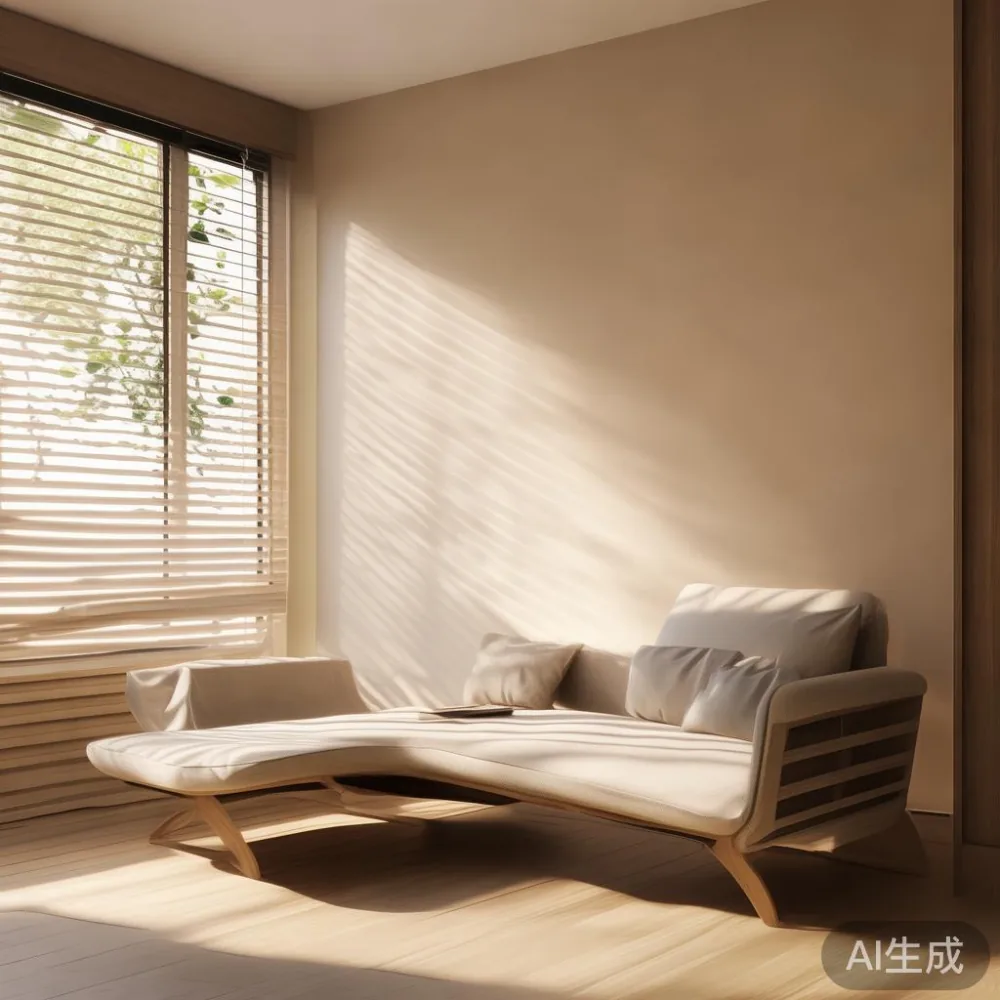
At MIDHILL, we work with solid timber pieces designed around real homes rather than showrooms. A practical chaise lounge should offer a long, relaxed silhouette, yet remain narrow enough for a compact living room. This guide explains how to combine it with a warm minimal palette while respecting local clearances, delivery constraints, and the practical needs of a humid climate.
What makes a warm minimal interior different from a plain neutral room?
Warm minimalism uses fewer finishes and stronger contrasts. Instead of filling every wall, it gives selected materials room to stand apart. Pale oak, ash, or light walnut establishes warmth; ivory, oatmeal, and soft beige reflect light; black or dark brown accents provide definition. Texture does the decorative work that excessive colour would normally handle.
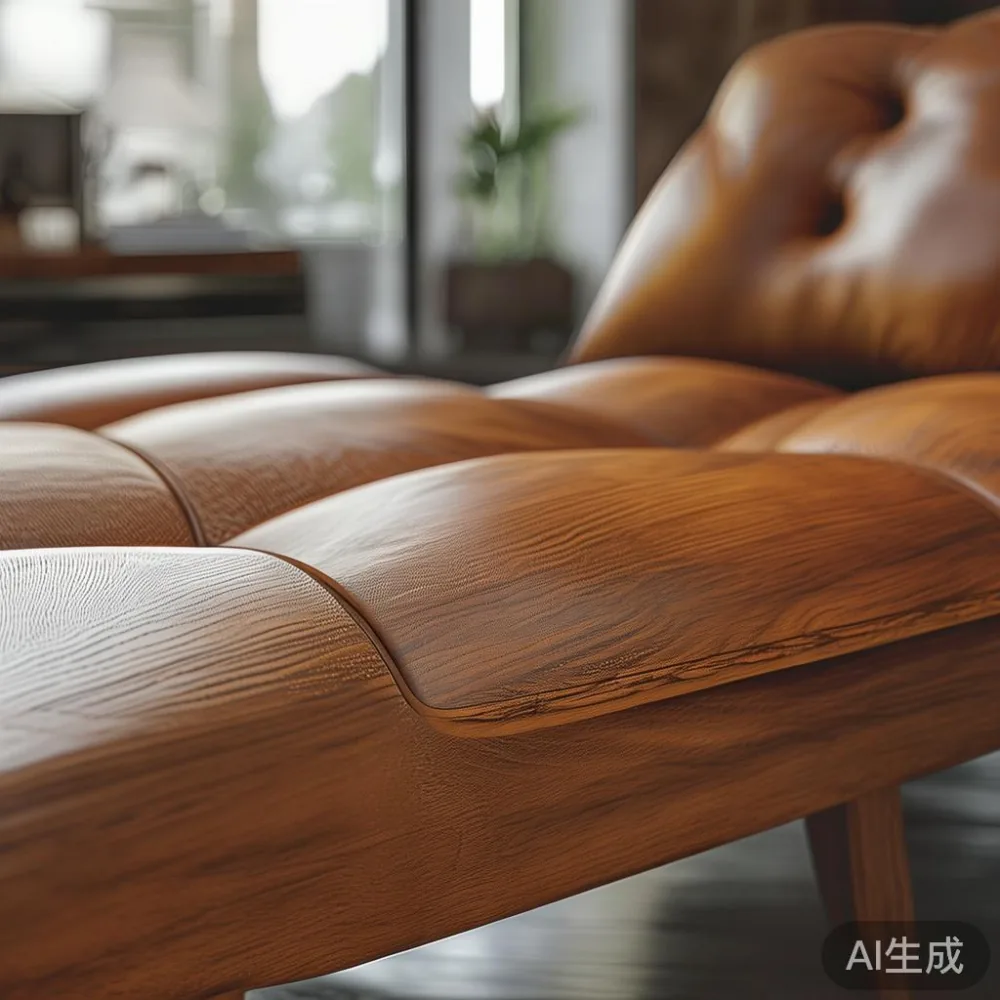
A chaise lounge should fit this language through its material and profile. A low solid wood frame with a gently reclined seat, slim arms, and one upholstered surface can look architectural without feeling severe. Keep visible objects limited to perhaps 5 items on a 120 cm sideboard, 2 or 3 books on a 45 cm nightstand, and 1 large artwork above the sofa. These numbers are not universal rules, but they help prevent a 28 sqm HDB living room from appearing visually crowded.
Singapore’s daylight is strong, so warm minimalism should not rely on heavy curtains or dark walls to feel comfortable. Linen sheers can soften a window while allowing useful light in. At night, 2700K lamps create a warm pool of illumination without the clinical effect of a single overhead ceiling light.
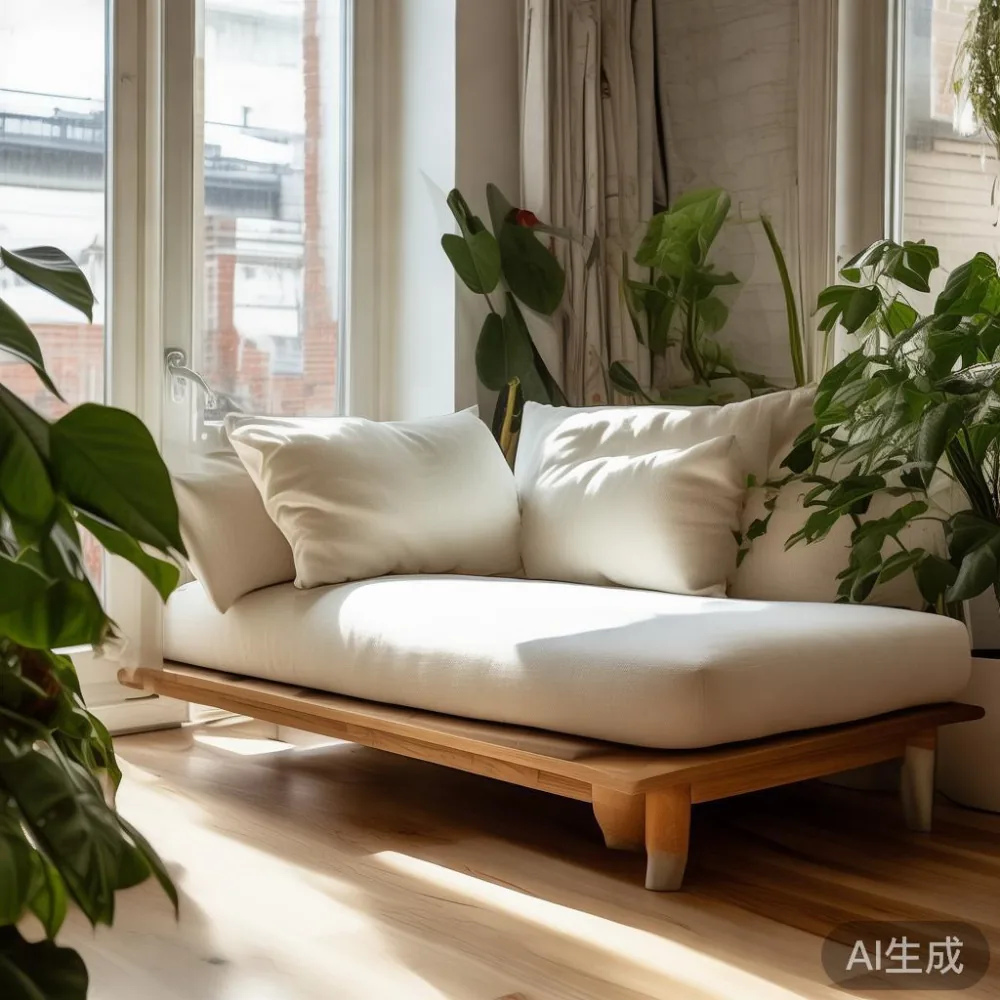
How do you choose a chaise lounge for a compact HDB or condo?
Begin with the space rather than the photograph. Measure the room at its widest and narrowest points, including radiators, air-conditioning units, and open door swings. A corridor may be only 100–120 cm wide, while some condo lift cars measure roughly 110 cm across the door and 140 cm deep. A chaise lounge with a 65–70 cm width can still be too wide if it must turn through a tight passage.
For many Tampines, Bedok, and Punggol homes, a chaise lounge around 160–170 cm long, 65–70 cm wide, and 72–78 cm high is a useful starting point. Check the diagonal of the delivery route, not just the final footprint. If the longest corridor turn is 160 cm, a 170 cm chaise lounge may require turning on its side. Confirm the lift dimensions with your building manager and ask whether the delivery team can use the service lift or staircase.
Leave about 75–90 cm for a main walking route beside the chaise lounge. In a busy family home, maintain 90 cm where children or elderly relatives pass frequently. A slim side table with a 35–40 cm diameter can hold a cup and book without narrowing the route. Avoid placing the chaise directly in front of the TV console unless the screen can be viewed from a comfortable angle; a 35–45 cm viewing distance often works better on a 55-inch television.
The chaise lounge must also suit how you actually sit. A seat height of 38–43 cm is easier for daily use than a very low 32–35 cm model. The back and arm should support the shoulders, and the extended section should support the calves without forcing the feet upward. Test the angle by sitting for at least 15 minutes before confirming the upholstery and firmness.
Which wood and fabric colours make a warm minimal living room feel richer?
Warm minimalism works particularly well with oak, ash, beech, and light walnut. These timbers show grain and small variations, so a simple room does not feel flat. A solid wood sofa with a natural oak base and oatmeal cushions can pair with a matching chaise lounge, but vary the texture slightly: use woven linen on the sofa and smooth cotton or durable boucle on the chaise lounge. Repetition with contrast is more refined than matching every surface.
For a French light luxury direction, pair pale wood with bouclé, cream upholstery, softened corners, and restrained brass details. French light luxury tends to be comfortable and layered, so the chaise lounge can carry a rounded edge while the dining table remains rectilinear. For an American light luxury approach, use generous proportions, neutral upholstery, and wider visual spacing. A 220–240 cm solid wood sofa can work in a new BTO living room, provided the room is at least 4.5 m wide.
Post-modern light luxury offers another route: clean rectangular forms balanced by one curved or sculptural piece. The chaise lounge can be that piece. Keep the bed frame, dining table, and wardrobe visually quiet so the curve has room to register. Avoid placing it beside another heavily curved item within a 2 m radius.
Colour matching should begin with a sample board. Place 3 woods, 3 fabrics, and 2 metal finishes together under daylight. Warm woods should not become orange against cream, while cool grey can make honey-toned timber look muddy. For long-term ease, choose washable covers and finishes that tolerate humidity, spills, and frequent cleaning.
How should the chaise lounge relate to the sofa, dining table, and other furniture?
Create one clear focal zone around the seating. A solid wood sofa of 180–220 cm can be paired with a chaise lounge placed parallel or at a 90-degree angle. Parallel placement suits a narrow rectangular room; a perpendicular chaise can define a conversation corner. Leave 30–45 cm between the two pieces so they feel related rather than merged.
A low coffee table, ideally 100–120 cm long and no more than 35–40 cm high, completes the grouping. Keep at least 30–40 cm between the table and seating. If a dining table occupies the same room, maintain a 75–90 cm passage between the table edge and the sofa. A 140 cm dining table with 55 cm-deep chairs usually requires at least 190–200 cm of total depth once seated space is included.
Repeat materials across the home without repeating every item. The timber used on the chaise lounge can reappear in the dining table or nightstand, while the solid wood sofa frame might share the same finish. Marble table surfaces introduce another layer: a 90–120 cm marble table can work beside the chaise lounge in a larger condo, provided its veining remains restrained and the room has 2 or 3 supporting pieces nearby.
Do not force every category into one room. In a compact flat, a dining table with a 120–140 cm top and a 75 cm height may be more useful against the kitchen or dining wall, with the chaise lounge near the window. A separate dining area reduces visual congestion and allows each piece to retain its function.
Can warm minimalism work in a bedroom, and what about the wardrobe?
Yes, but the bedroom should use even fewer shapes. A bed frame in pale oak, walnut, or light ash can be paired with plain bedding, a slim nightstand, and one textile layer. A 150 cm queen bed needs about 210–230 cm of width in the room, while a 180 cm king bed generally needs 240–260 cm. Keep 60 cm of usable space beside each side of a queen bed; 75 cm is more comfortable in a master bedroom.
For a compact bedroom, a wardrobe depth of 55–60 cm is usually practical, with sliding doors requiring less floor space during use. Hinged doors need clearance of approximately 60 cm and should not open into a narrow corridor. If you are researching how to style Japandi wardrobe in bedroom, focus on vertical storage, pale timber, woven baskets, and a limited collection of objects rather than open shelving above the bed.
Buyers comparing the best European light luxury wardrobe for 2026 may value concealed hinges, soft-close drawers, and detailed interiors more than decorative fronts. Buyers comparing the best Scandinavian wardrobe for 2026 often prioritise pale wood, clean lines, and modular widths. Both approaches can support warm minimalism, but European detailing may include warmer brass hardware, while Scandinavian design tends toward quieter black or stainless fittings.
The bed frame should not compete with the wardrobe. Match the timber tone and let the proportions differ. A 45–50 cm wide nightstand is enough for a lamp, phone, and glass of water, although 50–55 cm feels more generous. Keep bedside lighting around 2700–3000K and place the switch within reach so the room does not need a bright overhead light at night.
What should you check before ordering furniture for delivery in Singapore?
Measure everything and document it. You need the room dimensions, lift-door width, lift-car dimensions, corridor widths, turns, and stairs. Add a margin of 5–10 cm for packaging, dolly clearance, and imperfect alignment. If the building has a 100 cm lift door, a product wider than roughly 90 cm after packing may not fit upright.
Compare against for sale American furniture listings by checking actual dimensions rather than relying on a style label. A broad chair or table may be difficult in HDB access even if the photograph suggests generous scale. Likewise, check the delivered weight: a solid wood dining table may weigh 45–70 kg, and a large bed frame may weigh 50–80 kg. These weights are manageable with 2 trained delivery workers, but the route and lift capacity must support them.
Local prices are usually quoted before GST, while 9% GST applies to most purchases. For example, a SGD 2,800 chaise lounge becomes SGD 3,052 after GST. Check whether the quoted amount includes GST before calculating your budget. MIDHILL provides free shipping above US$350, but that overseas threshold does not replace careful confirmation of Singapore delivery arrangements.
Allow about 7–14 delivery days for a made-to-order or stocked configuration, and request the dispatch estimate before payment. Returns are accepted within 14 days under the stated policy, but furniture must be checked for eligibility, packaging condition, and collection charges. The 10-year structural warranty applies to qualifying products and should be read together with the care instructions.
How do you style a warm minimal room without buying too much?
Use a budget allocation rather than a shopping list. Allocate roughly 55–60% of the furnishing budget to the main seating, 20–25% to storage and tables, and 15–20% to textiles, lighting, and accessories. This prevents a beautiful chaise lounge from being surrounded by mismatched supporting pieces.
Begin with 3 repeated colours: timber, background neutral, and accent neutral. Add small doses of black, dark brown, or muted olive. For artwork, 1 piece above the sofa is usually enough for a 2.2–2.4 m sofa. A pair of smaller works can create balance, but avoid arranging them so tightly that they form a visual block.
Lighting needs 3 layers: ambient ceiling light, task lighting near a table or bed, and accent light near the chaise lounge. A floor lamp with a linen shade should stand beside—not directly behind—the chaise so it does not cast an uncomfortable shadow. Set the lamp around 120–150 cm high, with the shade slightly above seated eye level.
For a broader historical reference, top 10 Mid-century modern furniture is useful when looking for tapered legs, tapered case pieces, and warm timber, but reproducing every signature shape would work against a minimal room. Borrow 2 or 3 ideas: a slim tapered nightstand, a low side table, or a clean-front bed frame. Then finish with fewer accessories and more open space.
My own showroom test confirmed the importance of scale. Last month, I visited a colleague’s new 3-room BTO in Punggol and sat in a chaise lounge that looked modest in a 2.7 m living room. After a coffee table was added, the remaining walking route became tight. Replacing the 110 cm table with an 80 cm round table opened 30 cm of circulation space and made the room feel larger. The lesson was simple: a warm minimal interior succeeds when every centimetre has a purpose.
What final details keep solid wood furniture warm and practical in Singapore?
Wood finishes need care suited to the climate. Keep the chaise lounge and solid wood sofa away from windows with strong afternoon sun, and use coasters rather than decorative objects that leave rings. Dust with a soft cloth, wipe spills promptly, and avoid placing damp laundry directly against the dining table or wardrobe.
For the bed frame, inspect fixing points every 6–12 months, especially if the frame supports a high-profile mattress. For the dining table, use a stable base and avoid rocking it as a shortcut for levelling. Wipe the wardrobe track with a dry cloth and check that sliding panels remain clear. A marble table needs an appropriate sealant and careful use of acidic liquids, so coasters remain useful even on non-porous surfaces.
For the chaise lounge, rotate cushions and vacuum seams regularly. Check that the extended position does not create an unstable centre of gravity, and avoid standing on the upholstery. Solid timber may move slightly with temperature and humidity, so leave expansion gaps where the manufacturer specifies them.
A warm minimal home should still feel lived in. Choose a textured throw, one cushion with a useful pattern, and a tray that can be removed when guests arrive. Keep the chaise lounge central to the seating but not the centre of circulation. Its long line can soften a rectangular room, provide a proper place to stretch, and complement a solid wood sofa, dining table, wardrobe, nightstand, and marble table without making the space feel overfilled.