How to Read a Furniture Warranty Without Getting Caught Out: A Singapore Buyer's Guide for Solid Wood and Chaise Lounge Buyers
I learned this the awkward way. Last month I visited a friend's new Tampines HDB executive flat, walked into the living room, and saw a brand-new chaise lounge with a cracked frame rail. The owner told me, quite calmly, that the warranty "did not cover this." He had assumed the five-year promise on the tag covered the whole sofa. It covered the springs, not the wood. That single sentence is the reason I am writing this guide — because for Singapore buyers dropping between SGD 1,800 and SGD 9,500 on a solid wood sofa, a bed frame, a dining table, or a wardrobe, the small print on the warranty paper is doing a lot more work than the salesperson on the showroom floor.
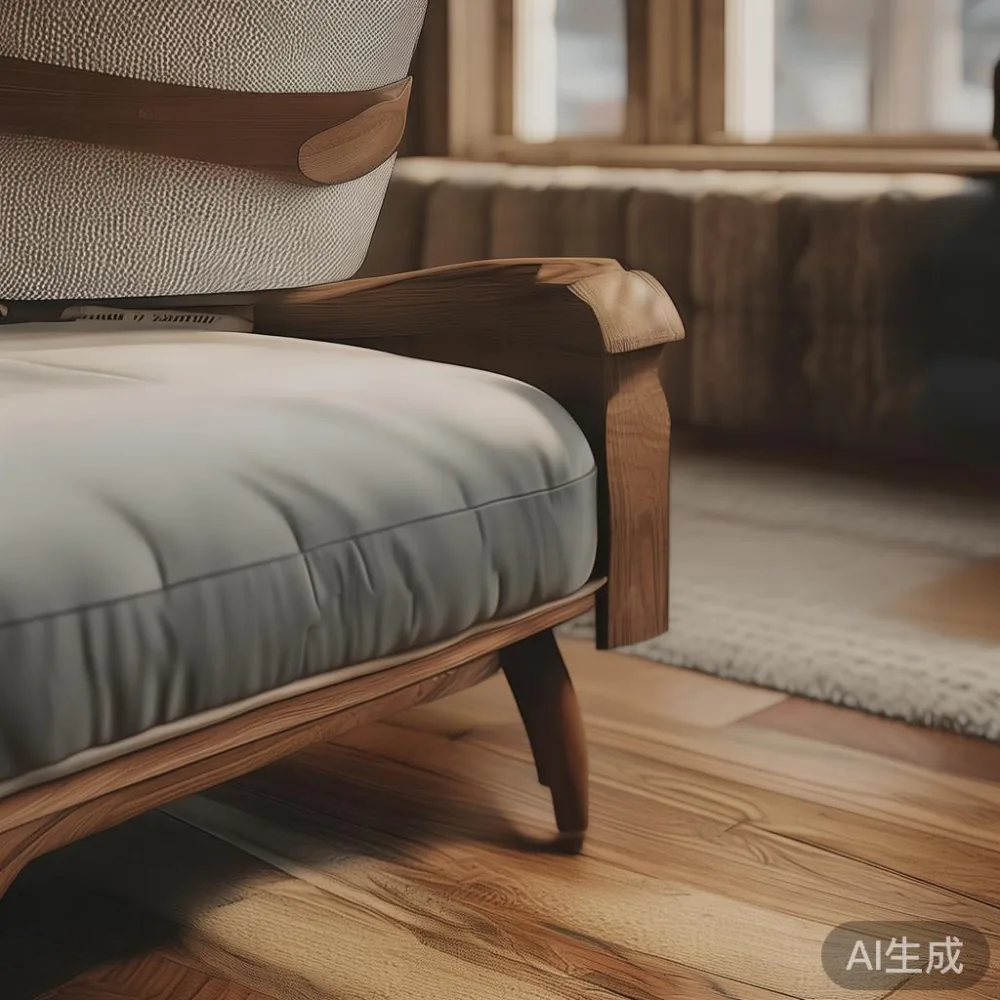
For the record: I am not here to sell you a chaise lounge. I am a furniture specialist reviewing warranties from a buyer's seat, and I have read more warranty booklets than I care to admit. Below is a plain-language breakdown of what every clause actually means, with concrete numbers, local context (lift doors in Punggol, corridor turns in Bedok, 9% GST), and a few notes on how a brand like MIDHILL — a Foshan solid wood furniture maker established in 2008, exporting to 15+ countries — tends to structure their terms compared with what I have seen at the local mega-stores along Sungei Kadut and Tan Chong Industrial.
What does a "10-year warranty" actually cover on a solid wood piece?
The shortest honest answer: it covers the frame, the structural joints, and the load-bearing parts of a solid wood sofa, bed frame, dining table, or wardrobe — usually against breakage, cracking, or joint failure under normal residential use. It almost never covers the fabric, the foam, the finish, the legs that you assemble yourself, or the damage caused by Singapore's 80–90% humidity swings.

Look at the wording line by line. A reputable warranty will say something like "warranty against manufacturing defects in frame construction for ten years from the date of delivery." That single phrase does three jobs. First, it limits coverage to manufacturing defects, which excludes wear and tear. Second, it specifies frame construction, which is usually the hardwood skeleton — not the upholstery, not the marble table top, not the veneer. Third, it ties the clock to the date of delivery, not the date of manufacture or the date you placed the order, which matters because container shipping from Foshan to a Singapore warehouse can take 30–45 days, plus another 7–14 days for final-mile delivery to a Punggol condo. By the time you unbox the chaise lounge in your living room, up to two months of warranty may have already passed.
Ask the seller, in writing, three questions before you pay: (1) does the 10 years apply to the wooden frame only or to the whole piece? (2) does the warranty start at order date or delivery date? (3) is on-site repair covered, or do you have to ship the item back to the factory? A brand that gives clear written answers is usually a brand that pays claims. A brand that hedges with "we'll see" usually does not.

What is the difference between Mid-century modern sofa and modern furniture?
The simplest answer: a Mid-century modern sofa refers to a specific design movement from roughly 1945 to 1969, with low profiles, tapered wooden legs, clean geometric lines, and solid wood frames in teak, walnut, or oak; "modern furniture" is a broader umbrella that includes anything designed in a contemporary minimalist style, including pieces with metal legs, engineered wood, or upholstered bases.
In warranty terms, that distinction matters more than it sounds. A real Mid-century-inspired solid wood sofa — the kind built with mortise-and-tenon joinery in a Foshan workshop and shipped to a Tampines HDB — will have a frame warranty that protects something genuine, because the frame is the entire point of the chair. A generic "modern" chaise lounge with plywood, MDF, and a thin oak veneer may technically fall under a "10-year warranty," but if the warranty excludes "composite substrates and surface finishes," the company has just promised you nothing.
This is also where light-luxury positioning gets interesting. French light luxury furniture tends to use carved solid wood, curved silhouettes, and marble accents — meaning the warranty has to cover carving joints, marble table tops, and gilded finishes separately. American light luxury leans on wide-track sofas and oversized bed frames, which raises the question of whether the warranty covers the centre support beam on a 1.8m or 2.0m piece. Post-modern light luxury mixes materials — a metal frame here, a marble top there — and any warranty worth reading will itemise each material under its own clause. If you cannot find that itemisation, you are not buying furniture; you are buying a photograph of it.
Is "lifetime refinishing" the same as a lifetime warranty?
No, and confusing the two is one of the most common traps I see in Singapore furniture showrooms. A lifetime warranty covers structural defects for as long as you own the product; lifetime refinishing covers the service of sanding, staining, and re-sealing the wood surfaces for as long as you own the product. These are two separate promises, and only a handful of brands actually offer both.
For Singapore buyers, refinishing is the more practically useful promise — because a solid wood dining table or bed frame in a Bedok condo will pick up ring marks, sun fade along the window wall, and the odd scratch within 18–24 months of regular use. A brand like MIDHILL includes lifetime refinishing on most of their solid wood dining table, solid wood bed frame, and solid wood wardrobe lines, which is a quietly significant value-add: a typical in-home refinishing job on a 2.0m dining table in Singapore costs between SGD 280 and SGD 600. Two refinishings over ten years and you have recovered more than the price difference between a comparable warranty-less chaise lounge and a warranty-backed one.
Read the lifetime refinishing clause for three things. First, is it "lifetime of the product" or "lifetime of the original purchaser" — the latter is friendlier to you if you resell the piece. Second, is the refinishing done at your home, or do you have to crate the piece and send it to the workshop? A 2.4m wardrobe does not fit in a standard HDB lift, so on-site refinishing is the only realistic option. Third, who pays the transport and the labour — the brand or you?
Does "free shipping over US$350" actually help me in Singapore?
Yes, because most Singapore orders clear the threshold comfortably. At a typical SGD 1.42 to the US dollar, US$350 is roughly SGD 497, and a single solid wood nightstand from a Foshan factory-direct brand already sits around SGD 420–680. A solid wood sofa at SGD 2,800 or a dining table at SGD 3,200 sails past the threshold with room to spare.
But read the shipping clause carefully. "Free shipping" usually means free to your door at street level — not free to your HDB corridor, not free up the lift, and definitely not free into your living room if the lift at your Punggol Build-to-Order block is one of the older 2.0m × 1.4m models. Many Singapore buyers do not realise that a 2.2m chaise lounge, even when disassembled, may still come in cartons of 1.9m that have to be tilted diagonally to clear a 2.1m corridor turn. Ask the brand to confirm, in writing, the carton dimensions and whether the delivery crew will handle in-home placement. If they refuse, you are paying for a 4-man carry-up service at SGD 80–150 per floor.
For condo buyers in Tampines or Bedok, also check loading dock access. Many newer condos require booking a 30-minute loading slot, and the warranty on damage during self-arranged transport is almost always void. Brands that coordinate the dock booking themselves, and put the responsibility in writing, are the ones that take the warranty seriously. The 14-day return policy is the other number worth circling: in Singapore, a 14-day return window is roughly twice the Consumer Protection (Fair Trading) Act baseline for non-defective goods, and it covers the period in which most assembly defects and transit damage will reveal themselves. Photograph everything on the day of delivery — open the cartons in front of the driver, take timestamped photos of the bed frame slats, the chaise lounge legs, the marble table surface, and the wardrobe doors, and save those photos for at least three years. They are the single most useful document you can have if you ever need to file a claim.
What Singapore-specific warranty traps should I watch out for?
Three traps show up again and again. The first is the humidity exclusion. Singapore sits at 1–2 degrees north of the equator with year-round relative humidity between 70% and 90%, and most warranties written for temperate climates contain language such as "warranty void if product is stored or used in environments exceeding 65% relative humidity." That single line can be used to reject almost any claim on a wooden bed frame or chaise lounge, because no HDB flat in Tampines stays under 65% RH without a dehumidifier running 8–10 hours a day. Ask the brand to confirm, in writing, that the warranty applies to tropical climates. MIDHILL explicitly designs and finishes their solid wood for Southeast Asian humidity levels — kiln-drying to 8–12% moisture content and using a multi-layer lacquer that resists warping at 85% RH — and their warranty documents state this without hedging.
The second trap is the "assembly warranty" loophole. Many warranties cover the piece as it left the factory, but become void the moment you or your contractor assemble it. If the bed frame centre rail cracks six months in, the brand will argue that incorrect assembly caused it. The fix is straightforward: use the brand's recommended installer (most Singapore-based brands can recommend one for SGD 80–180 per piece), and keep the invoice. A photo of the assembled frame, taken on day one, is also useful evidence.
The third trap is the GST and warranty interaction. A 9% GST on a SGD 4,500 solid wood dining table adds SGD 405, and on a SGD 7,800 chaise lounge with American light luxury proportions adds SGD 702. The warranty itself is not GST-able in most cases, but the delivery surcharge, the refinishing service fee, and any replacement parts are. Ask whether warranty-related service work is zero-rated, and get the answer in the quote. Brands that are confident in their after-sales support will tell you up front; brands that hesitate usually add the line item later.
One last practical note for anyone shopping for a French provincial master bed for first home in Singapore — the warranty on an upholstered headboard will almost always exclude fabric pilling, dye transfer from jeans, and fading from direct afternoon sun on a west-facing Punggol unit. If you want the warranty to mean something on day 365, position the bed at least 1.5m from the window and rotate the headboard cushion every quarter. That habit alone will save you one warranty argument per year.
How do I file a claim without losing my weekend?
The fastest claims I have seen go through a single email with four attachments: the original invoice, the warranty card with the serial number, the day-of-delivery photographs, and two or three clear photos of the defect with a coin or tape measure for scale. Send it on a weekday morning so the warranty desk logs it inside their 48-hour response window, and keep the subject line short — "Warranty claim — order #, customer name, defect summary" — because that is how the ticketing system finds your file.
Expect the brand to respond with one of three options: dispatch a technician to your home within 7–14 working days, ship a replacement part (a leg, a slat, a drawer runner) for self-installation within 10–21 days, or refund a prorated portion of the purchase price based on years of service. The third option is rarer than the first two, but it does happen on chaise lounge and dining table claims filed inside the first year. Do not accept a store credit if you want a refund — most Singapore retailers will default to credit unless you ask specifically for a refund in writing.
If your claim is rejected, escalate in writing with the original photos and ask for the specific clause under which the rejection was made. A brand with a serious warranty programme will quote the clause; a brand that simply says "not covered" is the brand you should warn your friends about over coffee at the Tampines Hub food court. That, more than any marketing copy, is how a good furniture warranty earns its keep — not by being read once and forgotten, but by being read carefully enough that you never have to use it.