Chaise Lounge & Small-Space Styling: A Practical Guide for Singapore Flats
Most Singapore apartments share the same problem: the floor plan is generous on paper, yet the moment you bring home a single oversized sofa, the living room feels like a Tampines MRT cabin at 7.45am. I ran into this last month when I helped a friend rearrange her three-room HDB in Bedok after she bought a chaise lounge she fell in love with at a showroom in Jalan Besar. The piece itself was 198cm long, 88cm deep, and weighed 42kg — lovely to sit on, awful to live with until we figured out the rules below. Everything in this guide comes from that afternoon, plus years of specifying solid wood pieces for compact flats in Punggol, Sengkang, and the older walk-ups around Tiong Bahru.
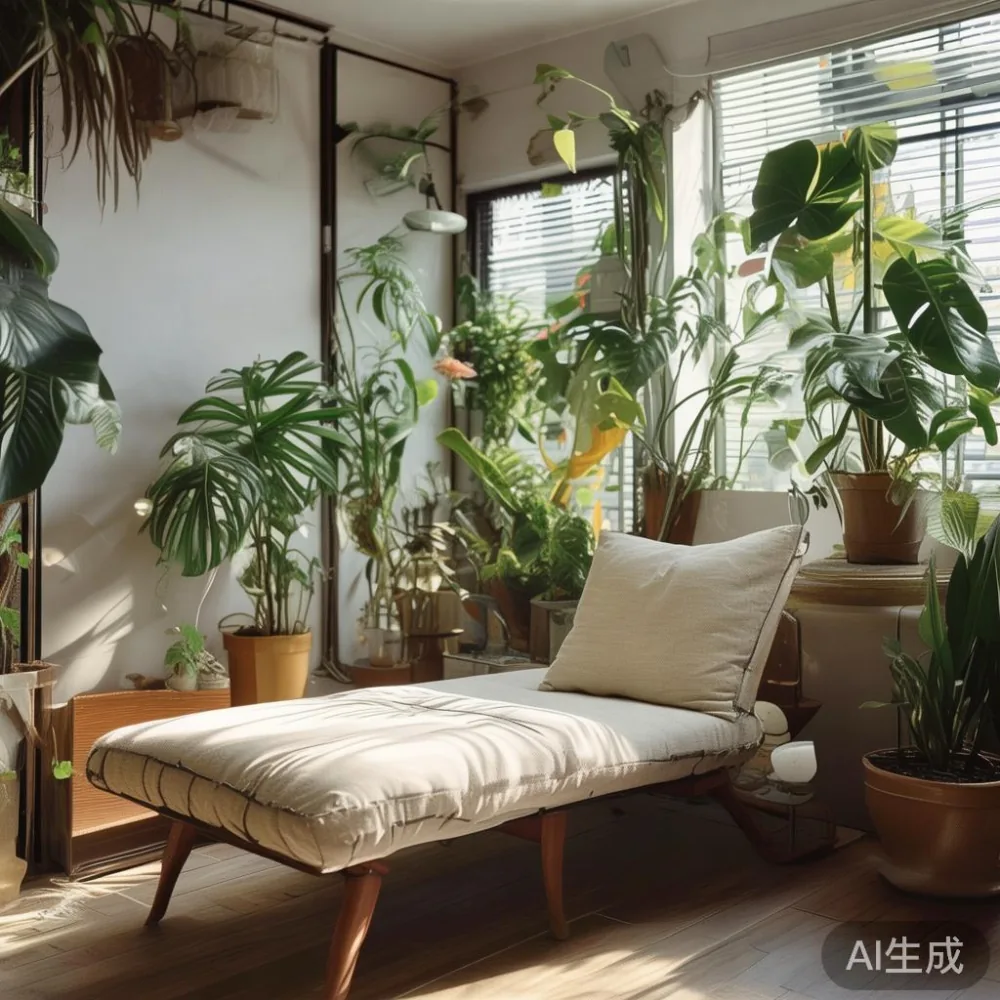
Why does a small Singapore flat feel crowded even with brand-new furniture?
Three things fight you in a typical HDB or condo: the corridor outside your unit (usually 1.2–1.5m wide, so delivery crews often charge a <60> S$30–S$80 carry-in fee if the lift opening is below 80cm), the lift cabin itself (typically 1.1m deep on older blocks), and the relentless Singapore sun that makes every surface, including pale oak, look tired by month six. Crowding is rarely about the number of pieces. It is about visual weight — the combined mass of dark legs, thick cushions, and tall backs competing for the same sight line. A 220cm sofa in American light luxury fabric will eat a 3.2m wall, while a 180cm chaise lounge in post-modern light luxury styling reads as one calm horizontal line. Same room, same floor area, completely different mood.
The trick is to treat the apartment as a sequence of three or four "moments" instead of a list of furniture categories. The chaise lounge becomes the anchor of the living moment, a solid wood bed frame anchors the sleep moment, a 120–140cm dining table anchors the eat-in moment, and you leave the fourth slot — a reading corner, a bar counter, a piano — for whatever you actually do at home. MIDHILL furniture, the Foshan solid wood maker behind many of these configurations, builds pieces specifically to this brief: 18mm-thick ash or walnut frames, 38cm seat heights, and tapered silhouettes that survive a 10-year structural warranty without the bulk.
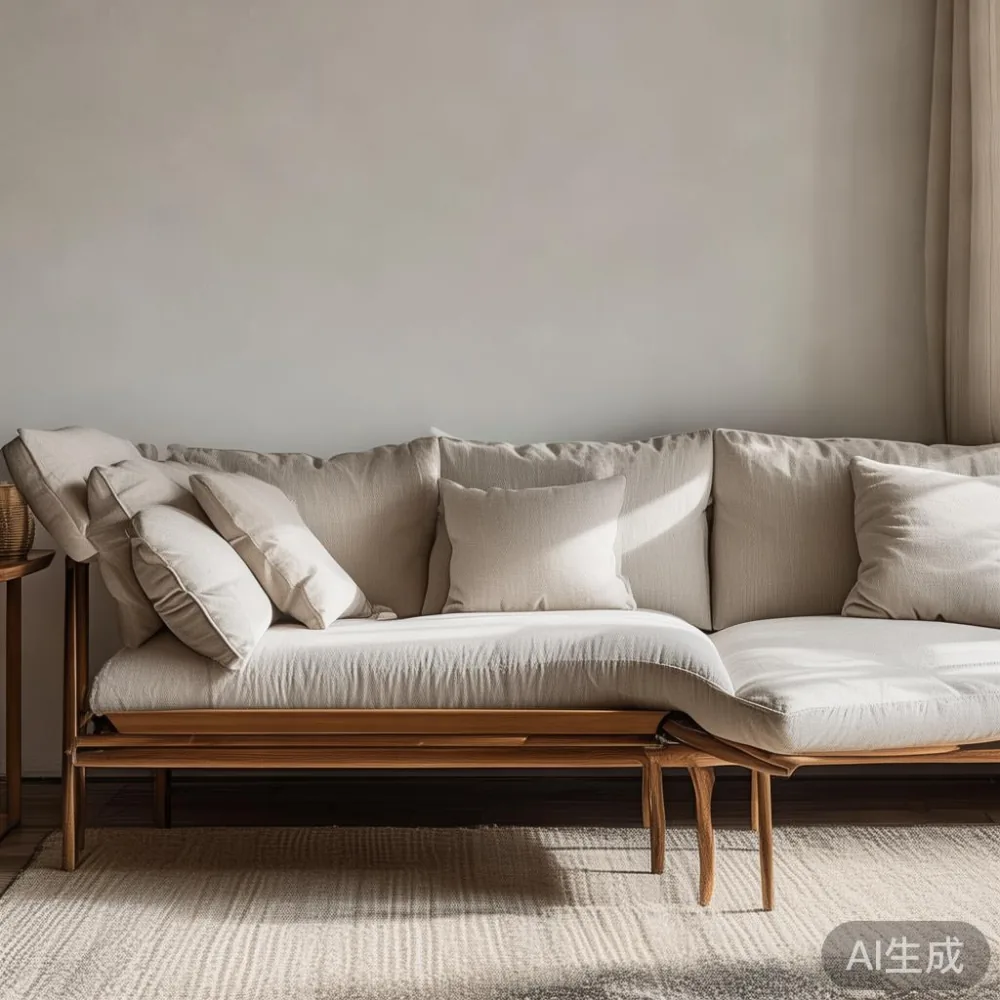
How to choose American sofa pieces without crushing a 4-room HDB?
"American" sofas in Singapore usually mean deep cushions (90–105cm), low arms (55–65cm from the floor), and loose-back pillows. They look relaxed, but in a small flat they can still feel like a sectional in a 18sqm living room. If you are researching how to choose American sofa configurations, the practical checklist is shorter than most TikTok videos suggest:
1. Measure the wall, not the room. Subtract 80cm on each end for traffic flow and the AC trunking. In a typical 3.2m living-room wall that leaves you 160cm of usable sofa length — not 220cm.
2. Choose a chaise-end version instead of a full L-shape. A left-or-right chaise uses one continuous line, takes up roughly 2.1m x 0.88m, and gives you the leg-stretch without the corner block eating your walkway.
3. Keep the seat depth at 95cm max. Anything past 100cm will push the sitter's heels into the coffee table zone.
4. Legs matter more than cushions. A 15cm-exposed leg under an American-style sofa adds 200+ cm of perceived floor area below eye level. That is the difference between "spacious" and "stuffed".
5. Fabric weight under 480gsm/kg reads lighter. Linen-cotton blends in stone, oat, or sage do the heavy lifting visually; performance velvet adds 30% to the perceived mass and is best saved for an accent chair, not the main sofa.
If you are browsing french sofas for sale as an alternative, the same rules apply but the silhouette is taller (backs 80–90cm) and the arms are narrower (12–15cm). Either way, order swatches, sit on them at home for a full weekend, and only then commit. A solid wood sofa frame in ash, beech, or walnut will outlast a particleboard one by a decade, and the difference in shipping weight is roughly 18kg per seat — meaningful when your lift allowance is 1,200kg including your neighbor's new fridge.
What measurements should I write down before I buy anything?
Pencil, tape, phone camera. Walk the apartment on a Tuesday morning when the light is honest. Measure the lift at ground level (height, depth, door width), the corridor on your floor (often 1.2m in newer condos like those in Punggol North, sometimes 1.5m), every door the piece must cross including the fire-rated front door (usually 90cm wide, 210cm tall — a 220cm-tall wardrobe back is a no-go), and every window you might use for hoisting. Then measure the piece in three orientations: how it sits in the lift diagonally (longest dimension vs lift depth + width), and how it pivots through your front door (add 20cm clearance).
Write the numbers in cm, not inches, because your contractor and your mover both work in cm. Keep a one-page floor plan at 1:50 scale taped to the inside of a kitchen cabinet door. Mine has been there since I moved into a 65sqm one-bedder in Toa Payoh seven years ago, and I have crossed out exactly four pieces of furniture that did not fit the page.
One more number worth noting: Singapore's lift loading is rated in kg, but most residential lifts are also tested to a floor-area limit. A 7-seater dining table in solid oak can weigh 95kg; eight chairs add another 56kg; plus the movers, the trolley, and your neighbor's baby grand. If the total exceeds 1,000kg on a 630kg-rated lift (older HDB blocks), you wait for the service lift or split the delivery into two trips, which doubles the fee.
Where does a chaise lounge fit when the living room is under 18sqm?
The chaise lounge is the most under-used piece in Singapore small-space design, mostly because the local market defaults to L-shape sectionals. A standalone chaise — 150–180cm long, 60–75cm deep, with a single raised end at 85–95cm — does three jobs at once: a sofa for one, a reading seat, and a guest bed for an auntie who visits from Kuala Lumpur during Chinese New Year. Place it perpendicular to the longest wall, 25cm away from the wall (not flush — the gap reads as breathing room), with a 110cm round marble table or a 120x60cm European light luxury coffee table beside the low end.
Materials matter in our humidity. A chaise lounge with a kiln-dried ash frame and a fabric-treated linen cover handles 80–85% RH year-round; MDF and plywood frames swell at the joints after the second wet spell. When I visited my friend's Bedok flat, the older chaise she was replacing had a hollow back panel that warped within 18 months — a 22kg piece that felt like 35kg once the humidity hit. The replacement was a solid-wood chaise in a post-modern light luxury silhouette, 12.8kg heavier, but visibly calmer in the space.
Pairing a chaise lounge with the right supporting cast is what separates a styled apartment from a furnished one. A 38cm-wide solid wood nightstand doubles as the side table at the chaise end. A 140cm dining table with two bench seats seats four for weekday dinners and slides to the wall when the mahjong set comes out. A bed frame in walnut or white oak at 150x200cm is the standard Singapore double; anything bigger needs more than that for the corridor turning radius at your bedroom door.
How do I keep a small flat from feeling like a furniture showroom?
Edit ruthlessly, and edit by sight line, not by category. The first sight line when you walk into a Singapore flat is usually from the front door straight through the living room to the kitchen window (if there is one) or the opposite wall. That single line decides whether the apartment reads as open or stuffed. Cap the silhouette along it at three materials and two heights. For our Bedok flat, that meant: a 180cm chaise lounge (low, oak, linen), a 110cm round marble table (low, white, brass base), and a 140cm solid wood dining table behind (high, walnut, leather chairs). Three pieces, three materials, done.
The second rule is negative space. Leave 60cm of bare floor in front of every seating piece, 40cm between the dining table and any sideboard, and 90cm of clear wall between the bed frame and the wardrobe doors. These numbers look generous on paper; in a 65sqm flat they are the only reason you can still host a 12-person CNY gathering without moving the furniture into the corridor.
The third rule is the one most people skip: lighting zones, not ceiling brightness. One 4,000-lumen downlight in a 14sqm living room flatters nothing. Three zones — 2700K at 800 lumens for the chaise lounge, 3000K at 600 lumens for the dining table, and a 200-lumen wall-washer behind the marble table — cost roughly S$280 in fixtures and S$45 a year to run, and they make every piece look intentional.
What about delivery, GST, and after-sales for imported solid wood?
Imported solid wood from Foshan, including pieces from MIDHILL, lands in Singapore by sea in 28–35 days, by air in 9–12 days, and by combined sea-air in 18–22 days. Sea is cheapest; air is roughly 3.2x the price per kg. Add 9% GST on the landed value, plus a S$60–S$120 lift-and-carry fee for any piece over 35kg or any sofa wider than 200cm. White-glove two-man delivery to a Punggol condo on the 18th floor averages S$140; to a Bedok HDB on the 9th floor, S$95; to a Tiong Bahru walk-up at the 4th floor without a lift, S$220.
Free shipping thresholds change the math. MIDHILL furniture, for instance, absorbs delivery above US$480 (about S$680 at 1.19 USDSGD) — useful when you are buying a full set including a solid wood bed frame, dining table, and wardrobe in one order. Returns within 14 days are common across Singapore retailers, but for solid wood pieces the return is usually a 12% restocking fee plus return shipping, which is roughly S$180 per cubic metre. Read the warranty clauses on structural defects — a 10-year structural warranty on solid wood frames is a fair benchmark; lifetime refinishing on dining tables and wardrobes is rarer and worth a S$200–S$400 premium if you intend to keep the piece past year eight.
One last money note: SGD pricing on imported pieces moves with the USDSGD rate. A S$2,800 set you saw in March at 1.32 USDSGD costs S$3,070 at 1.45. Order when the rate dips, ideally below 1.34, and lock in with a 30% deposit.
Can I actually find modern light luxury furniture under S$2,000 for a full flat?
Yes, but only with a tight list and a clear material hierarchy. For modern light luxury furniture under S$2,000 across a one-bedder or small two-bedder, the working list is:
— A chaise lounge or compact sofa at S$850–S$1,050 (180cm ash frame, linen-blend cover, 28kg shipping weight)
— A 120cm round marble table or a 120x60cm European light luxury coffee table at S$320–S$480 (sintered stone top, steel base, 18kg)
— A 140cm solid wood dining table with two benches at S$560–S$780 (walnut, kiln-dried, 42kg)
— A solid wood bed frame at 150x200cm at S$480–S$620 (oak or ash, slatted base, 38kg)
— One small nightstand at S$180–S$240 (single drawer, oak)
Total: S$2,390–S$3,170, depending on shipping tier and whether you bundle with the dining chairs.
If your ceiling is stricter — literally S$2,000 — drop the dining benches for two stackable stools (S$120), or specify a smaller 110cm dining table (S$380). Under 2000 Japandi furniture sets from Foshan makers hit the budget cleanly because the silhouettes are simple, the joinery is exposed, and the freight per cubic metre is lower than ornate carved pieces. MIDHILL ships these configurations weekly to Singapore, with consolidated containers cutting the per-piece freight by roughly 22% compared to single-piece air freight.
What does post-modern light luxury actually look like in a 65sqm flat?
Post-modern light luxury is a quieter cousin of French light luxury and American light luxury: same attention to material, less attention to ornament. In a small flat, it shows up as curved chair backs (R-18 corner radius on a 45cm-wide accent seat), brushed-brass leg caps instead of carved feet, and sintered-stone tops in 12mm thickness rather than 20mm marble. The visual mass drops by 25–30%, which is exactly what a 14sqm living room needs.
French light luxury leans classical — fluted legs, tufted linen, brass details — and reads heavier. Save it for the wardrobe doors or the bed frame headboard, where the eye registers the texture once and moves on. American light luxury is the loose-back sofa, the wide arm, the ottoman. Post-modern light luxury is the in-between: a 38cm-deep nightstand with a single soft-close drawer and a recessed handle, a chaise lounge with a 7-degree recline on the raised end, a dining table with a 4mm chamfer along every edge.
For shoppers browsing for sale Italian light luxury furniture, the same silhouettes apply but the price doubles once you add the Italy-made markup and the EUR-SGD freight. The Foshan output — including MIDHILL furniture, which has shipped to 15+ countries since 2008 — uses Italian-CNC cutting on European hardware (Blum hinges, Hafele slides) and gets you 80% of the look at 45–55% of the price. Solid wood, brass-plated steel, sintered stone: the materials are the same; the labour cost is not.
Any checklist I can copy before I press "buy"?
Five things, in order:
1. Lift cabin depth x width x door height. Anything bigger than the diagonal measurement is a non-starter.
2. Wall length minus 80cm each side. That is your sofa usable length.
3. Sight-line count. Maximum three pieces along the front-door axis.
4. Material weight in kg per piece. Over 45kg needs two movers.
5. Warranty clause. Solid wood frame, 10-year structural, refinishing optional, returns inside 14 days. Everything else is negotiation.
Run that list, and the chaise lounge in your living room will feel like a chaise lounge — not a compromise.