Matching a Chaise Lounge to a Warm Minimal HDB Interior
Walking into a freshly keys-collected 4-room HDB in Punggol last month, I watched my colleague Maya stand in her empty living room, dimensions roughly 4.2 m by 3.6 m, and ask one quiet question: where does a chaise lounge actually belong when everything else is warm minimal? Her walls were painted in a warm clay tone, the engineered timber flooring was a light honey oak, and her plan was to layer a single hero furniture piece with a few carefully chosen solid wood pieces — a dining table, a bed frame for the master, a wardrobe, and a nightstand or two. The whole budget sat at around SGD 6,500 for furniture, before GST.
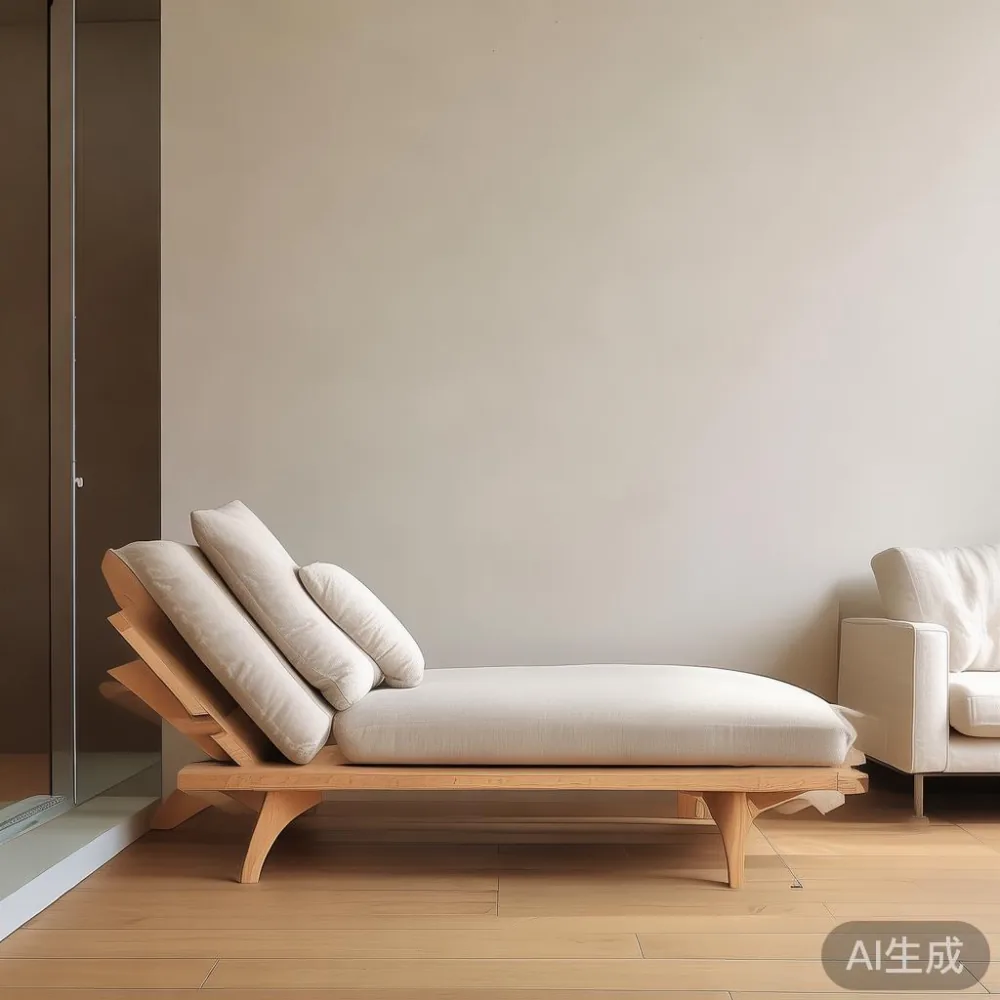
The puzzle is a common one across Tampines, Bedok, and the newer Punggol BTOs. Warm minimalism leans on negative space, tactile materials, and a controlled palette — usually a single warm white, a clay or terracotta accent, one muted wood tone, and one soft textile. A chaise lounge, because of its elongated L-shape and footrest, eats roughly 1.6 m to 1.9 m of linear wall and 0.85 m of depth. Get the scale wrong, and the room collapses. Get the tone wrong, and the calm you worked to build disappears.
This guide walks through seven decisions that matter for a Singapore home: door and lift access, scale, wood tone, upholstery, metal and stone accents, room-by-room coordination, and the practical care of solid wood furniture. Along the way, I will use the term French light luxury in a working way, since it gives a clean language for the soft-lined, restrained pieces that fit warm minimal homes — and I will contrast it with other styles so the differences are clear. I will also refer to a Foshan solid wood furniture maker, MIDHILL, when their solution fits, because their 10-year structural warranty, lifetime refinishing service, and free shipping over US$350 (roughly SGD 470) make ordering from a Chinese factory a practical option for Singapore buyers.
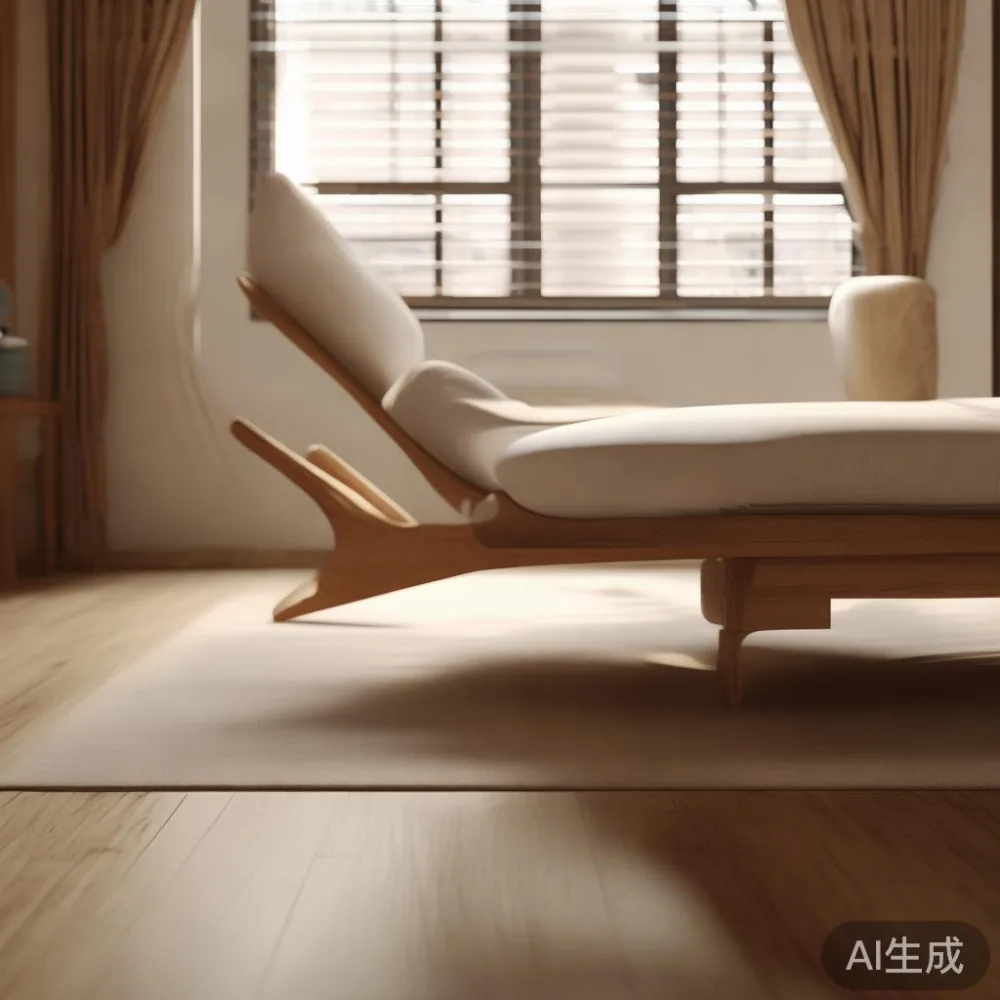
Does a chaise lounge fit through a HDB lift and corridor?
Before colour, before wood tone, check the lift. Most HDB passenger lifts in blocks built after 2010 measure roughly 1.2 m wide by 1.5 m deep, with doors around 0.9 m wide. Older blocks and some in Bedok drop to 1.0 m wide by 1.3 m deep. A disassembled chaise lounge in a flat-pack form usually fits, but an assembled one with a 1.85 m chaise on the long side will not make the corner. Three lift-to-corridor turning checks actually matter:
- Lift door width: aim for at least 0.85 m clear opening. Boxes over 0.9 m wide may need to go in vertically, which is where a sofa with detachable legs and a separate chaise module becomes a practical answer.
- Corridor turning radius: common HDB corridors are 1.5 m wide. A 0.9 m by 2.0 m module clears a 90-degree turn at that width.
- Unit door opening: a typical solid-core HDB front door is 0.9 m wide by 2.1 m tall. Anything thicker than 1.05 m on the diagonal will need to be tilted, which is fine for hardwood frames but awkward for marble table tops over 15 mm thick.
Last month, a client in Tampines GreenRidges ordered a 2-seat modular sofa with a right-facing chaise. The chaise module was 1.65 m long, packaged in two boxes of 0.78 m and 0.62 m, both around 38 kg. Lift access was fine; the only issue was a 1.2 m corridor pinch near the lift lobby, which the delivery team handled by folding the corridor trolley sideways. If your block has tight corners — Punggol's Northshore blocks and some of the newer PLH flats are tight — ask the supplier for individual module weights and packed dimensions before paying a SGD 80 to SGD 150 delivery surcharge for failed attempts.
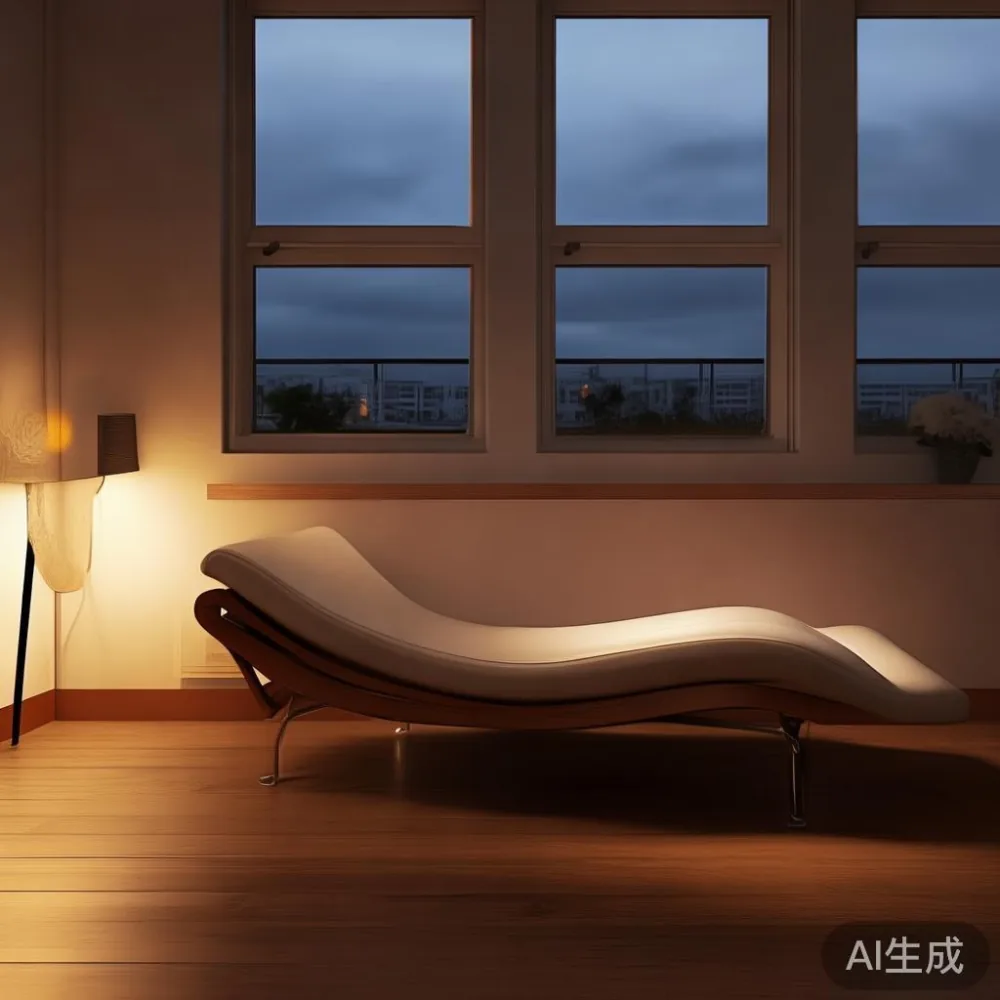
What does warm minimal actually demand from a chaise lounge?
Warm minimal is not a Scandinavian cool grey, and not a Bali-resort teak overload. The look sits in the middle: one warm neutral wall, one oak or walnut timber, one soft textile, one stone accent. A chaise lounge in this interior needs to behave like a piece of furniture, not a statement sofa. Three rules keep it honest:
- One wood per view zone. If the chaise lounge frame is light oak, the dining table and bed frame should be the same light oak, or a darker walnut deliberately chosen as a counterpoint. Two mid-tones fighting each other is the most common mistake in Punggol walk-up interiors.
- One metal, used sparingly. Brushed brass pairs with warm minimal cleanly. Matte black pairs with cool greys. If your chaise has brushed brass legs, the marble table nearby should not have chrome or rose gold — pick one and stay with it.
- One textile temperature. Linen-look bouclé in 380 to 420 g/m² reads warm. Tight-weave cotton reads cool. Velvet reads formal. For a HDB living room that opens into a kitchen, I lean toward a bouclé or linen-blend with a removable, washable cover — Singapore humidity at 80% average will punish anything that cannot be unzipped and aired.
Maya eventually chose a 2.0 m by 0.95 m chaise with a left-hand facing footrest, oak frame, brushed brass sabots, and a beige bouclé cover. The frame was solid white oak from MIDHILL's L-series, which fits a French light luxury sensibility — soft, lived-in, gently ornamented by the wood grain itself rather than by carved detail. The visual weight landed where she needed it: anchored along the 4.2 m wall, with 60 cm clearance on either side for circulation.
How should a chaise lounge be coordinated with a dining table and bed frame?
Coordination is where warm minimal homes either feel designed or feel thrown together. A 6-seater dining table — usually 1.8 m to 2.2 m long and 0.9 m wide — needs to coexist with the chaise in the same open-plan zone without competing. Three patterns work in Singapore HDB layouts:
- L-run layout: chaise against the long wall, dining table perpendicular against the short wall, with 0.9 m circulation between them. This is the cleanest layout for a 4-room HDB living-dining zone.
- Float-and-frame layout: dining table floats in the centre, chaise against the window. This needs at least 3.6 m of length to work and is more common in 5-room and executive flats in Tampines.
- Wall-hug layout: chaise pushed to within 5 cm of the back wall, dining table in a bay or near the kitchen entrance. Best for compact 3-room flats in Bedok, where every centimetre matters.
For wood tone, the cleanest rule is: same wood for the chaise lounge frame, dining table, bed frame, and wardrobe handles; alternate wood tones only on the nightstand and the marble table, where a darker walnut can sit as a small punctuation. The chaise lounge and the bed frame should also share height language — a 78 cm to 82 cm back-rest height on a chaise feels continuous with a 120 cm to 130 cm tall bed headboard. If the headboard is upholstered and the chaise is upholstered, both should use a fabric within 20 g/m² of each other in weight, or the eye will read them as two different rooms.
When buyers ask me about choosing a dining table as a focal point in a warm minimal flat, the answer usually points toward a light-luxury approach rather than a minimalist one — and that's where a phrase like light luxury for dining room becomes useful shorthand. The dining table, in that register, is solid white oak or walnut, with a leg profile that is gently tapered rather than sharply square, and paired with a soft beige or moss-coloured marble table at the side. A standard 1.8 m oval or rectangular top seats six comfortably in a HDB dining zone of roughly 2.4 m by 2.1 m.
French sofa vs French provincial sofa — which suits a warm minimal flat?
This is the comparison that confuses most first-time buyers scrolling through local catalogues. The phrase French sofa vs French provincial sofa gets used loosely, sometimes interchangeably. The honest difference is this: a French sofa in the light-luxury register is restrained, low-backed, gently curved, and finished in light oak or walnut with soft linen or bouclé upholstery in cream, beige, or muted clay. A French provincial sofa, by contrast, is heavier, deeper, more carved, often with cabriole or fluted legs, deeper skirts, and a more formal rolled arm.
For a warm minimal HDB, the French sofa wins almost every time. A French provincial piece reads formal and will dominate a small space. A French sofa reads calm, takes up less visual weight, and pairs well with a marble table or a slim brass floor lamp. The chaise lounge is in effect a French sofa with an extended footrest module — same proportions, same restrained detail, same restraint on carving. If you are torn between a French sofa and a more contemporary option, the frame weight test helps: a solid wood French sofa at 70 to 90 kg for a 2-seat + chaise module feels grounded without feeling heavy; a hollow-frame contemporary sofa at 35 to 45 kg feels disposable by comparison.
Buyers also commonly weigh French sofa vs Modern sofa in the same sitting. The modern sofa tends to be lower, sleeker, often with metal legs in matte black or chrome and tightly woven textile covers. For warm minimal homes with honey oak and brushed brass, the French sofa aligns better — modern pieces can read slightly cold. If the heart of the home is a cool palette, then a modern sofa is the correct fit. For most Singapore HDBs with cream walls and warm timber, the French register wins by feel, not by rule.
How can a chaise lounge be styled with a small marble table without breaking the room?
Marble is the obvious accent to pair with a French-style solid wood frame, because wood and stone carry each other beautifully. The trick is restraint. A marble table in a warm minimal HDB should be: under 0.55 m in diameter if round, under 1.2 m by 0.6 m if rectangular, and on a slim brass or matte black base. Two slabs to look at for this register:
- Travertine: warm beige, soft grain, very forgiving of water rings and minor scratches. A 400 mm diameter travertine side table at SGD 320 to SGD 520 lands cleanly beside a chaise.
- Italian grey or Carrara: cool grey, sharper veining, slightly more formal. Pairs with brushed brass rather than chrome. SGD 480 to SGD 850 for a 500 mm top on a brass base.
Height matters. The marble table should sit within 5 cm of the chaise arm height — usually 58 to 62 cm. Anything higher reads as a workstation. Anything lower reads as a stool. If the chaise lounge has a left-hand facing footrest, the marble table belongs on the right side at the seating edge, not the footrest end, so drinks stay within arm's reach without forcing the user to twist.
How to style Japanese sofa in apartment spaces without losing the warm minimal language?
This is a question Maya asked me on a Saturday afternoon, after she had decided on the chaise lounge and dining table and was staring at her empty master bedroom. She wanted a Japanese sofa — really a low, platform-style seating — in the bedroom as a reading nook. Her worry was that it would drift the room into a completely different style from the living room. Three rules keep a Japanese sofa honest within warm minimal:
- Stay within 18 cm of the floor. A Japanese sofa at 28 to 32 cm seat height feels correct. Anything above 38 cm starts reading as a European piece.
- Match the wood tone, not the construction style. Even though the Japanese sofa is platform-low, the timber should be the same oak or walnut as the bed frame and the chaise frame.
- Use one soft textile. A wool or linen-blend cover in the same colour as the chaise cover, plus a single bolster pillow, keeps the language consistent.
The phrase how to style Japanese sofa in apartment settings is in effect a question about visual continuity across rooms. A HDB flat reads as one continuous home because the doors are usually left open during the day. The bedroom visible from the living room should not feel like a hotel lobby or a teahouse. Keep one or two Japanese pieces — a low sofa, a square floor cushion, a shoji-inspired screen — and surround them with the same oak or walnut tone you used at the chaise.
What about the bedroom: bed frame, nightstand, and the light-luxury register?
The bedroom in a warm minimal HDB is usually 3.0 m by 2.7 m for a master in a 4-room flat, or 3.6 m by 3.0 m for a 5-room. A solid wood bed frame at 1.5 m or 1.8 m wide, with a 120 cm to 130 cm tall headboard, and a seat height of 38 to 45 cm, fits comfortably with 50 cm of side clearance. The nightstand at 50 to 60 cm wide, 45 to 55 cm tall, and 40 to 45 cm deep pairs without crowding.
The phrase light luxury for bedroom helps frame this register. A light-luxury bedroom is not a five-star hotel suite — it is a softly ornamented private room with restrained detail: a gently shaped headboard, brushed brass handles on the wardrobe, a marble top on the nightstand, and one textured textile. The wardrobe is usually 1.8 m to 2.4 m wide, 2.2 m tall, with sliding doors to save the corridor floor space — sliding doors reclaim 0.6 m of swing clearance compared to hinged doors, which matters in compact Singapore bedrooms.
Maya's final plan: solid oak bed frame at 1.8 m wide, two nightstands in the same oak with travertine tops, a 2.0 m sliding-door wardrobe in oak with brushed brass pulls, and the chaise lounge already living in the living room. Total came to roughly SGD 4,200, plus SGD 380 in delivery from a Foshan-based maker through consolidator shipping from Shenzhen to Singapore, taking roughly 18 to 25 working days door-to-door, including the 9% GST on the declared value above SGD 400. The lifetime refinishing service meant the oak could be re-oiled in year five or year ten if humidity dulled the surface — a meaningful benefit in Singapore, where ambient moisture does age timber faster than in temperate markets.
What about after-sales, warranty, and returns for a Singapore buyer?
Buying solid wood furniture from a Chinese factory is practical now in a way it was not ten years ago. Several structural pieces need to be in writing before payment:
- Structural warranty: 10 years on frame joints, slats, and drawer runners is the new standard. MIDHILL, the Foshan maker referenced earlier in this article, publishes a 10-year structural warranty and offers lifetime refinishing on oak and walnut frames.
- Returns window: 14 days for unused pieces, with the buyer paying return shipping for change-of-mind. Defect returns are covered by the supplier.
- Shipping threshold: orders above US$350 (about SGD 470) ship free to Singapore; below that, expect a SGD 80 to SGD 150 freight surcharge.
- Customs and GST: 9% GST applies to the CIF value above the SGD 400 personal relief threshold; a SGD 2,500 order typically carries SGD 180 to SGD 220 in GST and clearance fees.
Practical care: oil the oak frames every 12 to 18 months with a hard-wax oil, avoid placing solid wood furniture within 1.2 m of an unventilated window, and rotate the chaise cushions every two weeks so the bouclé wears evenly. If a marble table gets a ring, a 600-grit hand polish and a light resin fill sorts it; solid wood warping, which is rare in kiln-dried oak, is covered under the structural warranty.
Maya's flat, two months on, looks like a single calm composition. The chaise lounge is the anchor, the dining table holds a small tray and two books, the bed frame carries a single linen throw, and the nightstand with the travertine top holds a ceramic vessel her mother made. The room reads warm because every piece is in conversation with every other piece — same wood tone, same metal, same restrained ornament. That is the whole job of a warm minimal interior: not less furniture, but fewer disagreements between the pieces.