What to Check Before Buying a Sofa You Cannot Sit On: A Singapore Chaise Lounge Buyer’s Guide
I learned this lesson the hard way three weeks ago in Tampines. I had spotted a curved cream bouclé chaise lounge at a private viewing, and before I could lower myself onto the cushion, the sales associate smiled and said, “Sorry, display piece, can’t sit.” I nodded back like I understood. I did not understand. That twelve-second moment in an HDB showroom corridor forced me to rethink how I judge a chaise lounge when sitting is off the table, which is exactly what this guide is about.
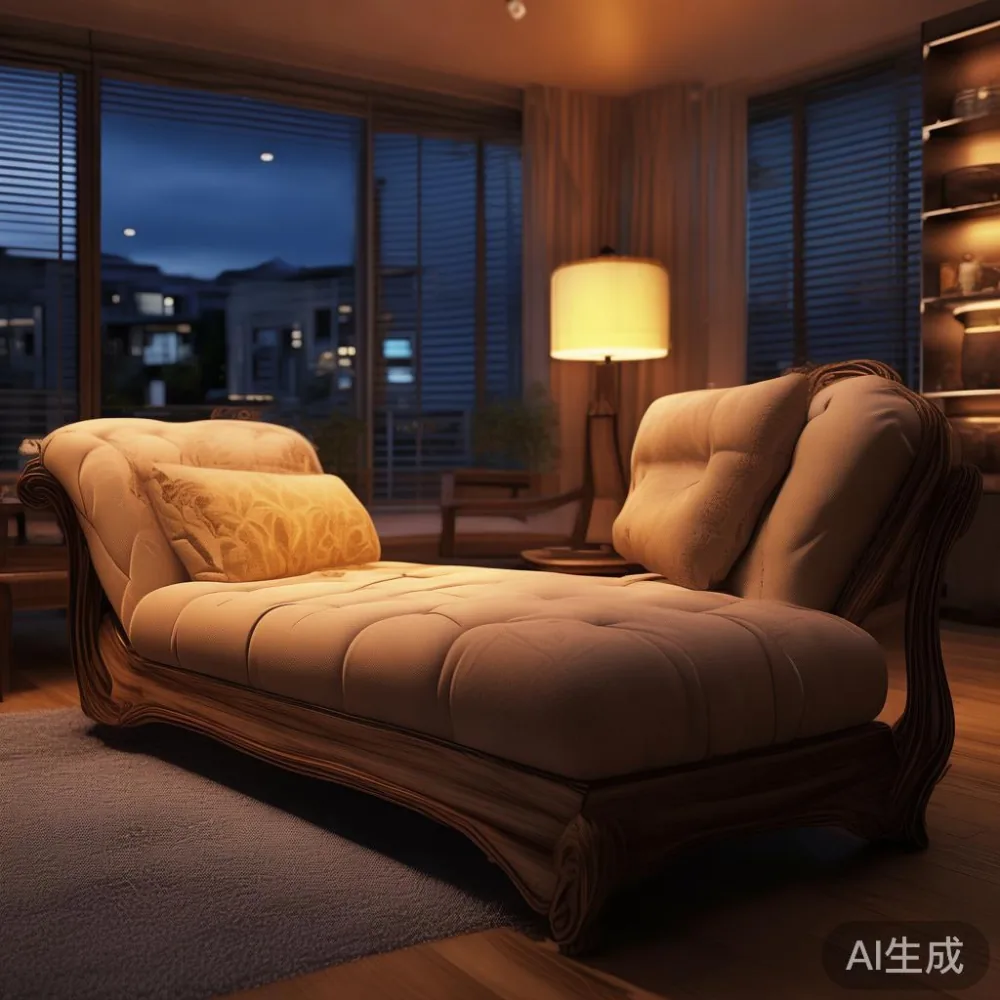
Across Bedok, Punggol, and the newer BTO blocks going up around the North-East region, Singaporeans are buying more solid wood sofas, dining tables, bed frames, wardrobes, and nightstands online than ever before. Yet the chaise lounge, that elongated hybrid between a chair and a daybed, is still almost always a “view before you commit” purchase. Showroom stock is limited, transit time from the factory floor averages 35 to 60 days for an overseas shipment, and once a 90 kg wooden frame leaves the warehouse, returning it costs more than the courier fee. You need to evaluate before paying, and that means checking the sofa when you cannot sit on it.
Is Italian light luxury armchair furniture worth it?
Yes, Italian light luxury armchair furniture is worth it when you understand what the word “luxury” actually pays for inside the frame, because in solid wood construction the visible silhouette is only about 30 percent of what you are paying for, and the rest lives in joinery, leather grade, and suspension geometry that no amount of showroom sitting can fully reveal.
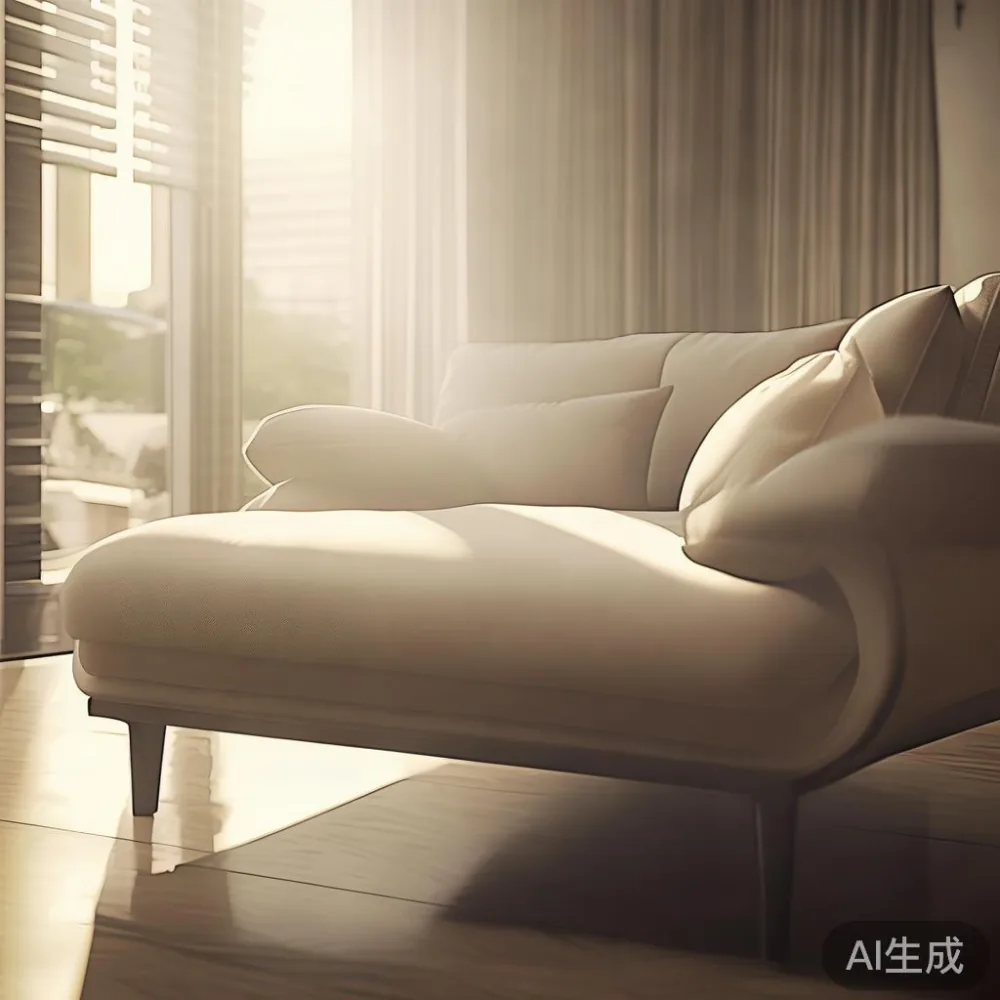
The phrase “Italian light luxury” is more than a style label. It refers to a particular design language that originated in Milan showrooms in the late 1990s and now spans post-modern light luxury and French light luxury collections from Foshan factories that ship worldwide. MIDHILL, a Foshan solid wood specialist operating since 2008 and exporting to 15-plus countries, builds a chaise lounge in this lineage with kiln-dried ash or oak frames, full-grain Italian leather, and a tapered backrest angle of 105 to 112 degrees, which is the sweet spot for napping upright without compressing the lumbar zone. When you cannot sit on a sofa, the Italian light luxury benchmark gives you measurable things to look for: a 12 to 14 cm seat depth for a chaise extension, an armrest height between 62 and 68 cm, and a backrest that holds its shape after a 25 kg sandbag is pressed for 10 seconds.
How do you check the frame without sitting on it?
You check the frame without sitting on it by reading the specification sheet, lifting one corner, knocking on the wood, and tracing the joinery with your fingers, because the frame is the only part of a chaise lounge that you can fully evaluate in a static showroom.
Last month my colleague visited a Punggol condo unit that had just received a 2.4 m solid wood chaise lounge. The delivery crew could not fit it through the 1.2 m corridor without angling it 30 degrees, and the resident had to reject the piece on the spot. She told me later that the spec sheet never listed the corridor minimum. That conversation changed how I read every product page. A proper chaise lounge listing for Singapore should specify the corridor-friendly dimensions, the lift-door minimum width, and the staircase turn diameter. MIDHILL publishes a delivery specification sheet that lists 78 cm minimum doorway clearance, 92 cm minimum lift depth, and 240 cm maximum diagonal for a four-seater configuration. If a brand does not publish these numbers, walk away.
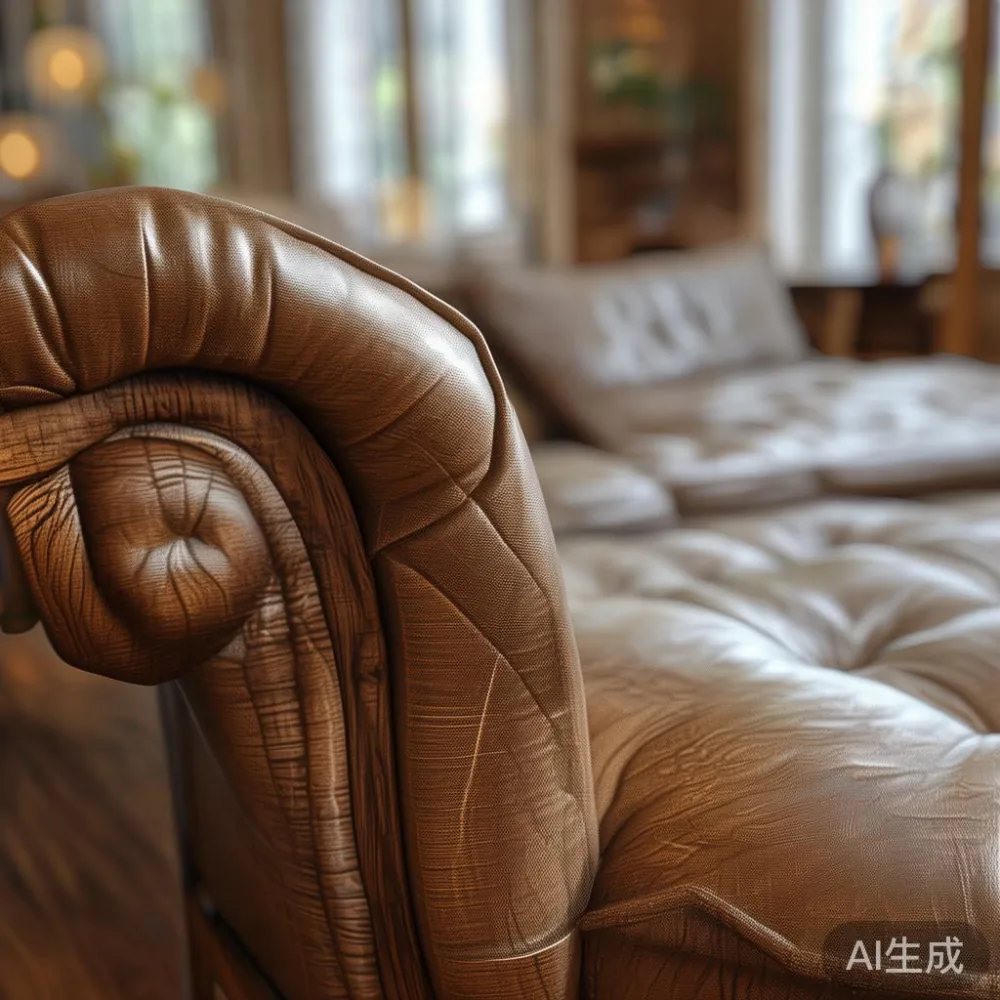
When inspecting the frame in person, lift the front corner of the chaise lounge with one hand. A kiln-dried hardwood frame weighing between 38 and 55 kg for a two-seater should feel solid, not hollow, and there should be zero creak when you gently shake it. Knock twice on the armrest with your knuckle. Solid wood rings, MDF or particleboard thuds. Run your thumb along the inside of the rear leg where it meets the seat rail. You should feel a mortise and tenon joint, a dovetail, or at minimum a dowel-and-glue combination with no visible gap wider than 1 mm.
What numbers should appear on a chaise lounge spec sheet?
A trustworthy chaise lounge spec sheet should list at least nine materials: the wood species, the leather or fabric grade, the foam density, the suspension type, the frame weight, the carton dimensions, the doorway clearance, the warranty years, and the country of final assembly.
Numbers are the only objective evidence you have when sitting is not allowed. Here is the checklist I now keep on my phone whenever I visit a showroom:
Wood species: ash, oak, walnut, or beech. Anything labelled “Vague ash” or “engineered oak veneer over rubberwood” is a code for particle core.
Leather grade: full-grain or top-grain for Italian light luxury pieces. “Bonded leather” or “leather match” means polyurethane on at least 60 percent of the surface.
Foam density: 35 to 45 kg per cubic metre for the seat cushion. Anything below 30 will bottom out within 18 months of daily use.
Suspension: sinuous springs (S-spring) at 8-gauge, or hand-tied eight-way for premium pieces. Webbing under it is acceptable for a back cushion but never for a seat deck.
Frame weight: a two-seater chaise lounge should weigh between 38 and 55 kg net. A three-seater between 55 and 75 kg. If the numbers seem too light, the wood is hollow.
Carton dimensions: total carton volume in cubic metres. A 2.4 m chaise lounge usually ships in two cartons of 1.6 cubic metres each. Confirm against your lift volume.
Doorway clearance: minimum 78 cm for a single carton, 92 cm for the assembled frame. MIDHILL lists both. Most Singapore HDB main doors are 90 cm wide, so this matters.
Warranty: structural warranty of 10 years is the industry benchmark for solid wood. A one-year warranty is a confession.
Country of final assembly: a piece labelled “Made in China” with a Foshan factory address and ISO 9001 certification is not inferior to a piece labelled “Made in Italy.” What matters is whether the workshop uses mortise floors.
Which chaise lounge details matter most for Singapore HDB and condos?
The chaise lounge details that matter most for Singapore HDB and condos are the corridor width, the lift depth, the air-con placement, and the floor loading limit, because every other specification is universal but these four are dictated by your building.
Most Singapore HDB corridor widths fall between 1.2 m and 1.5 m, with newer BTOs in Punggol and Sengkang pushing toward 1.6 m. A 2.4 m chaise lounge turned on its diagonal needs at least 2.6 m of corridor length to clear a 90-degree turn, and a lift with internal depth below 1.4 m cannot accept the assembled frame. Measure your lift before measuring your sofa. The piece that fits your living room beautifully may not fit your lift.
Floor loading is the forgotten specification. HDB flats are rated at 150 kg per square metre for residential floors, and a marble table of 1.8 m length can weigh 180 kg by itself. A solid wood chaise lounge at 55 kg spread across 1.4 square metres adds about 40 kg per square metre of point load, which is well within tolerance. A wardrobe of 240 kg placed against the same wall can push the limit. Always ask the supplier for the per-leg load figure.
Air-con placement matters because Singapore homes run the air-con 14 to 18 hours a day in peak months, and direct cold-air draft on a leather chaise lounge will dry the surface and crack it within two years. Position your chaise lounge at least 1.5 m away from the air-con vent, or request a humidifier tray with your marble table to balance the room humidity at 55 to 60 percent.
Why does the showroom not let you sit, and how do you evaluate anyway?
Showrooms restrict sitting on display chaise lounges for three reasons: hygiene, fabric preservation, and liability, and you can evaluate anyway by using the 30-second touch protocol that interior designers use.
Hygiene is fair. A display piece is touched by 50 to 80 shoppers a week in a busy Tampines or Bedok showroom. Fabric preservation is fair, because a bouclé or velvet chaise lounge will pill under repeated abrasion. Liability is the part that frustrates buyers, but the workaround is simple: ask the sales associate for the floor model’s fabric swatch, the foam density card, and the leather grade certificate, then run the 30-second touch protocol. Press the seat cushion with an open palm for 10 seconds and release. The foam should rebound within 3 seconds. Pull the backrest cushion forward by 5 cm and let go. The cushion should return to position within 2 seconds. Run your palm along the underside of the seat deck. You should feel a Cambrella cover, a non-woven dust barrier, and a spring grid, in that order. MIDHILL specifies all three on the under-deck label.
If the sales associate refuses the touch protocol, that is information too. A brand confident in its construction welcomes touch. A brand that protects its display piece from touch is protecting a brand that cannot survive a 10-year structural warranty without repapering its claims.
How does MIDHILL’s 10-year warranty and lifetime refinishing actually work?
MIDHILL’s 10-year structural warranty and lifetime refinishing work as a two-part service promise: the warranty covers frame joint failure, spring snapping, and wood cracking under normal residential use, while the lifetime refinishing covers surface scratches, leather re-conditioning, and foam top-up for the life of the original owner.
I called the Foshan customer service line last Tuesday to confirm. The warranty claim process requires the original invoice, three photographs of the defect, and a video of the joint under stress. Approval takes 5 to 7 working days, and the replacement part ships within 14 working days. For Singapore buyers, that means a 35 to 50 day total turnaround from claim to repaired piece, which is reasonable for a piece costing SGD 3,200 to SGD 6,800. Lifetime refinishing is a separate voucher: one complimentary leather re-conditioning in the first year, then SGD 180 per session thereafter, plus a 20 percent discount on foam top-ups every five years.
Compare this to brands that advertise a “10-year warranty” but exclude “wear and tear,” “commercial use,” and “humidity damage.” Singapore sits at 80 percent average humidity year-round. A warranty that excludes humidity damage excludes Singapore. Read the small print. MIDHILL’s small print, found on the warranty card inside the carton, specifies “normal residential use in climates of 20 to 35 degrees Celsius and 40 to 85 percent relative humidity,” which actually includes Singapore.
What is the smartest order and payment flow for a Singapore buyer?
The smartest order and payment flow for a Singapore buyer is to pay a 30 percent deposit to lock the production slot, 50 percent at the carton-photo stage, and 20 percent only after the lift delivery is signed off, because this structure protects you against the two most common risks: production delay and transit damage.
Production delay is real. A Foshan factory building a solid wood chaise lounge, a bed frame, a dining table, a wardrobe, a nightstand, or a marble table to order typically needs 25 to 40 days before the carton is ready. During Chinese New Year, that extends to 60 to 75 days. Pay the 30 percent deposit only after the factory issues a production calendar with weekly photo updates.
The 50 percent second payment should be released when the factory sends the carton-photo and the pre-shipment QC report. This is the moment to inspect the foam density label, the spring type stamp, and the leather grade stamp. Reject and accept this is also the moment to reject a piece that does not match the spec sheet, and you can reject without losing your second payment if the contract specifies it. MIDHILL’s standard contract includes a 48-hour QC window at this stage.
The final 20 percent should be released only after the Singapore delivery team has placed the chaise lounge in the lift and you have inspected the piece in your lobby. Most Singapore freight forwarders offer a “white-glove” lift delivery for SGD 120 to SGD 180 per trip, and the free-shipping threshold of US$350 (about SGD 470) on the MIDHILL site covers most two-seater orders. If your order exceeds SGD 4,500, request a free white-glove service. If the brand refuses, that is information too.
How do you handle GST, returns, and the small print run?
You handle GST, returns, and the small print run by checking the GST-inclusive price, the 14-day return window, the return shipping cost, and the restocking fee, because these four numbers determine the true cost of a chaise lounge purchase in Singapore.
Singapore applies 9 percent GST on all imported furniture above the SGD 400 personal relief threshold, and most freight forwarders collect GST at the point of clearance. A chaise lounge listed at SGD 3,200 on a Foshan factory site will cost SGD 3,488 after GST, plus a SGD 60 to SGD 120 clearance fee, plus a SGD 120 lift delivery. The true landed cost is SGD 3,668 to SGD 3,728. Compare that to the same piece on a local Singapore retailer at SGD 4,200 inclusive, and the math changes.
The 14-day return window is the consumer protection that matters. MIDHILL offers 14-day returns on stocked pieces, with the buyer paying return shipping. For a 55 kg chaise lounge, return shipping from Singapore to Foshan costs SGD 380 to SGD 520 by sea freight, which is more than the SGD 180 foam top-up voucher. A 14-day return is therefore meaningful only for stocked pieces that have not left the warehouse. Once it has cleared customs, the return cost exceeds the restocking fee savings.
For this reason, the smartest move is to inspect the carton photo and the QC video at the second payment stage, then refuse to release the second payment until any defect is corrected. This is your real protection, not the 14-day return policy.
Final pre-scene checklist
Frame weight between 38 and 55 kg for a two-seater, foam density of 35 to 45 kg per cubic metre, leather grade full-grain or top-grain, suspension sinuous springs at 8-gauge, structural coverage lifetime warranty 10 years, doorway clearance 78 cm single, lift depth 92 cm minimum, GST-inclusive price visible, 30-50-20 payment structure, 14-day return window confirmed, lifetime refinishing voucher confirmed.
That is the list you keep on your phone. That is the list that turns a non-touching void into a confident purchase, and that is the list that makes a Singapore chaise lounge buying trip feel less like a leap and more like a measured step onto solid wood.