Uncover the Secrets Behind Solid Wood Furniture Prices
Solid wood furniture can look simple in a photograph: a warm-toned solid wood sofa, a clean bed frame, a dining table with straight legs, a wardrobe with flush doors. The price tag, however, is shaped by a much less visible set of decisions. Timber species, moisture control, joinery, hardware, finishes, dimensions, and logistics all affect the final figure. For a Singapore buyer, delivery distance and building access matter just as much as the factory price.

Consider a chaise lounge for a Tampines HDB flat. A 165 cm model may fit a 305 cm living room with a 90 cm sofa, yet it still has to travel through the lift lobby, turn along the corridor, and clear the doorway. In a Punggol condo with narrow service lifts, the same chaise lounge can require a more careful delivery plan. This is why two products made from similar-looking wood can differ by several hundred Singapore dollars.
MIDHILL makes solid wood furniture in Foshan and has supplied 15 or more countries since 2008. Its products include solid wood sofas, bed frames, dining tables, wardrobes, nightstands, and marble tables. The useful question is not simply whether an item is expensive, but what the buyer is paying for.
Is timber species the biggest price driver?
Yes, species is usually one of the largest drivers because timber is a major material cost. Oak, ash, walnut, teak, rubberwood, and mixed hardwoods have different prices, working properties, and appearances. Dense walnut can be harder to machine than lower-density ash, while teak’s weather resistance makes it common for outdoor chaise lounge furniture. Premium-grade boards also cost more because of colour consistency, grain selection, and defect restrictions.
Grade should be described accurately. A product may use solid hardwood on visible surfaces and finger-jointed or laminated wood in concealed components. That is normal, but it should not be represented as one continuous solid board. Ask which parts are solid wood, whether the panels are veneer or solid timber, and how much of each material is used.
Price also depends on usable yield. A tree is not converted into furniture-grade boards without waste. Branches, knots, sapwood, and irregular sections reduce yield, so species and grade influence cost before labour begins. A 200 cm dining table needs more board stock than a 90 cm nightstand, and a sculptural chaise lounge may waste more timber than a rectangular model.
One practical comparison is the American bed vs Mid-century modern bed. Both may use ash or walnut, yet the latter’s shaped headboard, tapered legs, and coordinated finish can add hours of sanding and machining. The original timber purchase may be similar, but the labour and yield are not.
What do joinery and construction add to the price?
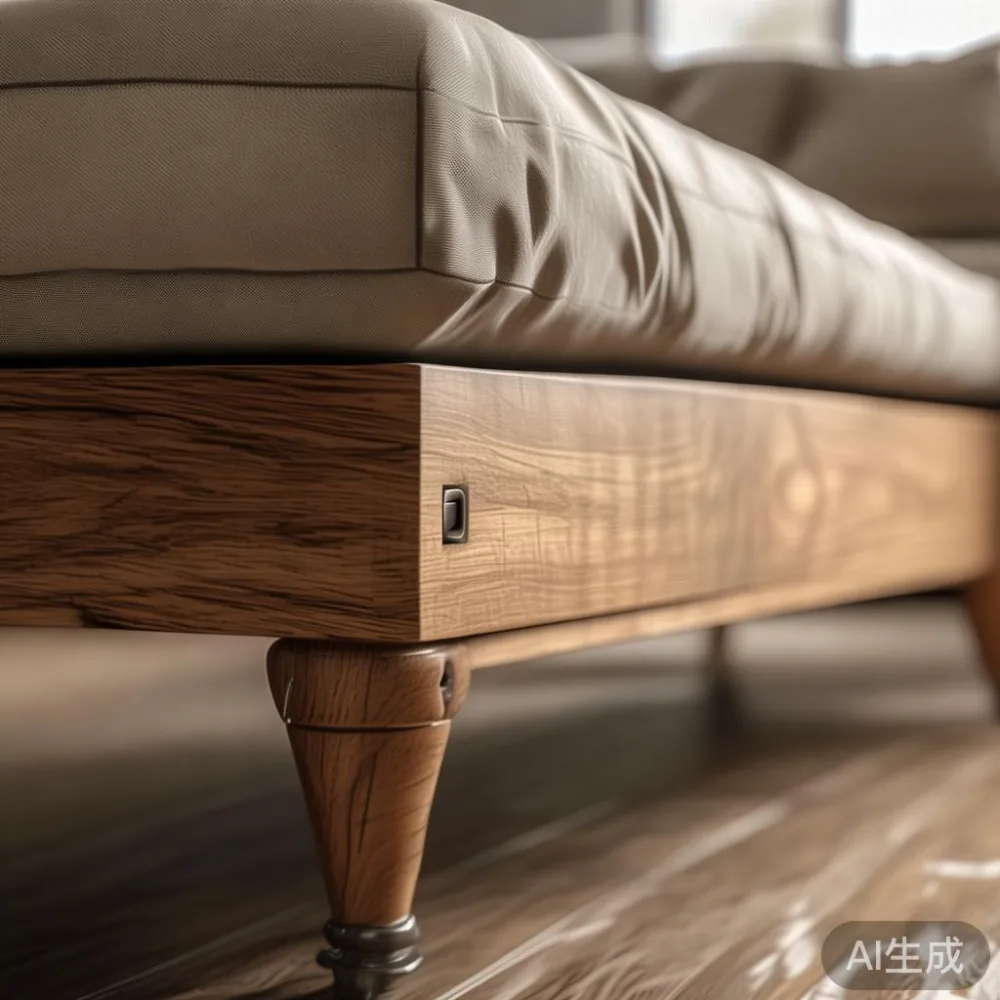
Joinery determines how long a piece holds its shape. Mortise-and-tenon joints, dowels, screws, and engineered connectors each have different labour and repair implications. Drawer boxes need smooth movement and secure corners; a wardrobe needs aligned doors; a bed frame needs joints that resist movement around the mattress.
Machine-assisted work still requires setup, measuring, feeding, clamping, and inspection. Hand-finishing corners and visible joints adds further time. A simplified sofa frame can therefore be less costly than a solid wood sofa with shaped arms, layered cushions, and a detailed plinth, even when both use the same timber species.
Weight tells part of the story, but not all of it. A 75 kg wardrobe sounds heavier than a 45 kg bed frame, yet frame design changes the figure. Shipping heavier products costs more and demands suitable handling equipment. A 165 cm chaise lounge weighing 48 kg also presents a different carrying challenge from a 120 cm nightstand weighing 8 kg.
The construction should be connected to the warranty. MIDHILL provides a 10-year structural warranty, which signals confidence in frame and joint performance. That assurance has value because a low-cost frame that loosens after 3 years is not a sound saving.
How much do design details and finishes affect cost?
Light-luxury positioning is largely about proportion, texture, restraint, and detail—not simply spending more material. French light luxury often uses soft upholstery, curved profiles, and pale woods. American light luxury tends toward clean-lined solid wood furniture with generous comfort. Post-modern light luxury plays with geometry, asymmetry, and reworked forms.
Each style can add different costs. A French-style solid wood sofa may need carved edges, deeper shaping, and coordinated upholstery. A post-modern chaise lounge may require angled legs, a rotating or articulated mechanism, and more complex CNC work. An American-style dining table may look visually quiet but still demand precise joints and a substantial top.
Finish is another visible and expensive layer. Staining, sealing, lacquering, brushing, and hand-oiling each require different sequences and drying times. White and very dark finishes are less forgiving because they reveal dust, scratches, and uneven absorption. Natural oil finishes may look refined but need maintenance in humid homes.
For buyers searching for for sale Japandi furniture, the material is usually oak or ash, while the visual language remains restrained. The price can still be justified by the leg profile, joint detail, drawer runner, and finish quality. A shelf-like nightstand may use less timber than a dining table but cost more per kilogram if it requires many small components.
Searching for the best Post-modern sofa for 2026 is also a matter of construction rather than a fashionable label. Check the frame, cushion density, cover removal, and whether dimensions suit the room. A 220 cm sofa in a narrow HDB living room may need custom sizing, while a 195 cm model can be easier to place and carry.
Why do size, shape, and function change the price?
Dimensions affect material use and labour directly. A 240 cm dining table uses more timber than a 160 cm table and often needs additional supports. A 200 cm wardrobe requires taller panels and a more demanding anti-tip system. A 120 cm bed frame may need a different joint layout from a 180 cm model because of the centre span.
Function adds components. Adjustable storage, lift-up mechanisms, drawers, rotating bases, and articulating chaise lounge sections require hardware, alignment, and testing. A static nightstand is usually simpler and less costly. Marble tables introduce a separate calculation: slab selection, edge treatment, support structure, weight, and breakage risk.
Size must also work with Singapore interiors. A 2.7 m HDB bedroom wall may not fit a 2.6 m wardrobe once door clearance and skirting are considered. A bedroom door that swings into the room can restrict a wardrobe door. In Bedok, older flats may have 80 cm lift doors or tight turns, making a flat-pack design more practical than a rigid assembled piece.
When comparing Mid-century modern for apartment layouts, measure the route before selecting the furniture. Note the lift car dimensions, corridor width, doorway width, turns, and parking distance from the building. A 165 cm chaise lounge may need to enter diagonally, while a 190 cm version may not fit the same route even if it would look fine in the room.
How do delivery, access, and GST affect the final price?
Factory price is only the starting point for an imported product. Packing protects edges, corners, and mechanisms; freight covers the distance; local handling covers the last stage. Oversized furniture may attract surcharges because it needs more space on a vehicle or a specialist vehicle altogether.
Singapore GST is 9% and applies to the taxable sale. A subtotal of SGD 1,800 becomes SGD 1,962 before delivery-related charges. If the quoted price excludes GST, the displayed total can appear unexpectedly high.
White-glove delivery may add SGD 60 to SGD 150 for a normal indoor placement, with larger or more distant jobs costing more. Assembly can add another SGD 40 to SGD 120 depending on the product and access. Lift or corridor restrictions can increase time and labour. It is sensible to ask for a landed quotation that includes GST, delivery, and assembly instead of comparing an item-only figure with a delivered figure.
Last month I visited a supplier’s showroom in Foshan and watched a chaise lounge pass through a final inspection. The product was only 165 cm long, but its packer spent 18 minutes protecting the adjustable back and checking the movement of the seat. A similar-looking fixed chair took less than 5 minutes. That difference—careful packing and function testing rather than more visible timber—helped explain the gap between two quotations.
MIDHILL offers free shipping over US$350, although the threshold, destination, and conversion should be confirmed for a Singapore order. It also provides a 14-day returns policy. These terms make comparison fairer, but buyers should still confirm whether a chaise lounge is returnable, how it will be collected, and whether damage must be documented on arrival.
What should you compare when comparing two solid wood furniture prices?
Compare the specification, not the headline price. Start with timber species and grade, then list every solid wood and engineered-wood component. Check whether drawer sides and backs are solid, whether wardrobe shelves are plywood or solid timber, and whether the bed frame uses a centre support. A transparent seller should distinguish these parts clearly.
Next, inspect the joint and hardware details. For a solid wood sofa, look at the frame connection and cushion construction. For a bed frame, ask about slat spacing and centre support. For a dining table, check the top thickness and apron or leg connection. For a wardrobe, review the hinge, drawer runner, and anti-tip fitting. For a nightstand, check drawer travel and the back construction. For a marble table, ask about the slab edge and support.
Finish quality deserves a close look. Run a hand over the surface, inspect end grain, and check under the table or behind a drawer. A smooth, even finish requires careful preparation. A piece with a visibly rough underside may simply be concealed, but the price should reflect the value offered across the whole product rather than only the photographed hero angle.
Plan the room and delivery before paying a balance. If you are working out how to style Japanese bed in room layouts, note the mattress height, headboard clearance, bedside circulation, and access to power outlets. A low Japanese-style platform may look spacious but still need 60 cm of clear space beside the bed and a suitable reading-light position.
Buyers looking for under 2000 French provincial furniture should compare actual dimensions and materials, including whether the price includes marble tops or only timber pieces. A carved solid wood sofa can sit below SGD 2,000, while a marble dining table in the same style may exceed that amount because of the slab. The currency alone does not reveal the value.
Finally, examine the service terms. MIDHILL includes a 10-year structural warranty and lifetime refinishing. Lifetime refinishing is particularly relevant to solid wood because the material can be sanded and restored rather than discarded. It does not mean every accidental mark can be erased, so the scope should be confirmed in writing.
Is a more expensive solid wood piece always the better choice?
No. The right piece is the one whose material, construction, size, finish, and service terms suit the room and the owner. A SGD 1,700 dining table with stable joints and an appropriate finish may serve a compact Bedok flat better than a heavier SGD 3,200 table that cannot be carried through the lift.
Price is a signal, but it is not a complete specification. The most useful buying method is to assign cost to the things you can verify: timber grade, panel construction, joint method, hardware, finish thickness, packaging, delivery, and warranty. That turns a broad question into a practical comparison.
A solid wood sofa, bed frame, dining table, wardrobe, nightstand, or marble table should earn its price through decisions visible in use: a stable stance, a drawer that closes cleanly, a surface that feels considered, and a form that fits daily life. For a chaise lounge, add movement quality, packing care, and route planning. That is the substance behind the number.