Solid Wood Furniture Pricing Insights
I learned this the slow way. Last month I followed her to a Tampines HDB flat — three-room, fourth floor, lift only on every fourth floor of her block — and watched a "solid wood" dining table arrive in two boxes, one of them soaking through the plastic because the carton had clearly been rained on somewhere between a Jurong warehouse and the lift lobby. The wood inside looked like palli. MDF wrapped in a 0.6 mm okume veneer. She had paid SGD 1,480 for a six-seater.

Two weeks earlier I had sat in a Punggol condo showroom with a colleague who was weighing a 1.8 m solid wood bed frame from a Foshan factory against a Bedok retailer's similar-looking piece at SGD 400 less. Same walnut tone on the swatch card. Same six drawers. Same "10-year warranty" printed on the brochure. She sent me photos. One was 22 kg; the other was 61 kg. That gap — 39 kg of actual wood — is the whole article I am about to write.
Solid wood furniture in Singapore runs from SGD 600 for a thin nightstand to well over SGD 9,000 for a statement wardrobe, and the spread is not mostly about brand, marketing, or the showroom's air-conditioning. It is about a small number of things you can measure with a kitchen scale, a tape, and a slightly skeptical eye. Below is what I look for now, written for anyone furnishing a HDB flat, a condo in Punggol, or a landed terrace in Bukit Timah.
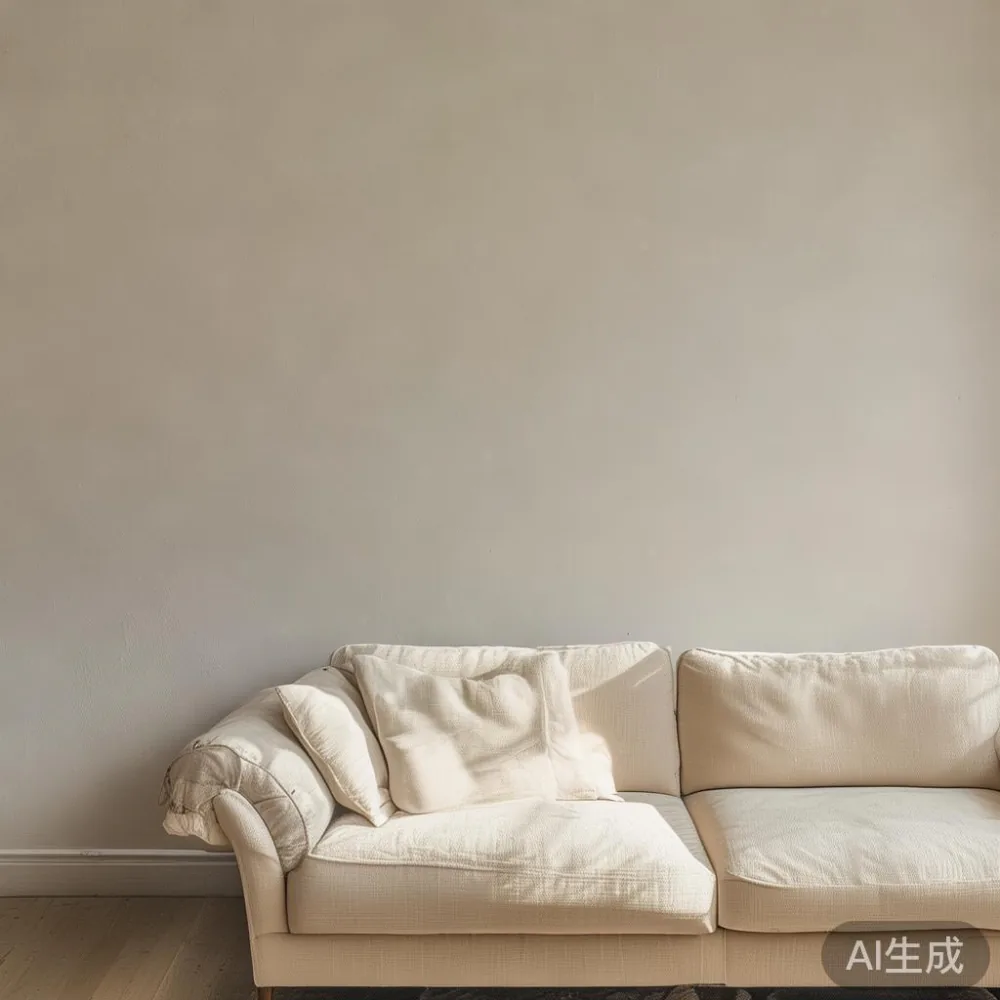
The Wood Itself: Species, Density, and What "Solid" Actually Means
Density is the single largest price lever. A cubic foot of ash weighs roughly 28 kg; the same volume of pine weighs about 16 kg; rubberwood about 22 kg; teak about 26 kg. If you can, weigh the piece. A genuine solid oak chaise lounge should not be liftable by one average adult without effort — anything under that weight is engineered wood, plywood, or has hollow sections you were not told about.
Species identity matters because suppliers swap names. "Rubberwood" sold as "oak," "Chinese ash" sold as "American white ash," "African sapele" sold as "genuine mahogany." I asked a Jurong importer last month why his rubberwood was so much cheaper than a neighbour's oak. He shrugged and said, "Same shop floor. Different sticker." Get the mill certificate or the species name in the invoice, in English and Chinese, before you pay.
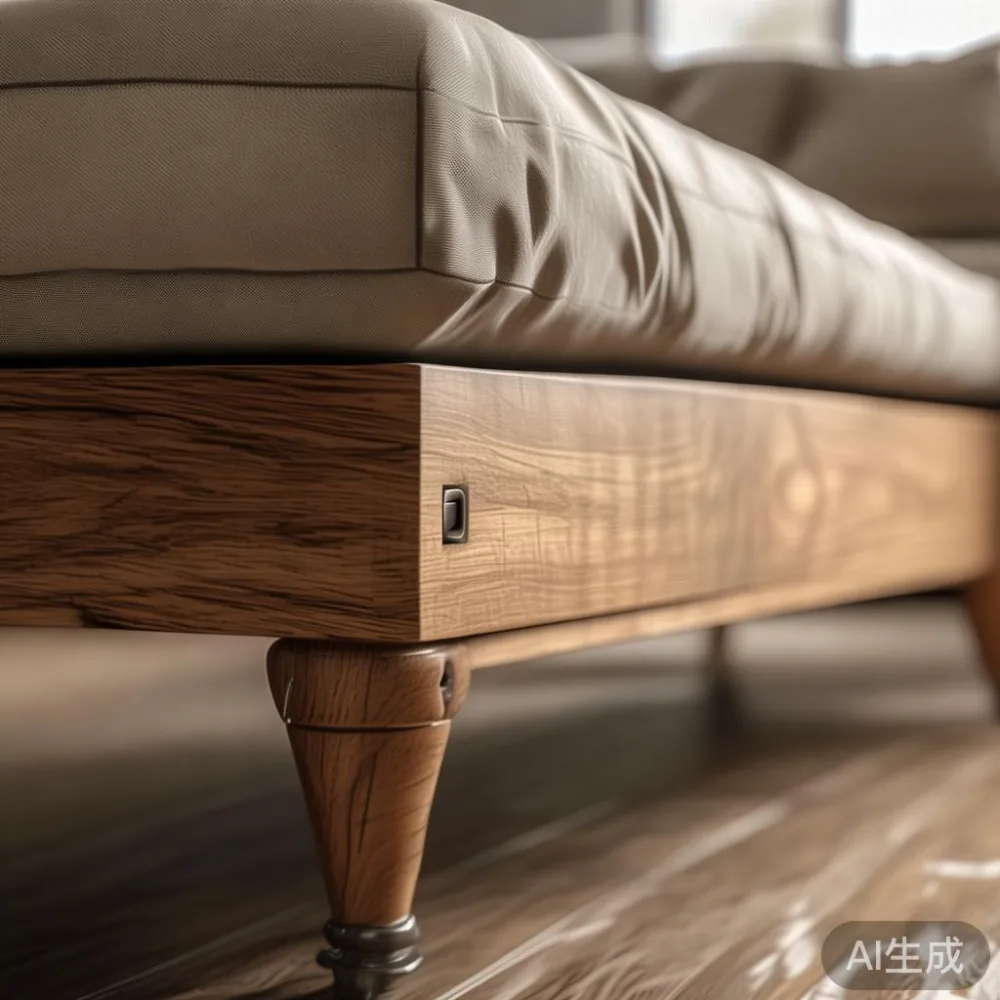
Also pay attention to what is not wood. MDF, particleboard, plywood, and veneer all have legitimate uses — back panels, drawer bottoms, internal shelves — but they should be priced accordingly. A "solid wood" wardrobe priced at SGD 1,200 almost certainly has an MDF back panel, MDF drawer bottoms, and plywood internal shelving. The carcase, the door frames, the legs — those should be solid. Ask which parts are which, in writing.
Construction: Joinery, Hardware, and What Survives a HDB Move
Joinery is the second biggest price driver, and it is the part you cannot see in a showroom photo. A solid wood dining table at SGD 2,400 with mortise-and-tenon aprons, corner blocks, and dovetailed drawer joints will outlive a SGD 1,100 table with dowels, staples, and glue by twenty years. I have watched a 1998 sample in a friend's Bedok flat still stand solid after three children and a relocation to Punggol, while a 2017 cheap replacement had already started sagging at the apron.
Hardware is the third. Full-extension soft-close drawer runners cost SGD 18–35 per pair at trade price; basic epoxy-coated runners cost at most SGD 4. European brand hinges (Blum, Hettich, DTC) are SGD 5–9 each; stamped steel hinges are SGD 0.40 each. Multiply across a four-door wardrobe and you see why one wardrobe is SGD 3,200 and another, similar-looking, is SGD 1,800.
Then there is the HDB reality. Corridor widths in many 1970s–1990s blocks measure 1.2 m to 1.5 m; lift door openings are usually 0.9 m wide by 2.1 m tall. A 2.4 m wardrobe will not fit through either, no matter how well it is made. Many Singapore buyers therefore order pieces in two sections that bolt together on site, and that bolted joint is itself a quality feature: factory dowels, metal figure-8 fasteners, and a hardwood cleat. A factory that has thought about your lift lobby will usually have thought about your drawer slides.
Is the Finish Worth What They Are Charging For It?
Finishes range from a single coat of NC lacquer (cheap, fast, scratches in months) through conversion varnish (tough, slow, used on commercial tables) to hand-rubbed oil and wax (beautiful, needs re-oiling every 12–18 months). Each layer of finish adds roughly SGD 80–250 to the manufacturing cost of a dining table, and there can be seven to twelve coats on a high-end piece. Run your thumbnail across an unseen corner. If it leaves a white mark, the finish is too soft for daily family use.
For a piece that will sit near a window or under a Singapore afternoon sun — which is most of us — UV resistance matters. Catalyzed lacquer, marine-grade spar urethane, and German hardwax oil all outperform basic NC lacquer under UV. Ask which finish system is used and whether a refinishing service is offered if it ever fades. Lifetime refinishing is rare in the industry; when a brand like MIDHILL offers it on a solid wood dining table or bed frame, the value of that promise over twenty years is real money, not marketing.
What is the Difference Between American Bed Frame and Modern Furniture?
An American bed frame in the traditional sense refers to a heavy, often ornate wooden frame — typically maple, cherry, or quartersawn oak — with thick rails (around 5 cm × 18 cm), bolt-through corner posts, and a headboard tall enough to dominate a bedroom wall; modern furniture, including modern bed frames, refers to lighter visual profiles, thinner legs, exposed joinery, and a wider range of materials including powder-coated steel, engineered wood, and upholstered panels.
Beyond the visual difference, an American bed frame is built around durability over decades — through-tenon joinery, kiln-dried to roughly 6–8% moisture content so it survives Singapore's humidity, and heavy enough that two movers are needed. A modern bed frame, even a solid wood modern bed frame, often uses metal-to-wood brackets, lighter rails around 4 cm × 12 cm, and a lower total weight — sometimes 25 kg for a queen versus 55 kg for the American style. Both can be excellent; they are built for different priorities and different price points. A heavy American-style queen from a Foshan maker will typically retail in Singapore for SGD 2,400–4,200; a modern queen in solid wood will retail for SGD 1,400–2,800. The difference shows up in the back of a moving van and twenty years later.
This is also where the broader term "French light luxury," "American light luxury," and "post-modern light luxury" matters. These are positioning terms used by Asian (especially Foshan) manufacturers to describe a design language: French light luxury leans toward carved details, marble accents, and brass hardware on otherwise simple silhouettes; American light luxury tends toward oversized proportions, deep cushioning, and walnut or oak tones; post-modern light luxury mixes periods and textures more freely, often combining a marble table top with a slimline solid wood sofa frame and brass-tipped legs. All three can be made well or made poorly; the price still comes back to wood, joinery, hardware, and finish.
Origin, Logistics, and the Singapore-Specific Add-Ons
Where the furniture is made shapes what you pay. A factory-direct container from Foshan, China, sent to a Singapore consolidator and then to your door, will typically be 25–45% cheaper than the same piece sold through a multi-level Singapore retailer. That is not because the factory is cutting corners — it is because the layers of distributor, agent, showroom rent (SGD 8–18 per square foot per month in Tampines or Bedok retail), GST at 9%, and warranty overheads have been removed. Foshan has been a centre of solid wood production for over four decades, and a maker like MIDHILL (operating since 2008, exporting to 15+ countries) can build a solid wood bed frame, dining table, nightstand, or wardrobe to a specification you choose rather than picking from a showroom's two walnut tones.
Shipping costs in 2025 sit at roughly USD 4–7 per cubic metre of furniture on the China-to-Singapore sea route (the rate has dropped from the 2022 highs), which for a 1.6 m dining table translates to about SGD 35–70 of freight inside the price. Lift access on delivery day is often charged separately: SGD 40–80 per floor above the second if your block has no lift, and SGD 30–60 if your corridor is too narrow for the assembled piece. A Punggol Waterway Terrace customer of mine last quarter paid SGD 50 extra because the corridor curve at her unit would not accept the wardrobe in one piece; the factory had pre-split it into two sections, the join was invisible, and the whole job took 22 minutes.
GST at 9% applies to most imported furniture, though a small exemption applies to certain local-made pieces — ask your supplier to confirm whether the invoice is GST-inclusive or if you will see a separate line. Free shipping over a purchase threshold (for MIDHILL, that threshold is US$350, roughly SGD 475) is common among factory-direct brands; under that threshold, shipping is usually SGD 80–150. Returns within 14 days, in original packaging, are also standard for factory-direct operators and rarer for showroom retailers, who often deduct 20–30% as a "restocking fee."
How Do I Read a Price Tag and Know If It Is Fair?
Work backwards from what you are getting. A 1.8 m solid oak dining table at SGD 14,000 is roughly: SGD 480–700 of raw wood (rough estimate, since oak prices vary widely, depending on grade and origin); SGD 900–1,500 of joinery labour and hardware; SGD 350–550 of finishing; SGD 600–900 of freight, GST, and Singapore handling; SGD 1,200–2,200 of showroom and warranty overhead. The remainder is margin. If a competitor is asking SGD 7,800 for what looks like the same spec, they have either cut one of those lines dramatically or they are buying a different grade of oak. The only way to know which is to ask for the mill certificate.
For a marble table in your living room — a round 1.2 m travertine top on a solid wood base — fair Singapore retail in 2025 sits between SGD 2,800 and SGD 6,500 depending on the marble grade (A, B, or commercial), the base construction, and whether the marble is sealed. Travertine needs sealing every 12–24 months in Singapore's humidity; if a retailer does not mention sealing, they may be selling you unsealed stone that will stain within a year.
For a chaise lounge, expect SGD 1,400–3,800 for a solid wood frame with high-resilience foam (density 32–35 kg/m³, not 18 kg/m³) and either full-aniline or semi-aniline leather, or a performance fabric like Sunbrella if you want a balcony piece that survives afternoon rain in Punggol. A chaise lounge under SGD 900 in 2025 is almost certainly not a solid wood frame; it is plywood wrapped in foam. Sit on it before you trust the price.
For a wardrobe, SGD 2,400–3,800 gets you a three-door piece with HDF/MDF back panel (acceptable), solid wood carcase, and basic runners; SGD 4,200–7,500 gets you full solid construction, dovetailed drawers, soft-close throughout, and either genuine walnut or a high-quality printed wood on solid poplar. A solid wood nightstand under SGD 350 should be inspected carefully; SGD 500–900 is a more realistic floor for genuine solid wood construction with proper joinery.
A Few Quick Tests You Can Run in a Showroom or at Home
Lift it. A solid wood bed frame for a queen size should weigh 40–70 kg depending on species. A solid wood dining table for six should weigh 35–65 kg. A solid wood wardrobe should weigh 90–180 kg. Anything significantly lighter is hiding engineered wood in the places you do not want it.
Look at the end grain. Real solid wood shows long, parallel grain lines on the end of every board; veneer shows a repeating pattern every 60–120 cm because it is sliced from a log. Look at the underside of a tabletop and inside a drawer — these are the least-finished surfaces and will tell you the truth fastest.
Smell it. Freshly sanded solid wood smells like damp sawdust and a hint of tannin. MDF smells faintly of glue; particleboard smells sharper. The smell fades within weeks, so a showroom piece may not give you much, but an unopened flat-pack still has the signature.
Ask for the warranty terms in writing. A 10-year structural warranty on a solid wood piece should cover joint failure, wood cracking under normal use, and hardware failure. It should not cover finish wear, sun fading, or damage from Singapore's humidity above 75% RH if the piece was placed in a non-ventilated space. Lifetime refinishing is rarer and more valuable than a longer warranty, because no warranty covers the day your three-year-old draws on the dining table with a marker.
Where Does That Leave You?
Solid wood furniture in Singapore, in 2025, is fairly priced when you can answer four questions clearly: what species is it, where is it from, how is it joined, and how is it finished. If a seller cannot answer those four questions in writing, the price is a guess. If they can, you can compare two price tags six-seater against six-seater and see a real difference.
For Singapore buyers specifically, factory-direct Foshan makers offer the most control over those answers. You specify the species, the joinery, the finish, the hardware brand, and the section sizes that will fit your Tampines corridor or your Punggol lift. You pay freight (free above US$350, around SGD 475), GST at 9%, and a modest margin. You get a 10-year structural warranty, lifetime refinishing if you choose MIDHILL, and a piece that weighs what a solid wood piece should weigh.
The shortcut version: if you remember nothing else, remember the kitchen scale. Forty kilograms of unexpected weight saved is forty kilograms of wood you were not sold. Ask why before you sign.