What to Check Before You Buy a Sofa You Cannot Sit On
I learned this the hard way last month. A client in a 1,210-square-foot condo in Punggol Point fell for a 3.4-metre four-seater chaise lounge online, paid S$4,200 for it, and watched a delivery team spend ninety minutes trying to push the carton through a 1.2-metre service door that simply would not give. They left. The sofa went back. The refund took three weeks. She told me the story over teh tarik at a Bedok kopitiam, and by the end of it we had built the checklist I am about to walk you through.
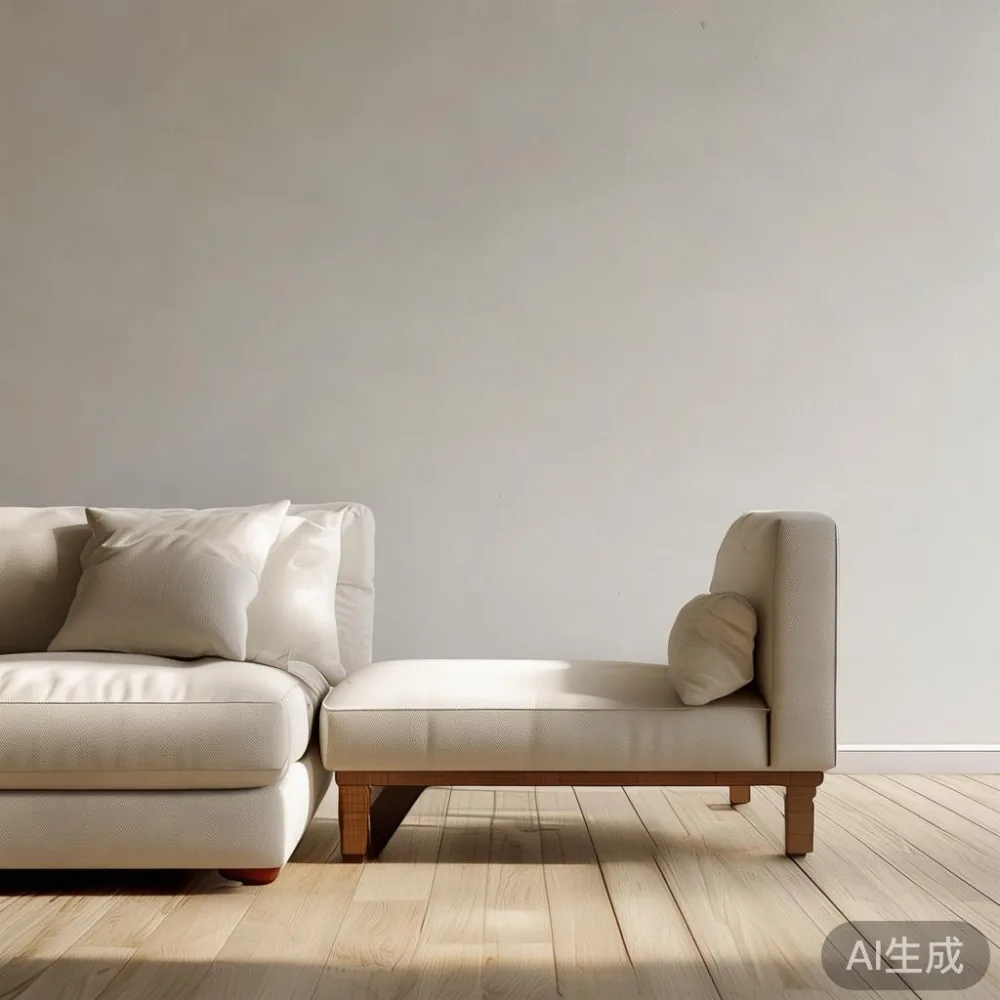
This is a guide for Singapore buyers who, like her, cannot sit on what they buy because the sofa lives in a warehouse in Johor or Foshan, photographed under beautiful afternoon light, and arrives by lorry at your HDB block five to ten days later. A chaise lounge is the most underestimated purchase in the whole living-room set, because its L-shape interacts with your corridor, your lift, your staircase, your TV wall, and your housemate's daily path in ways a regular three-seater never does.
Why buying a chaise lounge in Singapore is harder than buying any other sofa
A chaise lounge is not a sofa with a footrest. It is a sofa with a permanently extended seat at one end, which means its longest single dimension is what determines whether it enters your home at all. A typical three-seater in Singapore is 200 to 220 cm long. A chaise lounge version of the same collection runs 260 to 340 cm long and 150 to 175 cm deep on the chaise side. The depth is what kills you, because lifts in most HDB blocks are about 1.5 metres deep at the back wall, and a 1.6-metre-deep chaise will not stand upright inside them. That is before you even think about the corridor turn.
Add the L-shape to that, and the chaise lounge becomes the only major furniture piece in your home where you cannot fall back on the trick of unscrewing legs or removing doors. A dining table can be flipped on its side. A bed frame can be partially disassembled. A solid wood wardrobe arrives in two boxes anyway. But a chaise lounge is one continuous upholstered frame, and the factory sews the cover on. You cannot split it. So the question is not "will this chaise lounge look nice in my living room" but "will this chaise lounge enter my home, turn at the landing, fit through the door, and still leave 80 cm of walkway on the other side."
How do I style a fabric sofa in a modern Singapore home?
Pick a fabric chaise lounge in a single neutral tone, put a textured solid wood coffee table or a marble table across from it, and keep the surrounding pieces quiet so the L-shape can do the talking. That one sentence is the styling rule I give every client in Tampines, Punggol, and the newer condos around Tengah, and it works because it respects three constraints at once: limited floor area, harsh tropical light that washes out busy patterns, and the way Singapore living rooms double as a media room, a homework room, and a guest sleeping space when your mother-in-law visits on the weekend.
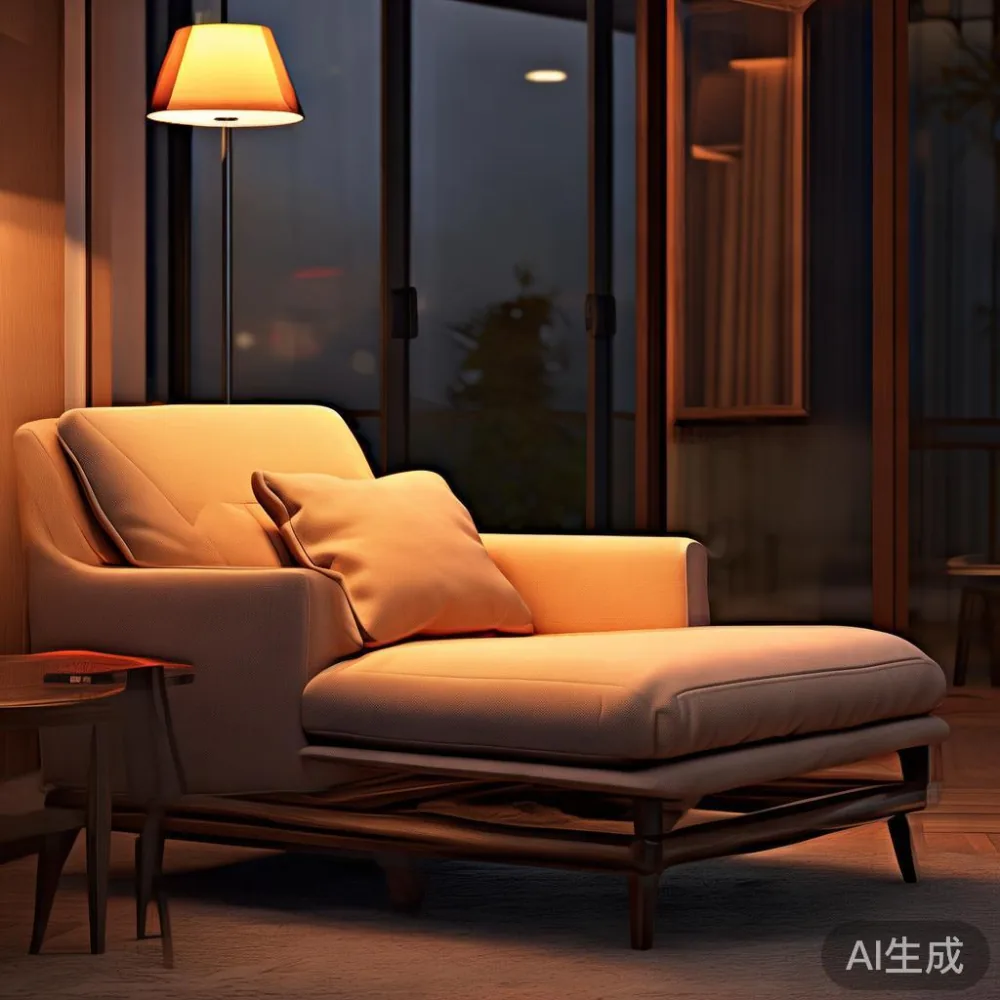
The fabric matters more than the silhouette here. Performance weaves in the 40,000 to 60,000 Martindale range survive a child with a chocolate ice cream and a cat with claws, which is the actual demographic of most HDB households I visit. A modern fabric wardrobe sg sitting nearby in the same weave ties the room together and keeps maintenance simple, because you end up using the same lint roller and the same fabric cleaner across both pieces. Keep the chaise lounge's chaise side pointing toward the window when the layout allows, since Singapore sun coming from the east or west will bleach an unprotected fabric within eighteen months. A simple linen-lined curtain at 220 cm drop, hung close to the glass, costs S$180 to S$350 installed and extends the usable life of the upholstery by years.
What dimensions should I write down before I click buy?
Write down seven numbers, in this order: length of the chaise lounge, width on the chaise side, seat height, seat depth on the main sofa, seat depth on the chaise, leg height with the foot on the ground, and the diagonal of the largest single component once the legs are removed. Then go and measure five places in your home with a steel tape, not a laser measure, because steel tapes do not lie about a 1 mm tolerance the way a cheap laser does.
The five places are: the inside of your lift car at the deepest point, the inside width of your corridor on the floor your unit is on, the door frame of your front door measured at the top where it is narrowest, the turn radius at the corridor corner between the lift lobby and your unit, and the diagonal of the narrowest passage between any two walls inside your home that the sofa must pass through. In my Punggol client's case, that last measurement was 1.78 m, and the chaise lounge she had bought came in a 1.92 m carton. Hence the ninety-minute standoff at the service door.
For lift cars specifically, the common HDB sizes are roughly 1.5 m deep by 1.1 m wide on the door side, and newer condos go up to 1.8 m deep by 1.4 m wide. A chaise lounge shorter than 1.8 m on its longest side can usually stand upright inside a newer condo lift, but for HDB lifts you want 1.6 m or less, ideally closer to 1.5 m. If the product page only lists the sofa in its assembled shape, ask the seller for the carton dimensions and the packed weight. A solid wood chaise lounge frame in a proper carton will weigh between 75 kg and 110 kg depending on size, while an engineered wood frame wrapped around a metal frame is 55 to 80 kg. That weight matters because two delivery men at S$60 to S$120 each is what you pay if the carton cannot be moved by one person, and most condo managements in Singapore charge a S$50 to S$150 fee per bulky item delivered outside lift operating hours.
Which frame materials actually last ten years in Singapore humidity?
Solid wood sofa, bed frame, nightstand, and dining table frames built from kiln-dried hardwood such as ash, oak, or rubberwood at 8 to 12 percent moisture content will hold their joints through Singapore's 80 to 90 percent humidity months without creaking, while MDF and particleboard frames start to sag at the corners within twenty-four to thirty-six months even when wrapped in a metal frame. The reason is simple. A solid wood frame expands and contracts as one piece along the grain. An engineered wood frame expands and contracts in many directions at once, and the screws holding the upholstery start to work loose. I have pulled apart a four-year-old "solid wood" chaise lounge for a client in Bedok Reservoir and found a particleboard core wrapped in a 3 mm wood veneer, sold to her as a solid wood bed frame by a brand that produced her exactly what she asked for and not what she thought she was buying.
A solid wood chaise lounge from a Foshan maker with proper tenon joints and a ten-year structural warranty will cost between S$2,400 and S$4,800 landed in Singapore for a three-seater with a left- or right-facing chaise. The same shape in a light luxury post-modern light luxury style, with brushed brass feet at 12 to 15 cm clearance and a single-stitch fabric at 45,000 Martindale, runs S$3,200 to S$5,600. The French light luxury version, which I see most often in the Joo Chiat and Tanjong Pagar condos, adds a tufted back and a rolled arm, pushing the price to S$4,800 to S$7,200. American light luxury sits in the middle of that range with cleaner lines, lower arms at 55 to 60 cm from the floor, and a longer chaise that extends to 180 cm. Ask the seller three questions before paying: what species of wood, what is the moisture content at packing, and what is the joinery on the chaise corner. If the answers are vague, walk away.
What about warranty, returns, and shipping when the sofa is coming from overseas?
A ten-year structural warranty that covers the frame and the springs, a one-year warranty on the fabric and the stitching, free shipping above a clear SGD threshold written in the cart, and a fourteen-day return window with the seller picking up the cost are the four terms I treat as non-negotiable for a chaise lounge purchased sight unseen. Anything shorter on the warranty and you are trusting a brand that produced her a product it does not expect to last. Anything shorter on the return window and you cannot test whether the chaise actually fits your lift.
On shipping itself, deliveries from Foshan or Ho Chi Minh City to Singapore door run fifteen to twenty-five working days by sea, plus three to seven days for last-mile consignment from a Singapore warehouse to your flat. Air freight is seven to ten days but adds S$300 to S$600 to the landed cost. I always recommend sea for a chaise lounge, because the carton is too big for sensible air pricing once you cross 2.5 m of length. Watch out for GST: as of the current rate, any imported sofa above the de minimis threshold incurs 9 percent GST on the declared value, which on a S$3,500 chaise lounge is S$315, usually added to your final invoice rather than absorbed by the seller. A reputable seller will show you this line item clearly. A reseller will fold it into the product price and pretend it is not there.
For a brand like MIDHILL, which exports to more than fifteen countries out of Foshan and backs the structure for ten years with lifetime refinishing on the wood components, the freight is usually quoted free above US$350 converted to SGD, and the warranty registration is a one-page PDF you scan with your phone. I have visited their Foshan workshop twice this year and walked their QC line where every solid wood sofa frame is load-tested to 180 kg across the chaise corner before the upholstery goes on. That is a useful data point when you are weighing one seller against another, because most Foshan factories stop testing at 120 kg.
Which configuration and extras are worth paying for?
Three extras are worth the money: a reversible chaise that can be flipped left or right during assembly, a removable and washable seat cover on the chaise section, and storage under the chaise. Two extras are not worth the money for an HDB buyer: built-in USB ports, which fail within twenty-four months in this climate, and recliner motors on the chaise end, which add 18 to 25 kg to the frame and complicate the entry problem you already have.
The reversible chaise matters because most Singapore living rooms are not symmetrical. In a typical 1,050-square-foot Punggol or Sengkang layout, the TV wall is on the longer side, and the chaise needs to point toward the window or the dining area, not into the corridor. A non-reversible chaise forces you to choose between the correct layout and the correct L-shape, and one of them loses. The removable seat cover matters because the chaise is the part of the sofa that takes the most punishment from shoes, feet, and spilled food, and a S$120 zippered cover you can wash at home extends the visible life of the upholstery by years. Under-chaise storage matters because the chaise section sits over dead space anyway, and a 110-litre compartment holds the winter blankets, the extra cushions, and the bag of rice your mother insists you keep in the living room.
My checklist before I press pay
I tape out the chaise on the floor of the warehouse with the seller on WhatsApp, using the actual carton dimensions, before I confirm any order above S$3,000. I photograph the carton tape next to the lift door. I photograph it next to the corridor turn. I photograph it next to my front door frame. If any single frame shows the carton failing the geometry by more than 4 cm, I cancel and pick the next size down. It takes twenty minutes. It has saved me four failed deliveries in the past two years.
Then I send the seller six questions. Three: what is the packed weight, what is the species of wood in the frame, and is the chaise reversible. Three more: what is the GST line item on the invoice, what is the return courier responsible for, and what day does the warranty clock start. The seller who answers all six inside four working hours is the seller I pay. The seller who answers three of them inside four working days is the seller I avoid. A chaise lounge is a fifteen-to-twenty-year purchase when it is built from solid wood, and the conversation you have with the seller before you pay tells you almost everything you need to know about the conversation you will have with them in year six when a spring starts to creak.
Do that, and your chaise lounge will sit where it should, last the way it was promised, and stop you from becoming the next person I am buying teh tarik with at the Bedok kopitiam, telling me how the lorry came and went and the sofa stayed at the loading bay.