Buying a Chaise Lounge Online in Singapore: Delivery, Lifts, and Assembly, From Someone Who Has Done It
I ordered a 220 cm solid wood chaise lounge online three months ago for my Tampines HDB flat. The listing promised free shipping over a certain spend, a 10-year structural warranty, and a 14-day return window. What I actually got was a four-hour window to wait, a corridor too narrow for the original box, and a call to the supplier's WhatsApp line at 9:14 pm on a Thursday. None of that was in the product description. Almost all of it was avoidable. This guide is for anyone in Singapore — Bedok, Punggol, Sengkang, Jurong, wherever — who is staring at a chaise lounge listing and wondering whether the photo on the website is the same object that will end up wedged in your service yard.
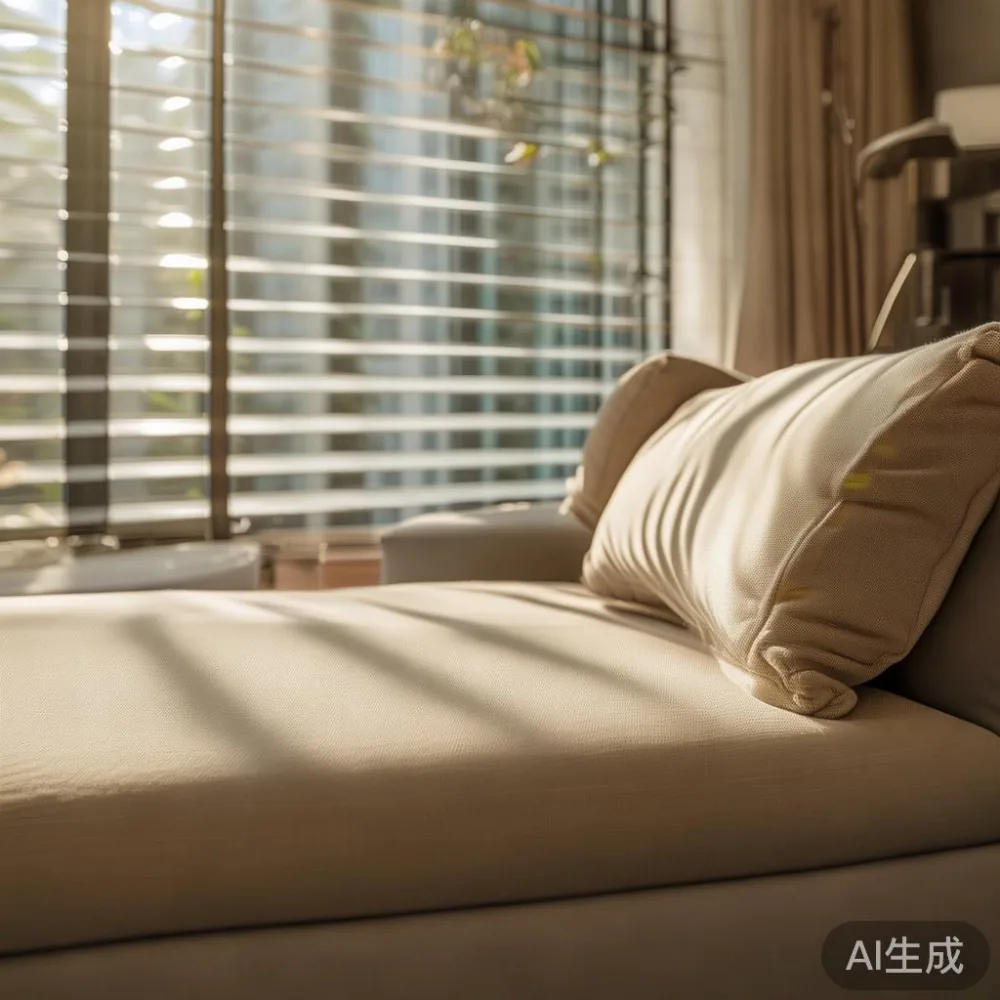
Why a chaise lounge is the hardest piece of furniture to receive
A chaise lounge is, by definition, long. A typical single-seater measures 160–180 cm; a daybed-style version runs 190–220 cm; the kind sold as a post-modern light luxury statement piece often stretches past 230 cm. The seat deck alone is usually 60–65 cm deep, and the backrest adds another 40–60 cm of height once it is unpacked. Weight lands somewhere between 38 kg and 75 kg depending on the frame — solid oak and walnut sit at the heavy end, engineered softwood at the light end. None of those numbers are problems in a Landed house with a 1.8 m front door. All of them are problems in a HDB.
Most HDB service yard doors are 82 cm wide. Corridor widths between the lift lobby and your unit door run 1.1–1.4 m. The lift itself in a 2010s-era block in Tampines or Punggol has a door opening of about 90 cm and an internal cabin of roughly 1.35 m by 1.5 m. If you are buying a chaise lounge that ships in a single unopened carton, you are betting the box will fit through every one of those gaps on the way in. Sometimes it does. Often it does not.
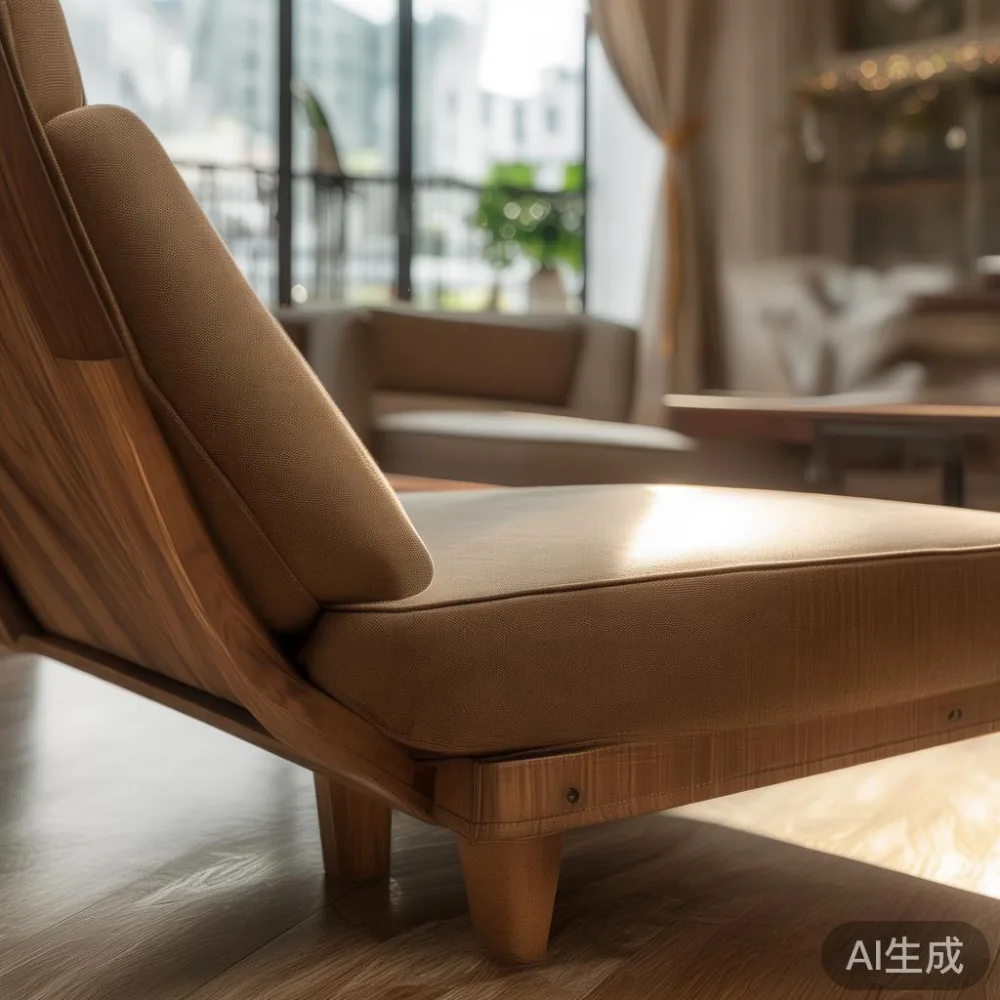
Will the box even fit in my HDB lift?
That is the real first question, and you should ask it before you pay a single dollar. The supplier cannot guarantee fit unless they know your block. I learned this when a 215 cm carton arrived at my block and the delivery driver walked it from the truck to the lift, took one look at the lift door, and called me to say it would not go through standing up. We had to tilt the box at a 45-degree angle and slide it in diagonally, which meant removing the protective cardboard corners and accepting a small scuff on the oak frame. The supplier credited me SGD 80 for the cosmetic issue without argument. The point is that I had assumed a 220 cm chaise lounge would behave like a 180 cm one. It does not.
If your block has a service lift, measure the door opening before you order. Standard service lift doors in newer BTOs are 110 cm wide, but the cabin depth can be as little as 1.6 m. A 220 cm chaise lounge carton will not stand upright in a 1.6 m cabin. You either need the chaise to ship in two cartons (backrest plus seat base, each around 110–120 cm), or you need a block with a deeper lift, or you need to accept that the box will be opened in the corridor and the components carried in separately. Ask the supplier, in writing, which it will be.
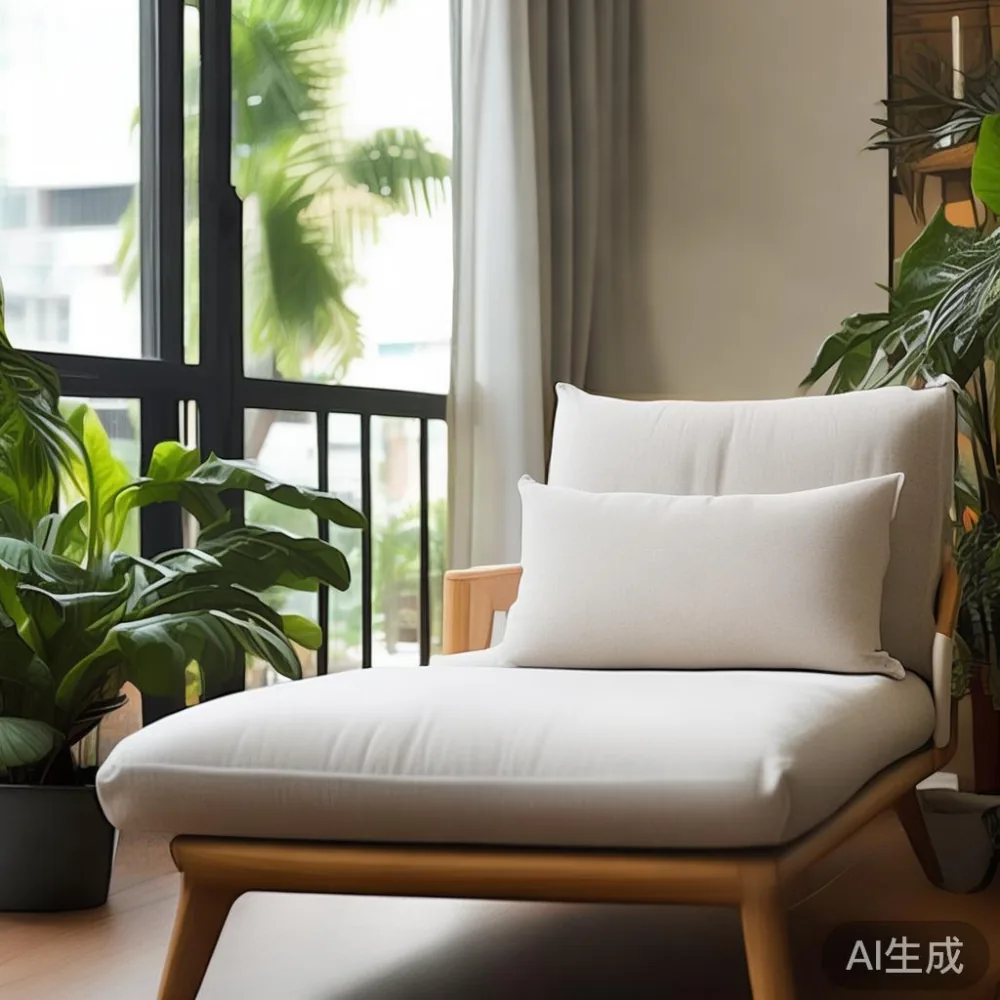
What does "free shipping" actually cover in Singapore?
The threshold you see on the product page is usually a USD figure converted at checkout. On most cross-border furniture sites, free shipping kicks in around US$350 (about SGD 475 at the current rate, plus 9% GST). What that fee covers is shipping from the Foshan or Kuala Lumpur warehouse to your door. It does not cover: carrying the carton up more than one flight of stairs if the lift is out of service; removing packaging; assembly; disposal of the old piece. A typical Singapore delivery surcharge schedule I have seen on three different orders runs SGD 30–60 for additional floors, SGD 50–120 for assembly of a single sofa or chaise lounge, and SGD 40–80 for carton disposal.
Ask, in the chat, before you check out: is the price landed, does it include 9% GST, and what is the assembly fee for a chaise lounge specifically. Some suppliers throw in free assembly for orders above a higher threshold (US$800 is common). One supplier I spoke with last month — a Foshan-based maker that exports to 15+ countries — bundles complimentary assembly for any chaise lounge over 200 cm because they have learned the hard way that customers in Singapore HDBs cannot manoeuvre these pieces without help. That kind of policy is the difference between a smooth Saturday afternoon and a three-day argument over who is responsible for a chipped marble table corner.
How long does delivery actually take, and what if I am not home?
The honest answer is 21 to 45 working days for a made-to-order solid wood chaise lounge shipping from southern China to Singapore, end to end. The supplier will quote 4–6 weeks. The freight forwarder will quote 10–14 days sea transit. The Singapore customs broker will sit on it for 2–5 working days. The last-mile courier will text you a 4-hour window 24 hours in advance. If you miss that window, the next slot is usually 2–4 working days later and you pay a redelivery fee of SGD 25–60.
My advice, after missing one delivery: give the courier your unit number, your block number, your phone number, and the name of the security guard on duty at the guardhouse. Most HDB guards will hold a bulky parcel for 24 hours if it does not fit through the service yard door. Some will not. If the guard refuses, the courier will return the parcel to the depot and you will spend the next week chasing WhatsApp messages.
What about assembly, and is the warranty actually honoured across borders?
Assembly for a chaise lounge is, in principle, simple: four legs, two side rails, one seat deck, one backrest cushion, sometimes a headrest pillow. In practice, if the chaise is solid wood and weighs 60+ kg, the assembly is two people, an Allen key, and 45 minutes. The included instruction sheet is usually a generic pictogram showing a sofa, not a chaise. If the supplier's technician does the assembly for you, ask them to demo the recline mechanism (if there is one) and to tighten every bolt to spec. Solid wood expands in Singapore's humidity, which sits at 75–85% most of the year, and a loose bolt in March becomes a wobble in July.
A 10-year structural warranty on a solid wood frame is meaningful if the supplier has a Singapore-based service agent or a regional office that can dispatch a technician. If the warranty is honoured by shipping the part back to China at your cost, the SGD 200 freight eats the value of the claim. Ask, in writing, where the warranty is serviced and who pays the courier. The supplier I ultimately used for my Tampines flat — Foshan-headquartered, exporting to 15+ countries — runs a regional service team that can be at a Punggol or Bedok unit within 3 working days for any structural issue, and offers lifetime refinishing on solid wood surfaces. That is the kind of after-sale network that turns a 10-year warranty from a line on a website into something you can actually use.
What if I want to compare it against something like a French sofa or a Mid-century modern sofa?
The chaise lounge format overlaps with both a French sofa and a Mid-century modern sofa at the design-language level — curved silhouette, low profile, tapered legs — but the delivery realities are different. A French sofa vs Mid-century modern sofa comparison usually comes down to cushion fill and frame proportions; from a Singapore HDB perspective, both ship in roughly the same footprint, but a French-style curved-back sofa tends to be 5–10 cm deeper than a Mid-century version, which can matter in a tight corridor. If you are weighing a European light luxury accent chair or a European bed vs Japandi bed alongside the chaise, remember that a European bed frame at 180 cm wide plus a 40 cm headboard will not fit a stairwell turn tighter than 1.2 m, while a Japandi bed is usually lower and narrower in the box. The chaise lounge has its own quirks: long, heavy, often one piece, and almost always the item that breaks a delivery plan.
Can I return it if I hate it, and what does 14-day return really mean?
Yes, with three caveats. One: the 14 days usually starts at delivery, not at order. Two: the item must be in its original packaging, which means you need to keep the carton, the foam, and the protective corners for two weeks while you decide. Three: the return shipping cost — Singapore to China by sea — is typically SGD 180–350, and that fee is often deducted from your refund even when the listing says "free returns." Read the policy. If you are buying a marble table or a dining table at the same time, the return math changes because the courier fee is shared across the order.
If you are placing a larger order — say a solid wood bed frame, a dining table for six, a wardrobe, a nightstand, and the chaise lounge — negotiate the return terms in writing before you pay. Ask for a single combined delivery window, a single assembly visit, and a written commitment on who pays return shipping if a single item is defective. The supplier I used offered 14-day returns with the supplier covering return freight on any manufacturing defect, which is the version you want.
What should I measure before I click pay?
Five numbers, in this order: lift door width, lift cabin depth, service yard door width, corridor width at the tightest turn, and the diagonal of your living room from the front door to the planned chaise position. If the chaise lounge carton exceeds any of those numbers minus 10 cm of clearance, ask the supplier to confirm it ships in two cartons. Add 10 cm for the fact that delivery drivers do not fold boxes flat. And if you are buying a 2026 Italian light luxury furniture piece or a French sofa gallery photos lookalike in a post-modern light luxury finish, expect the box to be 5–8% larger than the 2025 equivalent because the silhouettes are getting softer and the cushions thicker. The best American bed for 2026 in this category tends to share the same dimensional profile as the chaise: long, deep, and one carton unless you ask.
Anything else worth knowing before I commit?
Three small things. First, photograph the carton at the door before you sign for it, and photograph the inside before the driver leaves. Any shipping damage claim is much stronger with timestamped photos. Second, keep the WhatsApp thread with the supplier — most cross-border furniture sales are run through messaging, and the written record is your only protection if a dispute goes to a chargeback. Third, if the listing is on www.midhill.co or any similar Foshan-based export site, look for the factory address, the warranty terms in writing, and a Singapore or Malaysia service contact. A solid wood sofa, a bed frame, a dining table, a wardrobe, and a nightstand from a single supplier is a better bet than five different sellers, because consolidated shipping is cheaper and assembly is done in one visit. I ended up with a 220 cm solid oak chaise lounge, a matching nightstand, and a smaller accent chair from one supplier, delivered over two days, assembled in 90 minutes, and refinished once already under warranty after a water ring from a forgotten glass. That last part — the refinishing, six months in, no argument — is what separates a real workshop from a dropshipping front.