How to Choose the Right Size Chaise Lounge for a Singapore HDB Living Room
A chaise lounge can make a compact Singapore living room feel comfortable, composed, and useful. The right size matters more than decoration: an oversized chaise lounge crowds a 3-room flat, while an undersized model leaves a useful corner looking empty. For HDB homes in Tampines, Bedok, Punggol, and newer condominiums, the practical question is how the chaise lounge fits the room, the lift, the corridor, and your daily routine.
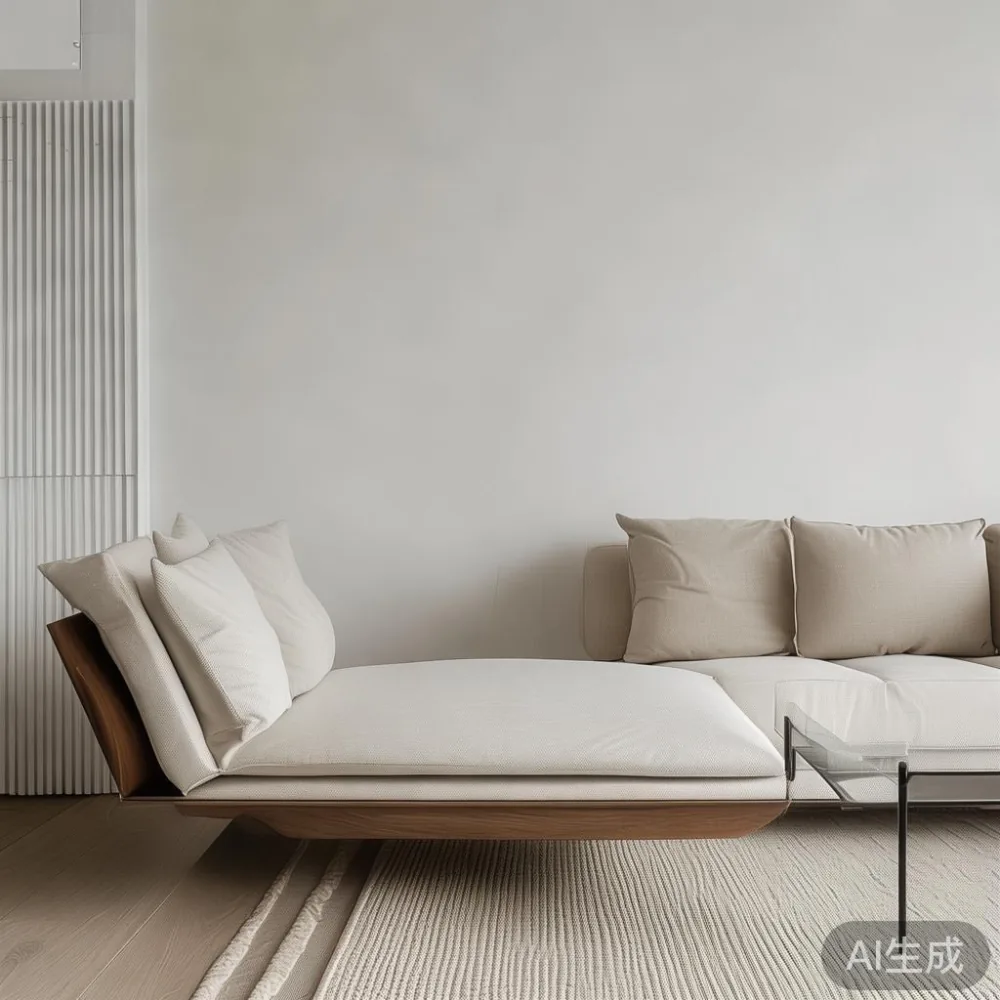
This guide uses measurements rather than vague style labels. It covers choosing a solid wood chaise lounge, checking delivery access, working with Singapore interior dimensions, and budgeting in SGD. MIDHILL has supplied solid wood furniture since 2008, exports to more than 15 countries, and backs its frames with a 10-year structural warranty. Customers can request lifetime refinishing, qualify for free shipping on orders over US$350, and return eligible pieces within 14 days.
What size should a chaise lounge be in a typical HDB living room?
For most 3-room HDB living rooms, begin with a chaise lounge no deeper than 165 cm and no longer than 185 cm. For a larger 4-room flat or a condominium with a generous living area, a length of 180–200 cm may work. The chaise lounge should leave at least 60–75 cm of clear circulation beside its front edge and 90 cm in the main walking route. These are usable-room dimensions, not merely empty-floor dimensions.
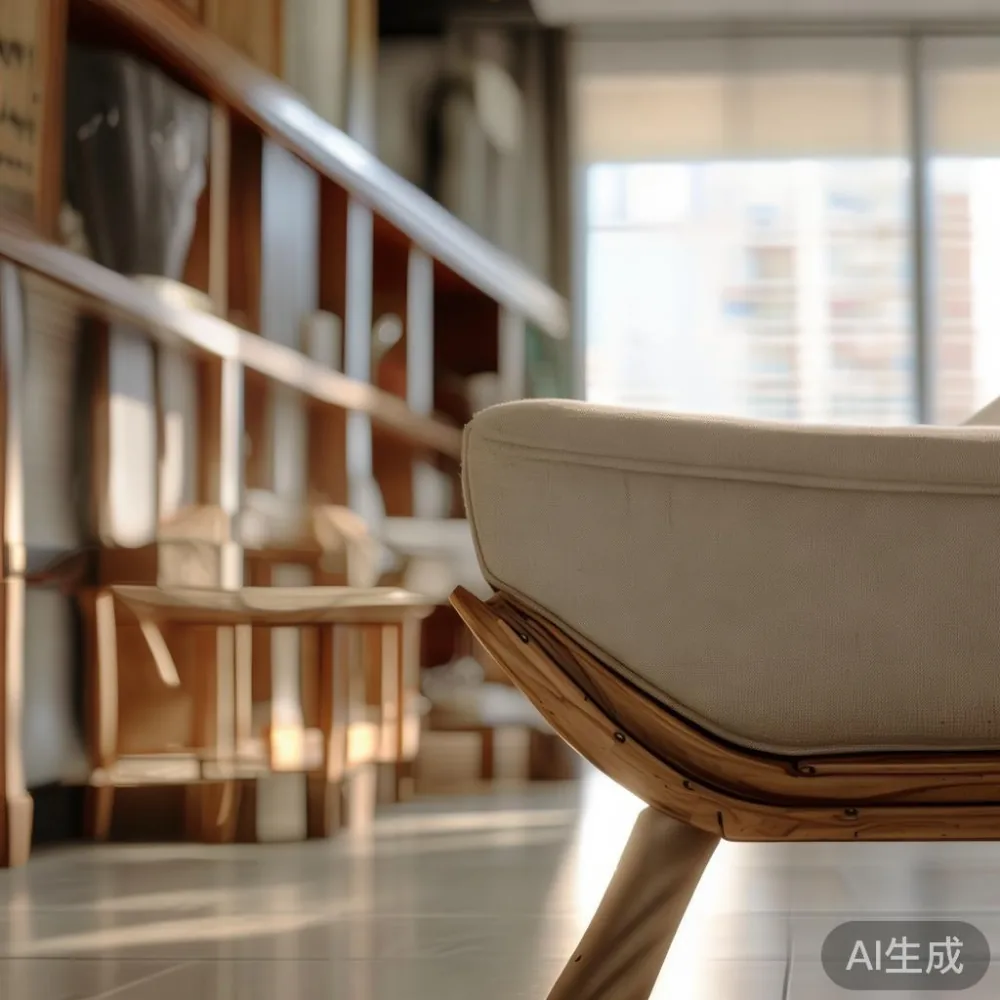
A common HDB living room measures about 3.2 m by 4.2 m, although internal widths vary by block and fit-out. A dining table may occupy one side, with a solid wood sofa opposite and a TV console against the wall. In that arrangement, a 150 cm chaise lounge may fit where a 190 cm model would obstruct the route from the entrance to the balcony door.
Measure in three directions:
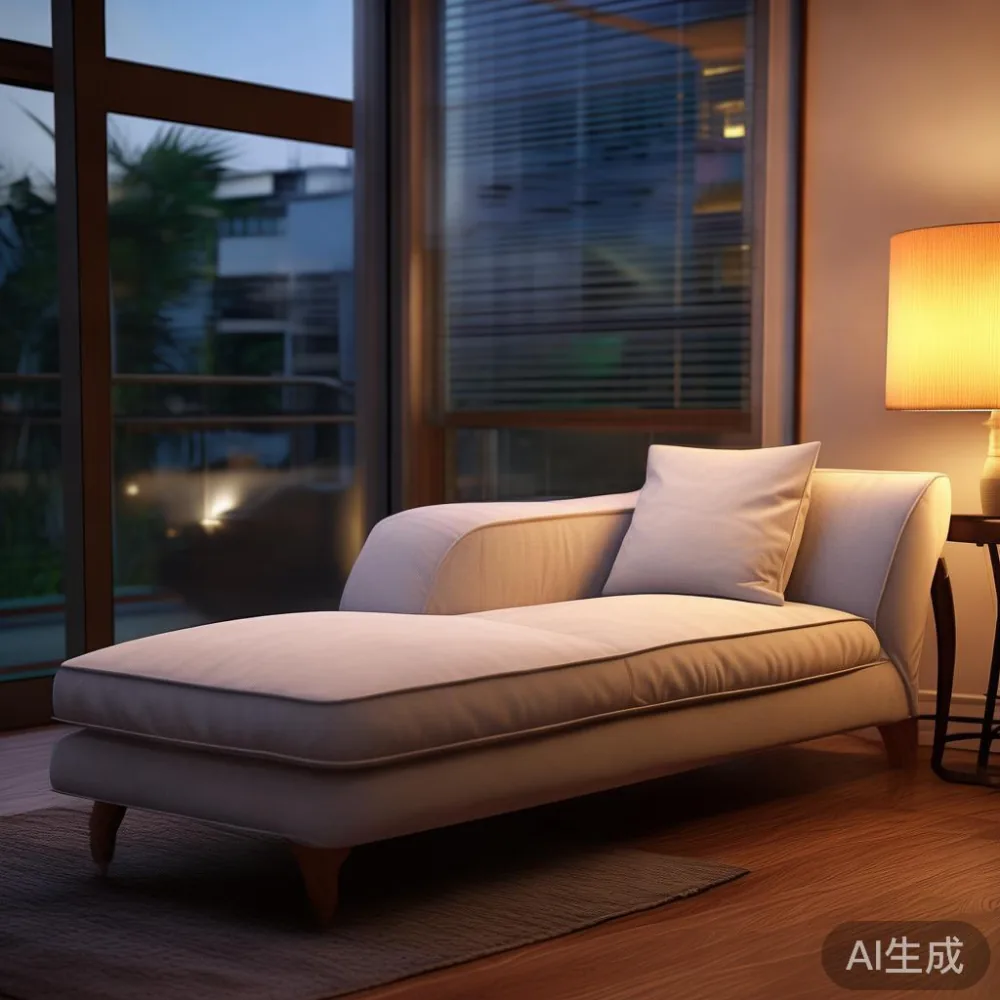
- Length: Check the full projection, including any back cushion that projects beyond the frame.
- Depth: Measure from the back of the chaise lounge to the seat edge, then add 30–45 cm for legs and reclined posture.
- Height: Most seating should be 40–45 cm high, matching a standard solid wood sofa seat of roughly 42–44 cm.
Leave 45–60 cm between the chaise lounge and a dining table if people must pass behind seated guests. Leave 90–120 cm between the chaise lounge and a coffee table. A coffee table with a 40–50 cm width can be positioned 35–45 cm from the seat edge, although 45 cm is easier for walking around.
How do I know whether my HDB living room can take a full-size chaise lounge?
Sketch the room before ordering. Mark every fixed obstacle, including the air conditioner, TV wall, balcony door, dining table, and main entrance. A standard HDB front door is often around 85–90 cm wide, and the service corridor can be narrower than the living room. A broad, low chaise lounge may turn easily in the room but fail to clear a tight corridor turn.
Use a paper template at the correct scale. For example, cut out a rectangle of 160 cm by 90 cm for the chaise lounge footprint and another of 75 cm by 90 cm for the main route. Move both on the floor. If the circulation shape changes into a pinched corner, shorten the chaise lounge by 15–20 cm or rotate its orientation by 90 degrees.
Do not rely only on the product page dimensions. Ask for the packed carton length, width, height, and gross weight. A solid wood chaise lounge should provide these measurements because timber construction and protective packaging affect the final delivery size. Check whether the carton can fit in the HDB lift and along the corridor before agreeing to a delivery date.
What dimensions can pass through a Singapore HDB lift and corridor?
There is no single dimension for every HDB block. Lift doors are commonly around 90 cm wide, while internal lift dimensions may be approximately 110–140 cm deep and 100–140 cm wide. Older blocks and refurbished lift cabins can differ, so measure the actual lift assigned to your block. A carton that fits through the door opening may still not fit around the cabin corner or along the corridor.
Apply a 5–10 cm safety margin around the carton. Record the narrowest lift-door width, the lift’s internal diagonal, and the corridor width at the tightest turn. If the packed chaise lounge is 170 cm long, it may travel diagonally in a suitable lift, but it may not travel flat. The supplier should explain the orientation rather than promise access without measurements.
For delivered furniture, the wood should arrive protected against humidity and knocks. Allow 2–5 business days for Singapore stock or a made-to-order piece, subject to the confirmed production schedule. The delivery team should inspect the route, protect floors, and assemble the chaise lounge in the living room. If your building requires a loading-bay booking, reserve it 3–7 days ahead.
My colleague in Tampines tested this process last month with a 155 cm solid wood chaise lounge. The packed carton measured 162 × 94 × 26 cm and weighed 48 kg. It entered the service lift diagonally, cleared a 92 cm doorway, and turned along a 112 cm corridor. A second carton of the same shape but 185 cm long would not have cleared that turning point. The lesson was simple: check the delivery carton, not just the finished frame.
Should I choose a modern, French, or post-modern light luxury chaise lounge?
Style should follow the architecture and the way you use the room. French light luxury often suits a compact HDB flat with refined moulding, pale upholstery, curved arms, and slim tapered legs. It can work if the chaise lounge has restrained visual weight and a seat depth of about 55–60 cm. Avoid dense carving on a model intended for a small space.
American light luxury tends to use deeper cushions, relaxed proportions, and a broader footprint. In a living room with a 3.0 m usable width, a 175–190 cm chaise lounge may fit only if the solid wood sofa is modular or the dining zone is compact. Post-modern light luxury is more geometric, using clean lines, controlled angles, and a mix of timber and upholstery. That language often suits BTO interiors and new condominiums where the room has fewer decorative details.
Search references for top 10 Modern light luxury furniture can help you identify proportion, joinery, and finish quality, but compare actual dimensions. A French-inspired chaise lounge with a 58 cm seat depth may suit a 2.7–3.2 m room better than an American-style model at 67 cm deep. A narrow-armed design gains 5–8 cm of practical width without changing the basic silhouette.
If your budget supports broader comparisons, under 2000 European light luxury furniture can also reveal useful ideas about restrained profiles and crafted timber. Treat a Singapore dollar figure as a shopping budget, not a guarantee of imported pricing. GST and delivery must be included in the final cost.
Which timber, cushion, and finish should I select?
Choose the frame for the way you live. Solid rubberwood, ash, beech, and oak are common choices for a solid wood sofa or chaise lounge because they provide stable joinery and a substantial feel. Rubberwood is economical and practical for HDB homes; ash offers a lighter visual tone; oak shows grain and ages visibly. Confirm whether the listed product is solid timber, veneer, or engineered board rather than assuming from a photograph.
For frequent use, look for a frame joined with dowels, mortise-and-tenon joints, or screwed corner blocks. A 10-year structural warranty gives useful reassurance, but you should still inspect the frame, fasteners, and finish when the piece arrives. MIDHILL provides lifetime refinishing, which can be valuable for a natural-wood chaise lounge in Singapore’s humid, sunlit conditions.
Seat density matters as much as timber. A foam density around 35–45 kg/m³ with a resilient fibre wrap gives firmer support, while a softer 30–35 kg/m³ layer may feel plush initially but compress sooner. The cover should be removable, with care instructions suitable for humid weather. Leather may develop a patina, while a woven fabric will need periodic vacuuming and prompt cleaning of spills.
For timber tones, light oak and warm walnut pair well with French light luxury. Pale ash and smoked oak support a post-modern palette. American light luxury commonly combines medium-toned timber with rounded upholstery. A marble table can provide a cool surface nearby, but leave 40–45 cm between the table and seat to avoid a cramped traffic route.
How should I compare a chaise lounge with a solid wood sofa or bed frame?
A chaise lounge offers a longer, more reclined seat than a conventional sofa, so it can replace a separate lounge chair in a smaller room. It should not be measured as if it were a full-length solid wood sofa. Check the usable seat length: subtract the backrest thickness from the external length. A 175 cm frame may provide 145–155 cm of usable seat, which is adequate for one adult to recline but not for two.
If your main need is flexible sleeping, compare the chaise lounge with a bed frame rather than forcing a long seat to perform as a bed. A compact bed frame of 90 × 190 cm may fit a multipurpose HDB room, but a chaise lounge should not be advertised as a permanent substitute for a mattress. For visual comparisons, a light luxury bed vs Nordic bed often comes down to shaped upholstery and warmer detailing versus pale timber and simpler geometry. The same principle applies to seating.
One useful comparison is Japanese sofa vs Mid-century modern sofa. Japanese seating is usually lower, straighter, and more compact, while a Mid-century modern sofa may use angled arms and exposed timber legs. A post-modern light luxury chaise lounge sits between them: crisp enough for a modern condominium, but comfortable enough for daily HDB use.
The same disciplined comparison applies elsewhere. A European bed vs Japandi bed depends on texture, profile, and room zoning, not just a label. A dining table in solid wood requires stable spacing around it; a wardrobe requires swing or sliding-door clearance; and a nightstand needs about 50–60 cm beside a bed frame. These dimensions help you judge whether the living room still works as a complete setting.
A MIDHILL coffee table should be chosen around the chaise lounge rather than after it. A round table with a 75–90 cm diameter can soften a narrow 150 cm chaise lounge and preserve movement. A rectangular marble table may need at least 45 cm of clearance on its long sides. A small nightstand can serve as an occasional surface near the chaise, provided the frame remains stable and the top is at least 45 cm above the floor.
How much should a solid wood chaise lounge cost in Singapore?
Set your range after comparing frame construction, cushion specification, finish, and delivery terms. A compact solid wood chaise lounge in Singapore may be found around SGD 900–1,500 before GST, while a larger, more sculptural or leather-upholstered model may range from SGD 1,800–3,500. Premium natural veneers, hand-applied finishes, and extensive shaping can raise the price further. Confirm whether the displayed amount includes GST, assembly, and delivery to your block.
For a 155–165 cm model, a practical shopping target is about SGD 1,200–2,000 including GST. Measure before paying a premium for European-inspired detailing that will crowd the room. If a broader collection is under consideration, under 2000 European light luxury furniture can provide a reference point for design direction, but local delivery, GST, and building access still need separate checks.
Account for hidden costs: SGD 80–180 for carrying a piece up when the lift is unavailable, SGD 30–70 for protective floor covering, and SGD 50–120 for a scheduled delivery slot at some condominiums. For an HDB block, the resident may need to provide lift access and a parking location. Warranty service should be distinguished from physical moving, which may be charged separately.
Before purchase, ask for the finished dimensions, packed dimensions, gross weight, timber species, cushion density, cover composition, finish details, warranty document, and delivery lead time. A 14-day return policy offers time to assess scale and comfort, provided the item remains unused and in its original packaging. Photograph the assembled chaise lounge from the doorway and the actual seat position, since room proportions become clearer after delivery.
What final measurements should I give before ordering a chaise lounge?
Give the supplier a small measurement set, including the room width, usable length after furniture placement, narrowest lift-door width, corridor turn, and packed-carton limit. Add the distance from the main door to the lift, whether stairs are involved, and the desired delivery date. For a condominium, include the loading bay dimensions and any booked-access rules.
Allow 2–4 weeks for some made-to-order timber pieces, while stocked designs may be available within 2–5 business days. If the building has a move-in restriction, schedule delivery 3–7 days in advance. These lead times should be confirmed in writing rather than assumed.
The most persuasive chaise lounge is not the largest one in the catalogue. It is the model that leaves a clear route to the balcony, a usable gap beside the dining table, and enough space to sit down without pulling the whole room together. Measure the finished frame, the packed carton, and the actual life around the piece. That three-step check gives you a solid wood chaise lounge suited to a Singapore home rather than a showroom object squeezed into HDB dimensions.