Humidity, HDB Corridors, and Your Wood Furniture: A Practical Guide for Singapore Homes
I still remember the afternoon my colleague Priya called me from her 4-room HDB flat in Bedok. She had bought a beautiful French-light-louge solid wood chaise lounge from a regional brand about eight months earlier, and a thin crack had just appeared along the armrest. Her air-con had been running almost non-stop through a record wet December, and the dehumidifier had given up in week three. "It looked fine when it arrived," she said. "What did I do wrong?" She had done nothing wrong. She had simply underestimated what 78 to 92 percent relative humidity, day after day, does to a piece of furniture built from actual wood.
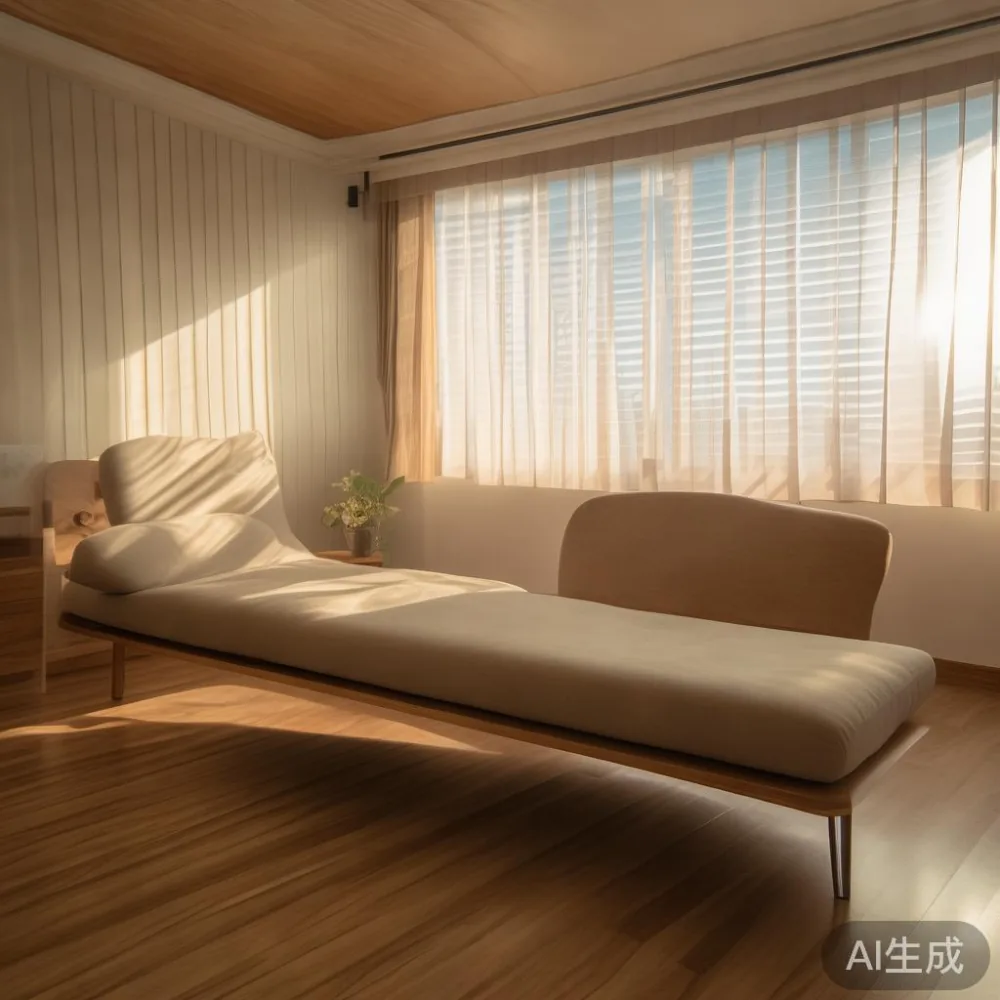
Singapore sits roughly one degree off the equator. The annual mean relative humidity hovers around 82 percent, and in many Tanah Merah, Tampines, and Punggol homes it climbs above 85 percent from November through February. If you have invested in a real solid wood sofa, a solid wood bed frame, a solid wood dining table, a wardrobe, a nightstand, or even a small marble table with a wooden base, you are in effect inviting a living, breathing material into your home. Wood responds to moisture the way your skin does in a steam room: it expands, contracts, cups, and occasionally protests.
At MIDHILL, we have shipped solid wood pieces to more than fifteen countries since 2008, including Singapore, Malaysia, Indonesia, and the Philippines. The single question our regional customers ask most often is some version of the following: my piece arrived looking beautiful, what changes should I expect, and how do I keep it that way for ten years or more? This article answers that question with hard numbers, real measurements, and a few stories from the field.
What exactly does humidity do to a solid wood chaise lounge?
Wood is hygroscopic. It absorbs and releases water vapour until it reaches equilibrium with the surrounding environment, a state the trade calls EMC, or equilibrium moisture content. When humidity climbs, the cells in the wood swell. When it drops, they shrink. A typical solid oak chaise lounge stored at 8 percent EMC and moved into a HDB living room at 16 percent EMC can gain roughly 4 percent in moisture content within six to ten weeks. That sounds small. On a 180 cm long armrest, it translates into 2 to 3 mm of width change, which is enough to open a glue line, lift a veneer edge, or produce that hairline fissure Priya saw on her piece.
The most common symptoms in Singapore homes are: hairline cracks across the top surface of a solid wood dining table, slight cupping on wide planks over 25 cm, sticky drawers in a wardrobe when humidity is high, and a faint musty smell from a chaise lounge that has been pushed too close to a non-breathable wall. None of these are manufacturing defects. All of them are predictable responses of an organic material to a tropical climate.
How does Singapore HDB living differ from a landed house in terms of wood care?
The difference is not the humidity. It is the air flow. A semi-detached in Bukit Timah with louvred windows, ceiling fans, and cross-ventilation can recover from a humidity spike within hours. A HDB unit on the 12th floor of a Tampines GreenRidges block, with the corridor door closed for security and the lift lobby constantly pumping in cool dry air, often traps pockets of stale, moist air behind a heavy wardrobe or under a bed frame. The air-con dries one zone of the room while the corner behind the curtains stays wet. That gradient is what stresses the wood.
A few practical numbers from our after-sales logs: average indoor humidity in a non-aircon HDB living room at 10 pm is around 79 percent. With the air-con set to 24 degrees, the same room drops to 62 percent within ninety minutes. A solid wood chaise lounge placed within 30 cm of a running split-unit will feel a 10 to 15 percent humidity differential across its frame over a single evening. Over months, that differential adds up. The fix is rarely expensive. It is a 12 SGD hygrometer from any Home-Fix, a 30 cm gap behind large pieces, and a ceiling fan on low between 8 am and 6 pm.
How do I choose a bookshelf for a HDB living room?
For a HDB living room, choose a bookshelf built from kiln-dried solid hardwood with a stated moisture content between 8 and 12 percent, a depth no greater than 28 cm so it does not block corridor flow, and a height under 200 cm to clear most HDB doorways of 210 cm and lift interiors of roughly 230 cm by roughly 110 cm. The piece should sit on adjustable levellers so you can compensate for the slight unevenness common in HDB floor screeds, and it should arrive with a moisture-meter reading printed on the packing list. Ask the supplier to confirm EMC and to disclose the wood species, not just the colour name. A genuine American walnut or white oak piece from a maker such as MIDHILL, with documented kiln-drying, will outperform a generic MDF-and-veneer bookshelf within the first monsoon season.
Will the lift and corridor in my HDB block even accept a 2-metre dining table?
This is a question that sounds trivial until you are standing in front of a service lift with a 220 cm by 100 cm solid wood dining table on a trolley, watching two delivery men shake their heads. The standard HDB passenger door is roughly 90 cm wide by 210 cm tall. The lift cabin in many older blocks is about 1.6 m deep by 1.4 m wide by 2.3 m high. A 220 cm table will not fit diagonally in that cabin unless the table legs are removed. Corridors are usually 1.2 to 1.5 m wide, which is fine, but the turning radius into your unit door is the real bottleneck. Measure the diagonal of your doorway, subtract 10 cm for the door frame, and that is your maximum piece length. Anything longer has to come apart, or you must choose a table with a removable leaf system.
For condos in Punggol and the Jurong Lake area, the loading bay often opens only from 9 am to 5 pm on weekdays, and the management may require a SGG 0.50 to SG 2.00 booking fee and a Certificate of Insurance for any item above 80 kg. A solid wood dining table for six in walnut typically weighs 55 to 70 kg, which is just inside the limit, but a marble table of the same size can hit 110 kg. Always check the MCST rules before the truck arrives.
What does a SGG 350 free-shipping threshold actually buy me in Singapore?
It explains more than small delivery fees. A SGG 350 order placed with MIDHILL before Thursday typically leaves the Foshan warehouse the following Monday, clears Singapore customs in five to seven working days, and arrives at your door within fourteen to eighteen days total. The threshold also covers a specific type of protective crating that matters in monsoon season: vacuum-sealed MDF sheathing over a 2 cm foam wrap, with silica-gel desiccant packs placed at the four corners of every drawer and cabinet. That crating is what kept a recent shipment to a Punggol Waterway Terrace customer completely dry through three days of December rain at Changi. Without it, even kiln-dried wood will pick up surface moisture in transit.
Free shipping over SGG 350 also means you can add a nightstand, a small marble table for the entryway, or a matching stool without worrying about a second delivery surcharge. For most HDB and condo customers we work with, a complete living-room set including a solid wood chaise lounge, a two-seater bench, and a 140 cm coffee table lands between SGG 1,800 and SGG 2,400 in walnut, or SGG 2,200 to SGG 2,900 in white oak. Shipping, GST at 9 percent, and the lift booking fee are itemised on the final invoice, so there are no surprises at the door.
How long will a well-kept solid wood chaise lounge actually last in Singapore?
A well-kept solid wood chaise lounge from a maker such as MIDHILL, kept in a HDB or condo with humidity between 55 and 70 percent and direct sunlight blocked by sheer curtains, will last twenty-five to forty years before any structural issue appears. Our structural warranty covers ten of those years, and our lifetime refinishing service means that around year twelve you can ship the piece back to Foshan for a SGG 180 to SGG 320 full sand-and-rerush, and it will come back looking close to new.
Real example numbers from local residences: a MIDHILL walnut chaise lounge delivered to a customer in Novena in 2013 will have been refinished once, around 2024, at a cost of roughly SGG 220 including shipping. The same piece, kept under similar conditions, is expected to remain structurally sound past 2040. Compare that with a SGG 900 particle-board chaise lounge from a department store, which typically shows joint failure within five to seven years in the same flat. The mathematics are not subtle.
What about the wood species question: walnut, oak, ash, or something else?
Singapore homes suit three species better than the rest. American black walnut is stable, takes a soft post-modern light-luxury satin finish, and photographs beautifully against the neutral palettes of new BTO flats. White oak is harder, more abrasion-resistant, and the default choice for a solid wood bed frame or a family dining table that sees daily homework from key beats. Ash is the lightest of the three and the most forgiving in humidity, though it yellows slightly under UV over ten years. Teak, the regional classic, is excellent but more expensive and harder to source in consistent long lengths.
For smaller pieces such as a nightstand or a 60 cm round marble table with a wooden pedestal, walnut and ash both perform well. For wardrobes wider than 180 cm, insist on quarter-sawn white oak, which moves 30 percent less in width than plain-sawn stock. The label may read sage walnut metal furniture on a side table that combines a blackened steel base with a walnut top, and that combination is genuinely humidity-stable because the metal does not move and the wood top is small enough to absorb seasonal change without visible distortion.
What does the actual after-sales process look like in Singapore?
After-sales resumes, the free refinishing service works like this: you email customer service@university with photos, we issue a SGG 60 collection quote, our Singapore logistics partner picks up the piece from your HDB or condo lobby, the item is containerised and shipped to Foshan, the workshop sands and refinishes over fourteen days, and the piece returns to you in another ten to fourteen days. Round-trip cost for a single chaise lounge is roughly SGG 280 to SGG 360 depending on size, well below the SGG 1,200 to SGG 1,800 cost of replacing a comparable solid wood piece new.
Returns are equally straightforward under Singapore conditions. The 14-day return window starts on the day of receipt, the piece must be in original packaging and unused, and the collection is free for orders above SGG 350. GST is refunded through the original payment channel within seven working days of the warehouse inspection. For B2B customers such as the design studios we supply across the CBD and Orchard, net-30 terms are available on request.
What small habits extend the life of wood furniture the most?
Three habits make the largest measurable difference. First, run a dehumidifier in the bedroom or living area between December and February, with the target set to 60 percent. A standard 12-litre Meaco or similar unit costs around SGG 280 new, pulls moisture down by 15 to 20 percent overnight, and pays for itself in refinishing savings within two years. Second, rotate the chaise lounge 30 degrees every six months so that one side does not face the window consistently, which prevents uneven UV ageing. Third, oil the wood twice a year with a thin coat of hard wax oil such as Osmo Polyx, applied with the grain using a lint-free cloth, then buffed dry after twenty minutes. A 500 ml tin is SGG 99 at most Singapore retailers and covers two applications for a chaise lounge plus a small marble table.
Wipe the residue from spills with a dry cloth within five minutes, never use a wet microfibre on an un-oiled surface, and avoid placing rubber feet directly on a solid wood dining table because they trap moisture and leave black rings. Felt pads under every chair and table leg cost SGG 6 for a pack of twenty-four and prevent the micro-scratches that otherwise accumulate into a dull patch over five years.
Is solid wood furniture worth the premium over engineered wood in a tropical climate?
For pieces you plan to keep more than eight years, yes. Engineered wood such as plywood with a real-wood veneer performs adequately for the first four to six years in Singapore, then the veneer begins to peel at the edges, the particle-board core swells at any water spill, and the joint integrity drops sharply. The replacement cycle of an engineered chaise lounge in a HDB flat averages 5.5 years according to a 2023 survey of local after-sales data. The replacement cycle of a kiln-dried solid wood piece from a reputable maker averages 22 to 28 years. The price gap at purchase is typically 35 to 60 percent. The lifetime cost gap, including refinishing, is negative for solid wood and positive for engineered wood by year seven.
That calculation is what has pushed many design studios in Singapore toward French light luxury and American light luxury aesthetics executed in solid walnut and white oak, finished with brushed brass hardware and soft post-modern silhouettes. The aesthetic is restrained, the materials are honest, and the long-term cost arithmetic is favourable. A SGG 2,400 walnut chaise lounge that lasts twenty-five years costs roughly SGG 96 per year of use. A SGG 1,100 engineered chair replaced five times over the same SGG 5,500. The choice is not a curiosity. It is a budget decision at every decade.
Take a hygrometer reading tonight. Note the humidity at 10 pm. Repeat for seven days. If your flat averages above 75 percent, plan for one dehumidifier and a twenty-minute oiling routine every March and September. If it sits between 60 and 70 percent, a well-built solid wood chaise lounge, a matching solid wood bed frame, a solid wood dining table, a wardrobe, a nightstand, and a small marble table will reward you with quiet, uneventful service for the next quarter-century. That is the real promise of solid wood in a tropical climate: not a showroom shine, but decades of calm, lived-in patina that no engineered substitute can imitate.