How Singapore's Humidity Affects Your Solid Wood Chaise Lounge — And How to Keep It Beautiful
I keep a digital hygrometer tucked behind the curtain rod in my Tampines HDB unit, and on most afternoons the dial sits somewhere between 72% and 82%. That number is the reason I started paying attention to what humidity actually does to a piece like a solid wood chaise lounge. Last month I visited a friend's resale condo in Bedok to help her assess a dining table she had ordered online — the top had a faint, almost ghostly bow along the 180 cm edge, and a tiny crack no wider than a fingernail had appeared near the joint. She lives four floors up, air-conditioning runs about 10 hours, and her balcony door is rarely open. Even with all that, the wood was reacting to the air. That visit pushed me to write down everything I have learned about how tropical humidity shapes the way solid wood furniture behaves in Singapore homes.
Why is humidity such a problem for wood furniture in Singapore?
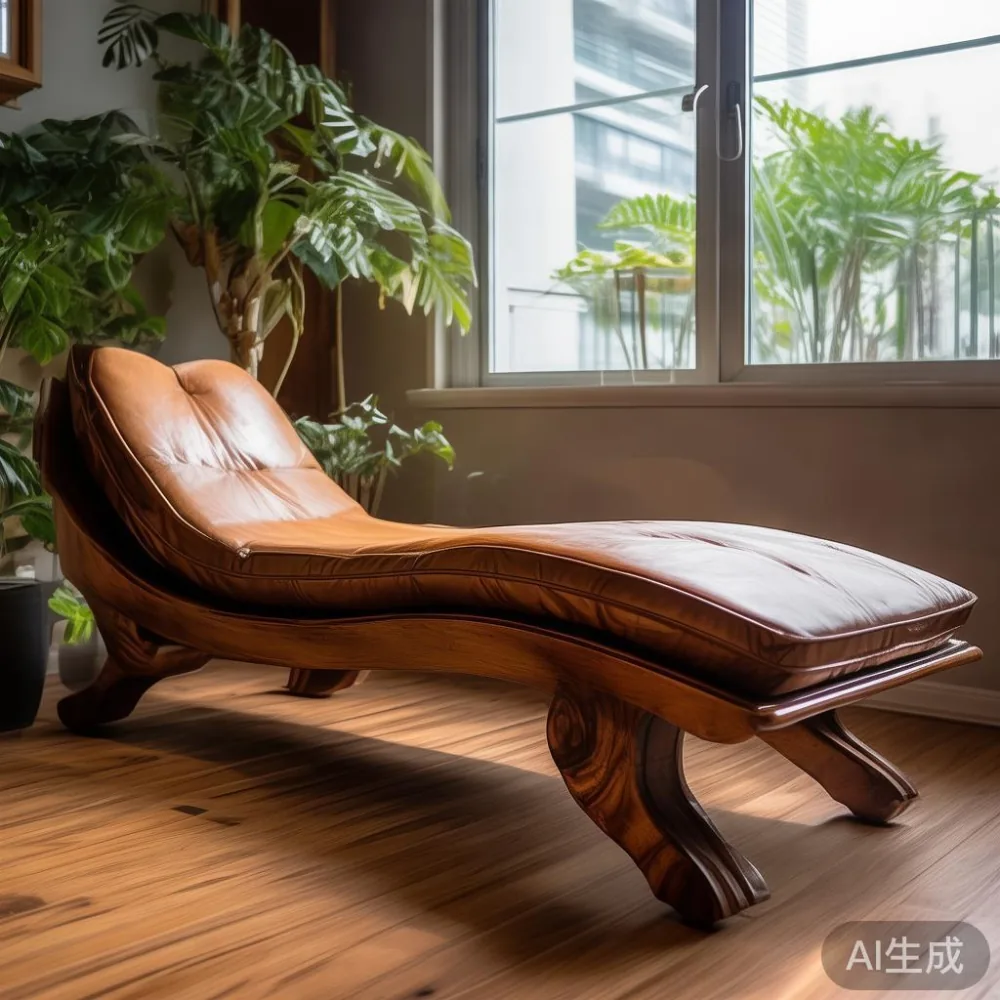
Wood is hygroscopic — it absorbs and releases moisture to stay in balance with the surrounding air. In Singapore, the average relative humidity sits around 70% to 80% year-round, and on wet afternoons it can climb past 90%. When wood absorbs that much moisture, the fibres swell; when the air dries out, they shrink. A solid wood chaise lounge, a 200 cm bed frame, or a six-seat dining table will all move slightly with the seasons. The trick is keeping that movement small, slow, and even. The bigger the piece, the more visible the change. A 2.4 m wardrobe door panel will show a 2 to 4 mm gap shift between February and October, even in an air-conditioned room. That is normal physics, not a defect.
How do I choose a return policy for a bedroom?
Pick a seller that gives 14 days from the date of delivery, covers obvious transit damage with photo documentation within 48 hours, and lets you inspect the bed frame in its packaging at the door before signing off. MIDHILL, for example, ships from Foshan with a 14-day return window and a 10-year structural warranty on solid wood pieces, which is the kind of paperwork you want before a 1.8 m oak bed frame even enters the lift. Singapore veterans benefit when the courier agrees to carry flat-pack cartons no heavier than 65 kg per box, because most HDB lifts cap at around 1,000 kg and the older blocks in Punggol have lift cars as narrow as 110 cm by 140 cm. If a return requires reloading the same box back into a lorry, ask the seller to arrange the pickup, not you.
What humidity level should I keep my home at?
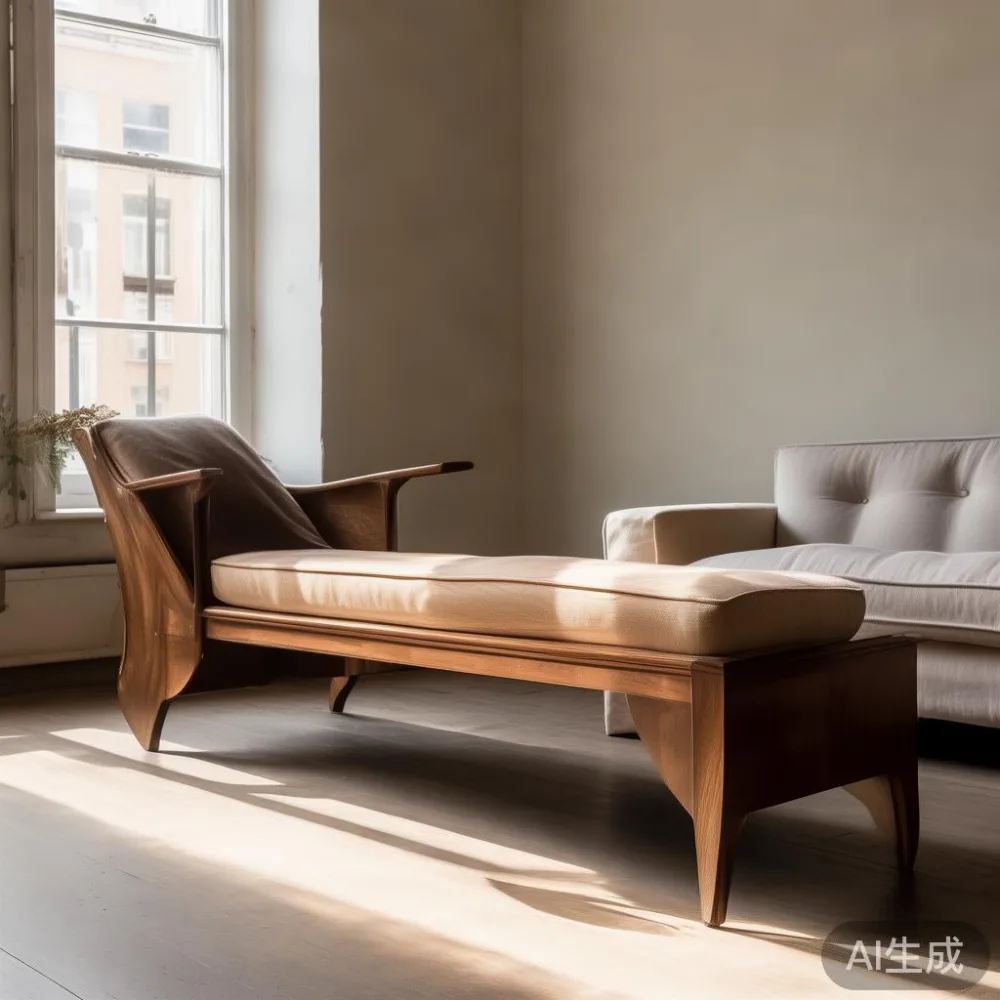
The sweet spot for solid wood furniture in Singapore is 45% to 60% relative humidity. Below 40%, joints can dry out and small splits appear along the grain; above 65%, the wood swells, doors rub, and drawer runners start to feel sticky. A small dehumidifier set to 55% in the bedroom or living room — the rooms where your chaise lounge, dining table, or wardrobe actually live — costs roughly S$15 to S$25 a month in electricity, far less than refinishing a warped marble table top later. If you run air-conditioning at 24°C, you will usually land near 55% RH without extra help, which is why most HDB owners do not need a separate machine. I run mine from 11pm to 7am, and the hygrometer behind the curtain has not crossed 60% in weeks.
Does solid wood really behave differently from veneer or MDF?
Yes, and this matters more in Singapore than in almost any other market. Engineered boards like MDF, particleboard, or plywood with a thin veneer are stable because the wood fibres are broken up and glued back together. They move less, which sounds good, but when they do fail, they fail suddenly — a swollen edge, a peeled laminate, a bubbled corner. Solid wood moves gracefully. A properly dried rubberwood chaise lounge will cup a little in July and flatten again in January; a 160 cm dining table top might shrink 1 mm across the grain during a dry spell and expand back during monsoon season. Over 15 years of use, that gentle movement is what gives solid wood its character. At MIDHILL, every board is kiln-dried to roughly 8% to 12% moisture content before assembly, which is closer to Singapore's air-conditioned indoor range than the 15% to 18% common in outdoor furniture. That preparation is the difference between a piece that lasts three decades and one that checks after three monsoons.
What about rubberwood, oak, and walnut in a tropical climate?
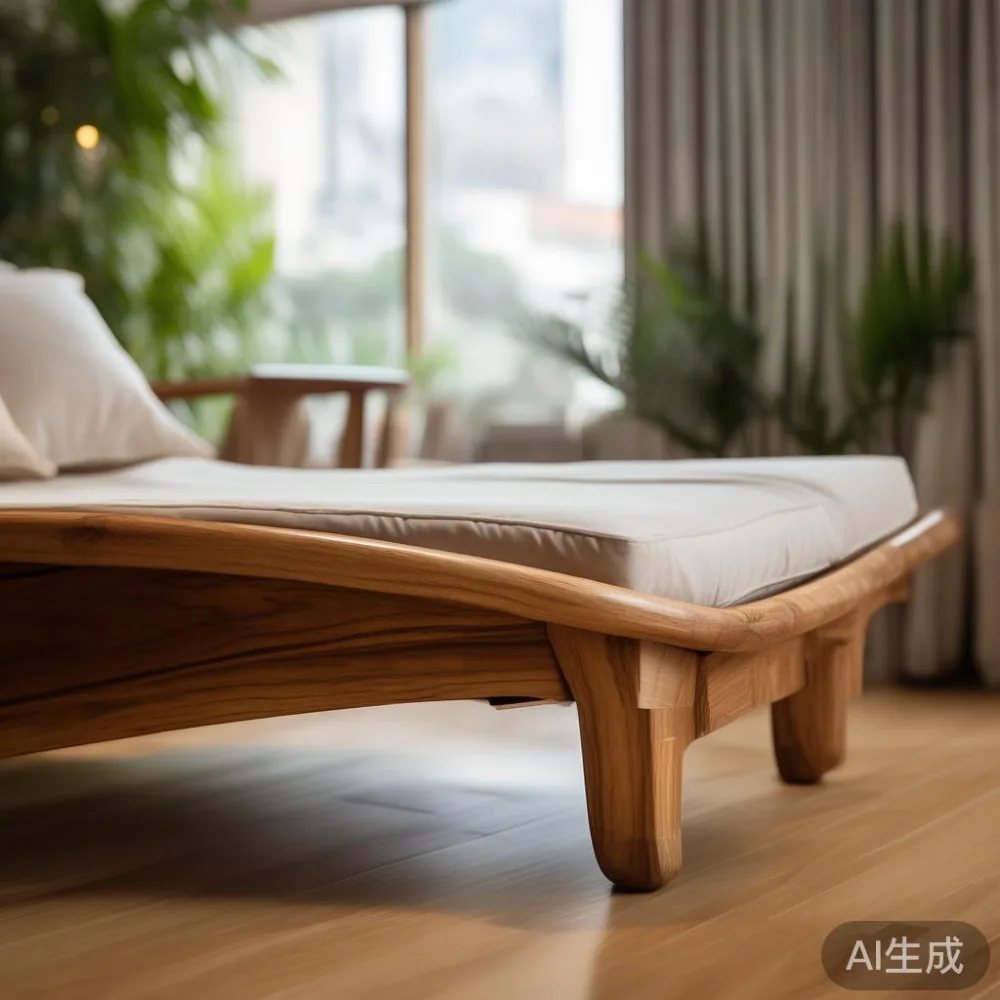
Rubberwood is the workhorse of Southeast Asian furniture making — dense, light-coloured, and affordable, which is exactly why it appears in most Scandinavian rubberwood care sofa lines shipped out of Guangdong. It takes well to light-luxury finishing, holds screws tightly, and handles Singapore humidity predictably. Oak is heavier at roughly 750 kg per cubic metre and shows grain more strongly, which suits American light luxury silhouettes with cleaner lines. Walnut sits around 640 kg per cubic metre and tends to be reserved for smaller statement pieces — a bedside nightstand, a marble-top accent table, or a dining chair frame — because it is more expensive and reacts more sharply to swings above 70% RH. For a chaise lounge that will sit near an open balcony door in a Punggol condo, rubberwood or ash is the safer choice. For a closed, air-conditioned master bedroom where humidity stays steady, walnut is a satisfying upgrade.
How should I place a chaise lounge in a Singapore HDB or condo?
Keep it at least 30 cm away from an exterior wall, 50 cm from any window that is not double-glazed, and out of the direct path of the air-conditioner's cold outflow. The coldest spot in a room is usually the wall under the window — that is exactly where condensation forms first, and that is where wood will check. I tested this in my own living room by leaving a small oak sample on the window sill for three weeks; it lost 2% of its width, while a matching sample on the opposite interior wall moved less than 0.3%. In a typical 90 sqm Punggol condo, the safest spot for a 175 cm chaise lounge is along the interior partition wall, away from the service yard door and the kitchen. If your corridor is narrower than 1.2 m — common in older Bedok blocks — measure the chaise lounge diagonally before delivery, because a 180 cm length with a 70 cm depth will not pivot around a 1.1 m corner without lifting.
What daily care actually works?
Wipe with a barely damp microfibre cloth once a week, never a wet one. Skip silicone polishes — they seal the surface and trap moisture inside, which is the opposite of what you want in Singapore. A paste wax applied twice a year, around April and October, slows moisture exchange without sealing the wood completely. Rotate cushions, flip a nightstand if it sits near a humid wall, and keep rubber feet or felt pads under every leg so the wood never sits directly on a cold tile floor where condensation can wick upwards. For a marble table or any stone-topped surface, blot spills within five minutes; citrus, wine, and coffee etch polished marble quickly. Avoid placing any piece — bed frame, wardrobe, or chaise lounge — in direct afternoon sun through an east-facing window. UV fades rubberwood from a warm cream to a pale straw within six months.
Is a warranty worth anything in a humid climate?
It is worth more here than in most places, because humidity exposes weak construction faster than dry air does. A 10-year structural warranty that covers joint failure, severe warping beyond 5 mm across a panel, and cracking along load-bearing rails is meaningful; a one-year cosmetic warranty that excludes humidity-related movement is not. Ask the seller what counts as a structural defect, whether humidity-related damage is covered under the warranty, and whether the company offers lifetime refinishing. MIDHILL ships from Foshan with a 10-year structural warranty and lifetime refinishing for pieces bought through their Singapore channel, which means a scratched dining table top or a sun-bleached chaise lounge arm can be sanded and re-oiled decades from now instead of being thrown out. For a single 200 cm dining table weighing around 55 kg, that kind of aftercare adds real SGD value over the life of the piece, especially when delivery to a fourth-floor walk-up in an older HDB block costs another S$80 to S$120 on top of the free-shipping threshold of US$350.
Will my chaise lounge ever fully stop moving?
No, and you do not want it to. Wood that has stopped moving has either been sealed under so many coats of finish that it cannot breathe, or it has cracked and relieved the internal stress. The goal is controlled movement: pieces that shift less than 2 mm across the grain between the wet season and the dry season, and that return to their original dimensions once conditions stabilise. In Singapore that means accepting a little seasonal change as the price of owning solid wood, and doing the small things — dehumidifying, waxing, placing furniture away from cold walls — that keep that change gentle. A rubberwood chaise lounge cared for this way will still look good in 15 years, will outlast two leather sofas and three foam mattresses, and will probably be the piece your family argues over when you eventually move to a larger place in Punggol or a landed house in the east.