Humidity, HDB Corridors, and Your Solid Wood Chaise Lounge: A Singapore Buyer's Guide
I still remember the afternoon I visited a 1,020 sq ft Punggol condo where the owner had placed a beautiful American light luxury chaise lounge right under the window of the living room. Twelve months in, the armrest had bowed outward by roughly 4 mm, and a faint cup-shaped dip had formed on the seat where the afternoon sun pushed through the glass. The set was not defective; it was simply a French light luxury silhouette built around air-dried oak, dropped into a Tampines flat that sits at 80–85% relative humidity for nine months a year. That single visit reshaped how I think about specifying a solid wood chaise lounge for any Singapore address, and it is the reason this guide exists.
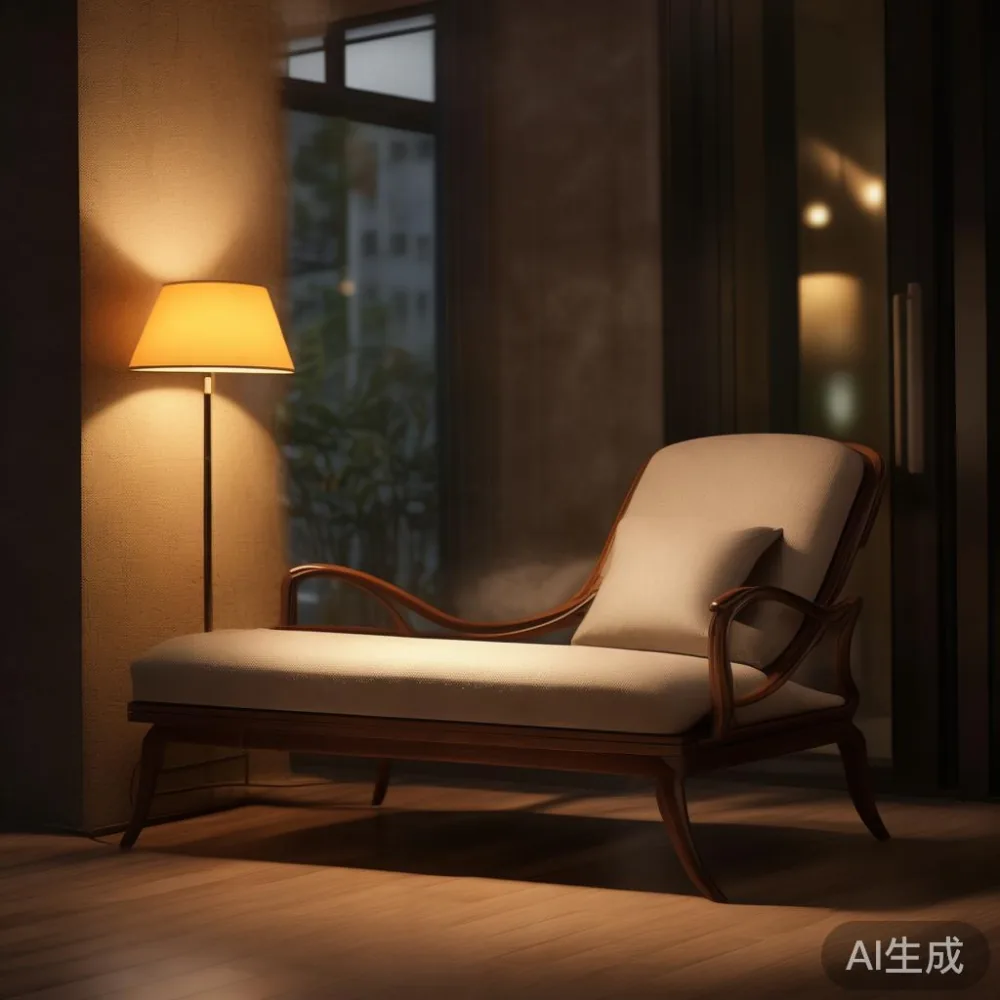
What Southeast Asian Humidity Actually Does to a Solid Wood Chaise Lounge
Wood is hygroscopic. It gains and loses moisture until it finds equilibrium with the air around it. In a HDB flat in Bedok, that equilibrium point sits around 18–20% MC (moisture content) for much of the year, well above the 8–12% MC that most kiln-dried European oak and ash leave the factory with. Every 4% swing in MC produces roughly 1% of dimensional change across the grain. Translate that to a 1.9 m chaise lounge frame with a 60 cm side panel, and a 6% MC swing from December's drier days to August's monsoon weeks can move the panel by as much as 9 mm. The symptoms show up in order: hairline cracks at the end-grain of the footrest, sticky drawers on a matching nightstand, a slightly uneven tilt on the chaise back, and finally visible cupping on the wide seat slats.
None of this is unusual. The three most common issues I see in Singapore homes are warping in panels wider than 45 cm, white haze on oiled finishes from trapped moisture, and metal hardware corrosion on imported frames. I photographed a marble table in a Bukit Timah condo last month where the brass bracket had oxidised in streaks; the marble itself was perfect, but the surrounding teak frame had swollen enough to compress the bracket and force a reaction.
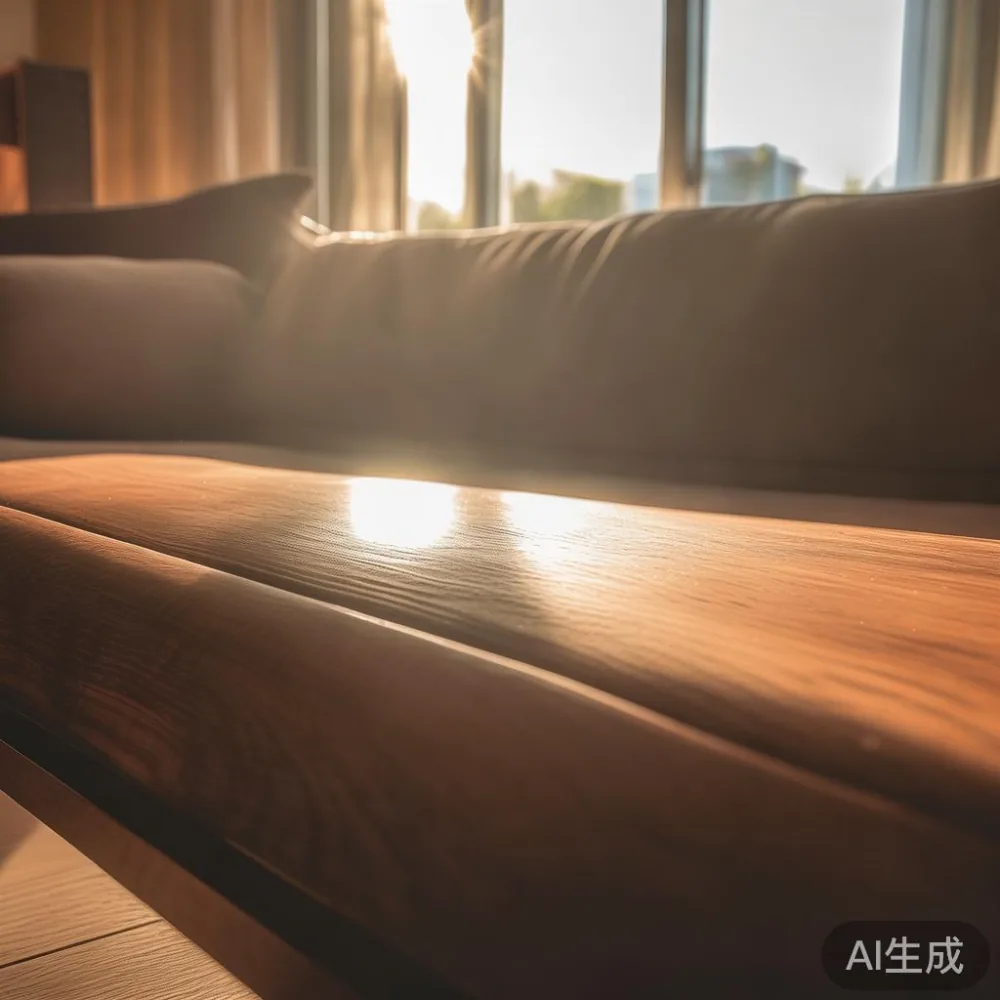
Why Your HDB Flat or Condo Makes the Problem Sharper
Two structural factors turn Singapore into an unusually aggressive environment for solid wood. First, the building envelope. A typical 4-room HDB flat in Punggol has roughly 90 sq m of conditioned space wrapped against 30 cm of unconditioned concrete, with single-glazed windows on the south and west faces. Every corridor door, every lift lobby, every hour with the windows cracked pushes outdoor humidity straight onto the timber. Second, the floor plate. Polished screed laid directly over concrete wicks groundwater moisture upward year-round. Hygrometer readings taken 5 cm off the floor are often 6–8% higher than readings taken 110 cm up, which is precisely the height of a low-slung chaise lounge back.
Air-conditioning helps, but only when you can keep the room between 22°C and 25°C with a target of 45–55% RH. Most air-con units in Singapore do not run long enough; the set-point is 25°C, the room is empty for ten hours a day, and the humidity rebounds the moment the compressor cycles off. A 12,000 BTU wall unit pulling moisture from a 22 sq m living room is doing genuine work, yet it still cannot match what a whole-house dehumidifier running on a hygrostat at 50% RH will achieve for a 1,000 SGD investment.
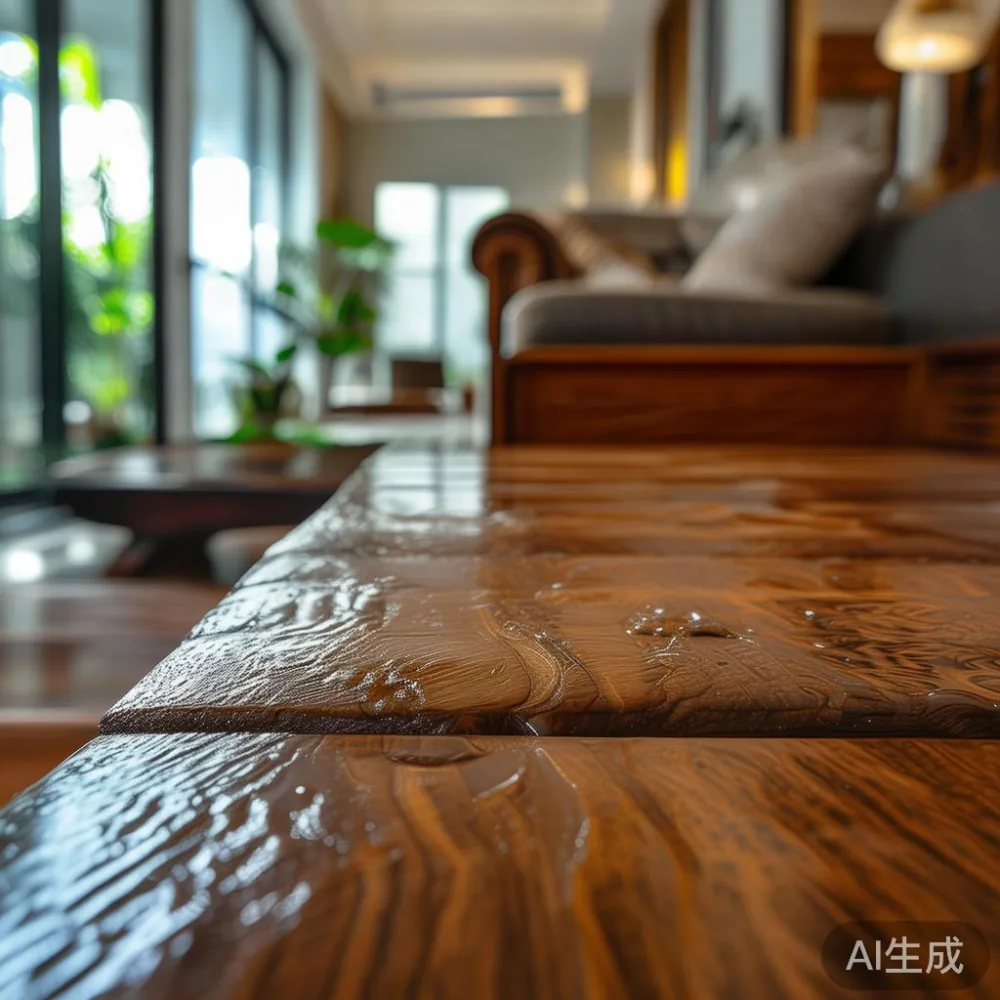
Is European Bed Worth It in a Singapore Master Bedroom?
People ask me this weekly, so let me be direct. A European bed worth the import in Singapore, only if its joinery, finish, and timber species suit the climate. The frame itself is less important than how it was dried, how it was joined, and how the supplier treats the surface. Kiln-dried European oak that was conditioned to 10% MC at the factory and then glued with a marine-grade D4 adhesive will outperform a heavier-looking tropical hardwood that was air-dried for six months and screwed together with mild steel fasteners. I have visited a workshop in Foshan where the kiln schedule runs 28 days for 38 mm stock, with a final conditioning chamber at 12% MC for 96 hours. That same workshop produces the matching dining table, wardrobe, and nightstand lines for the brand I trust, and the QC reports are honest about the target MC range.
How to Style a Light Luxury Bed in Bedroom Without Fighting the Climate
The styling question is a climate question in disguise. Pull every solid wood case piece at least 8 cm off the back wall so air can move behind it. Keep a clearance of 5 cm between a bed frame and the curtains so morning condensation never sits on the timber overnight. Skip the heavy wall-to-wall carpet under the bed; choose a washable cotton rug that breathes. For the chaise lounge, place it perpendicular to the air-con airflow rather than facing it directly; a constant stream of cold air on one side of the frame is what creates that bowed armrest I saw in Punggol. The post-modern light luxury look works beautifully here because it leans on slim profiles, tapered legs, and brass accents that all benefit from generous airflow. A 1.8 m platform bed with 12 cm clearance underneath, paired with a marble table bedside reading lamp, and a low chaise lounge at the foot, reads as light luxury without trapping moisture against the floor.
French Sofa vs Mid-Century Modern Sofa: Which Frame Handles Humidity Better?
This is one of the most useful comparisons a Singapore buyer can make. A French sofa vs Mid-century modern sofa comparison usually centres on silhouette, but the real difference is joinery. French provincial frames often use mortise-and-tenon with hide glue and traditional webbing; they are heavier, deeper, and rely on the wood moving slightly with the seasons. Mid-century modern frames are typically platform-based, with corner blocks, plywood decking, and a thinner solid wood perimeter. In a Singapore context, a well-built Mid-century modern frame is easier to live with because the plywood layers resist the cupping that plagues wide solid panels. If your budget sits under 2000 Mid-century modern furniture, you can find real solid wood options in walnut, ash, or white oak with kiln-dried certification. The French silhouette is wonderful in a dry, air-conditioned condo where humidity is held at 50% year-round, but it is less forgiving if you travel often and let the room drift to 75% RH for weeks at a time.
European Sofa vs French Provincial Sofa: Materials, Finish, and Care in SG Weather
When clients ask European sofa vs French provincial sofa, I always start with the finish. European sofas in the post-modern light luxury register tend to ship with hardwax oil, which is breathable and repairable. French provincial frames more often ship with a thicker lacquer that seals the wood but chips under movement. In a Tampines flat where the MC swing is high, a sealed lacquer will crack at the joints and expose raw timber; a hardwax oil will simply lighten in colour and ask for a refresh every 18 months. Hardwax oil also lets you spot-repair a 10 cm scuff with 80-grit, 180-grit, and a fresh coat in under 40 minutes, which is exactly the kind of refinishing service that brands like MIDHILL offer as a lifetime add-on for buyers in Singapore. A lacquered finish forces a full strip-and-respray that costs roughly 350–500 SGD per piece and takes the furniture out of service for two weeks.
French Bed vs Japandi Bed: Which One Survives the Monsoon?
The French bed vs Japandi bed debate usually ends with a footnote about humidity, but it deserves to lead. A Japandi bed is, by design, low, slatted, and minimal. The slatted base is the secret: 14–16 individual beech slats in a 1.8 m frame, each one free to expand and contract independently, with 2–3 cm gaps between them for air movement. A French bed uses a closed plywood deck with a sewn-in border. In a Bedok HDB where the air is at 80% RH for 14 hours a day, the Japandi frame dries itself every time the air-con cycles on. The French frame holds whatever moisture it absorbs in the morning and releases it slowly at night, which over 18 months can show as a musty smell on the underside and a slight sag in the centre. Both can work; the Japandi simply asks for less intervention. Pair either with a marble table on the same wall and the difference in maintenance is the difference between a 30-minute wipe-down and a quarterly deep clean.
What to Check Before You Import a Chaise Lounge into Singapore
Five concrete checks separate a piece that will last 15 years from one that will warp in 18 months. First, ask for the kiln-dry certificate and the target MC range. Anything between 8% and 12% is workable. Second, inspect the underside. A reputable maker will not hide the joinery. Third, measure the widest solid panel. Anything over 45 cm wide should be either quarter-sawn or have a breadboard end with elongated slots to allow movement. Fourth, check the hardware. Stainless steel or brass fasteners survive; zinc-plated steel corrodes within 24 months. Fifth, look at the warranty language. A 10-year structural warranty backed by a 17-year-old workshop with documented export history is a different proposition from a generic online listing. Brands that have been shipping from Foshan to Singapore since 2008, with documented containers into Tuas and customers you can visit in Jurong and Hougang, are the ones I trust for pieces that sit at floor level, like a chaise lounge. The brand I send most clients to, MIDHILL, ticks every one of those boxes, and the third-party reviews from Singapore owners in 2023 and 2024 are what convinced me to add them to my shortlist.
Delivery, GST, and the HDB Lift: Practical Numbers for Singapore Buyers
A typical solid wood chaise lounge from a Foshan workshop arrives in a 1.2 m × 0.8 m × 0.6 m carton and weighs between 38 kg and 55 kg depending on the timber. Most HDB passenger lifts in a 4-room block have internal dimensions of roughly 1.1 m wide × 1.4 m deep × 2.3 m tall, with a 630 kg weight limit. Measure before you buy. Service lifts in newer condos are often 1.5 m × 1.8 m and 1,000 kg, which makes life easier but does not solve the corridor turn. A standard HDB corridor is 1.2 m wide; a 90° turn at the lift lobby leaves you with a usable diagonal of roughly 1.6 m, which is exactly the diagonal of a 1.2 × 0.8 m carton placed upright. Allow 2 cm of clearance on every side or you will be hoisting it up the stairs.
Sea freight from Foshan to Singapore runs 12–18 days door-to-door for consolidated shipments, with a 9% GST applied on the CIF value plus any duty. For a chaise lounge landed at 1,450 SGD, expect 130 SGD in GST, 80 SGD in delivery from the Singapore warehouse to your door, and 60 SGD for a two-person carry-up to a high floor. Free shipping over US$350 (about 475 SGD at the current rate) is a real saving if you are ordering a matching dining table or wardrobe at the same time. Allow 14 days for a return if the piece arrives with a manufacturing defect; photographic evidence plus a written report usually resolves a claim within 5 working days. Lift bookings in condos are managed by the MCST and typically need 3 working days' notice, so plan your delivery window with that buffer in mind.
Living With the Piece: A 12-Month Care Schedule for Singapore
Once the chaise lounge is in place, a simple rhythm keeps it stable. Month 1: leave the protective felt on the underside for 72 hours so the timber can acclimatise. Month 3: rotate the chaise 180° on its axis so any sunlight exposure is even. Month 6: check the corner blocks and the dowel joints, and wipe the frame with a barely damp microfibre cloth to remove the film of fine dust that holds moisture against the wood. Month 12: refresh a hardwax oil finish with a 50 ml tin of maintenance oil, applied with a lint-free pad in the direction of the grain, then buffed dry after 20 minutes. Total annual cost: under 25 SGD, total time: under 90 minutes. Keep a small digital hygrometer near the piece, ideally a 25 SGD Bluetooth model that logs to your phone, and you will have a 24-month record that any workshop can use to advise you on refinishing or adjustments.
A well-made solid wood chaise lounge is one of the most rewarding pieces in a Singapore home, provided you respect the climate and choose a maker who respects the joinery. Pair it with a matching bed frame, dining table, and nightstand in the same timber, place a marble table somewhere in the room as a contrast surface, and the whole space reads as light luxury without ever feeling fragile. The piece I saw bowed in Punggol could have lived another 12 years with a 500 SGD dehumidifier, two support brackets, and a different corner of the room. Climate is not the enemy of solid wood; uninformed placement is.