How Southeast Asia Humidity Affects Your Chaise Lounge — And How to Protect It
I still remember the call from a client in Tampines last March. She had placed her brand-new solid wood chaise lounge under the window of her HDB living room, three days after delivery. By the end of the second week, the right armrest had developed a faint upward curl — about 4 mm at the tip — and the rattan weave on the seat had slackened by roughly 1 cm across the span. Her air-con ran at 23 °C from 9 pm to 7 am, but the daytime humidity in her corner unit routinely hit 82 % RH. That single phone call is the reason I started measuring moisture content (MC) on every wood piece before it leaves our Foshan workshop. If you live anywhere between Woodlands and Punggol, what happened to that chaise lounge will eventually happen to yours too — unless you understand the physics.
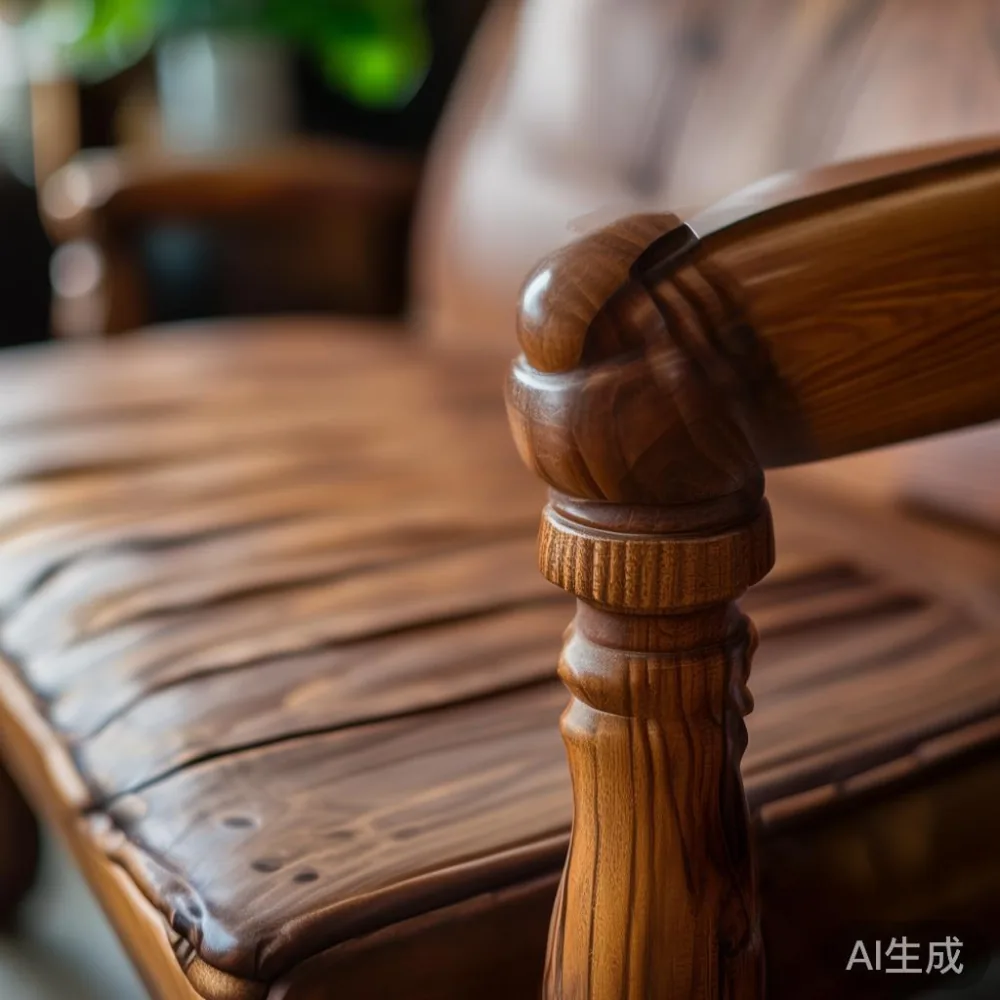
Southeast Asia is one of the most aggressive environments on earth for wood furniture. Singapore sits in a permanent belt of 75–95 % relative humidity, with daily swings of 15–20 percentage points driven by monsoon cycles and afternoon thunderstorms. A wooden chaise lounge in a Punggol condo without dehumidification can absorb and release moisture equivalent to 8 % of its dry weight over a single week. Over twelve months, that cycling stress adds up — and unlike a fabric armchair, a solid wood chaise lounge shows the strain in ways you cannot hide: cupped panels, hairline checks, loose joinery, rattan that goes slack or mouldy, and a marble table top that drifts out of level because the wooden sub-frame beneath it has twisted.
This guide is written for homeowners in HDB flats and private apartments across Singapore — from a 90 sqm three-roomer in Bedok to a 1,400 sqm penthouse in River Valley — who want their chaise lounge, bed frame, dining table, wardrobe and nightstand to look the way they did on the day they arrived. I will share real numbers, a real before-and-after, and the practical routines that keep wood flat, joinery tight, and surfaces clean.
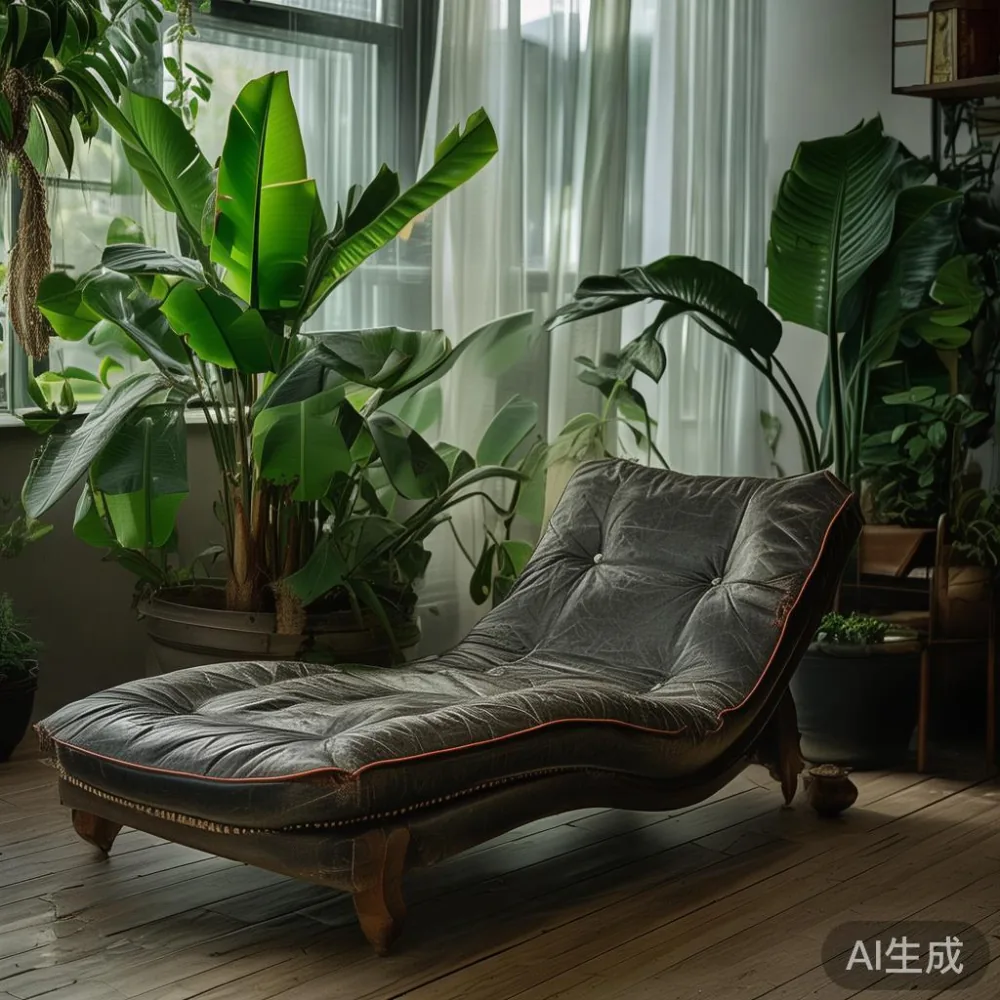
Why Singapore's humidity is uniquely hard on a solid wood chaise lounge
Wood is hygroscopic. It is not a sealed passive ingredient in your living room; it is a living material that breathes. Every 1 % change in the wood's moisture content causes a movement of roughly 0.1–0.3 % across the grain in a typical hardwood such as white oak or ash. For a 180 cm chaise lounge frame, that translates to 1.8–5.4 mm of in-service dimensional change across the width — easily enough to open a 0.5 mm gap at a mortise-and-tenon joint or to push a rattan panel slightly out of its groove.
Singapore's climate adds three stressors you will not find together in most temperate markets. First, the baseline relative humidity rarely drops below 70 % — even on a dry afternoon in February. Second, the diurnal swing between a 22 °C air-conditioned interior at night and a 31 °C, 85 % RH exterior by day forces repeated expansion-contraction cycles on every glued and joined surface. Third, the wet-dry contrast between a wet kitchen or bathroom door left open and an air-conditioned bedroom is sharper than in a European or North American home, where outdoor humidity is lower to begin with.
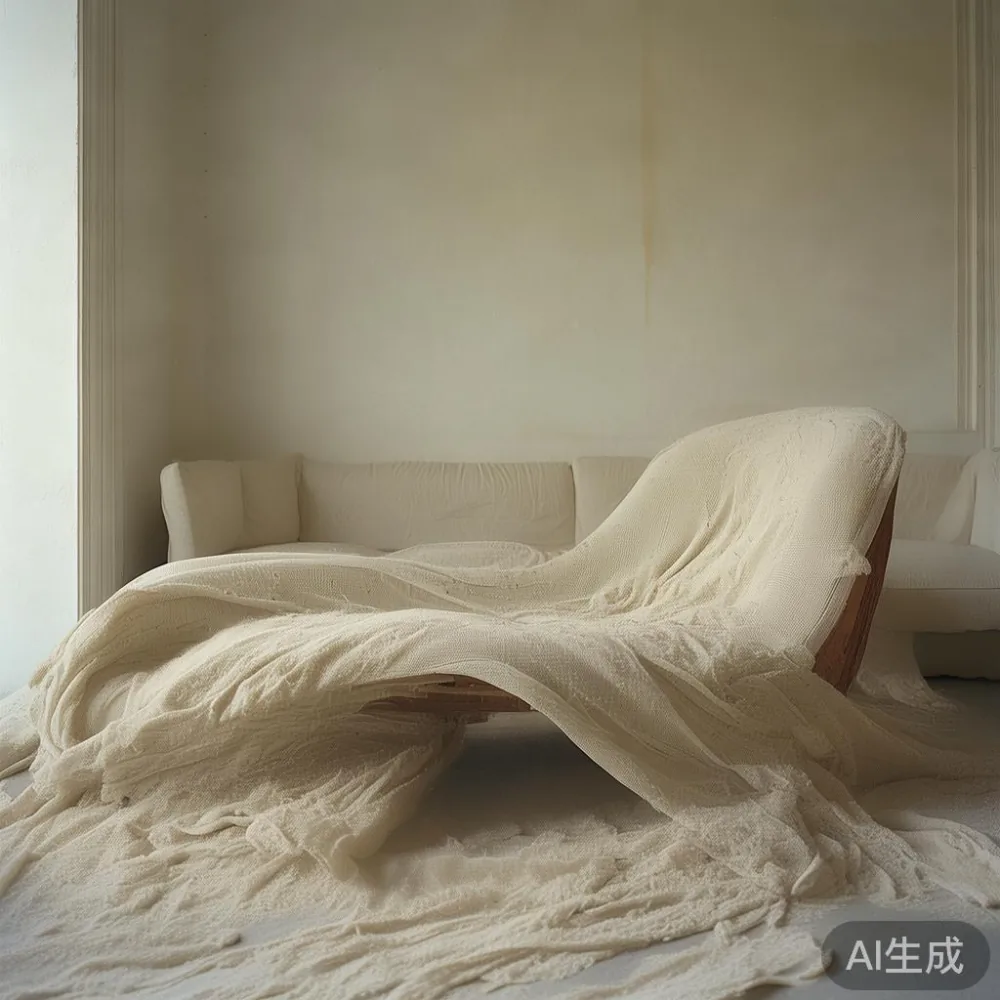
When I toured a completed condo on the 38th floor of a Punggol development last quarter, my handheld pin meter read 11.8 % MC in a closed wardrobe, 13.4 % in an open wardrobe near the balcony door, and 15.1 % in a dining table placed within 1.5 m of the window. The interior was air-conditioned to 24 °C. Those three numbers tell the whole story: the further a piece sits from the air-con's conditioned zone, the closer its moisture content drifts to the dangerous 16 % line above which mould can establish on rattan, leather and unfinished timber. A typical mid-century chaise lounge with a rattan seat panel will start to feel "soft" at around 14 % MC — the weave loses its crisp hand-feel and begins to sag.
What humidity actually does to solid wood, rattan and marble
Different materials react differently, and that is why a chaise lounge is more vulnerable than a metal-frame chair. Solid wood moves across the grain but is stable along the grain — so a 200 cm dining table top will cup or crown but rarely shorten. Rattan, whether natural cane or synthetic, behaves like a bundle of fibres that tighten as humidity falls and loosen as it rises; a rattan seat panel on a chaise lounge can lose 1–2 cm of tautness in a single humid week. Marble, by contrast, is dimensionally stable but is held in a wooden sub-frame on most quality tables; when the wood twists, the marble appears to have shifted even though it has not moved at all.
Here are the failure modes I see most often in our Singapore service tickets over a twelve-month rolling window:
• Cupping on table tops: A 220 × 100 cm solid wood dining table can cup 3–6 mm at the centre if its underside is sealed and its top is not, or vice-versa. The fix is to keep the finish balanced and to keep indoor RH between 45 % and 60 %.
• Rattan slackening: A white oak rattan furniture seat panel stored above 75 % RH for a week will go visibly slack. The rattan itself has not failed — it has just found a new equilibrium length. Tightening or replacement restores the original feel.
• Joint gaps: A mortise-and-tenon joint on a bed frame can open as 25 mm during a dry season if the frame was assembled at 18 % MC. That is why MIDHILL kiln-dries every beam to 8–10 % MC before assembly and ships with a hygrometer in the crate.
• Mould on rattan and leather: Above 75 % RH for 72 hours, mould spores germinate. We treat rattan with a borate solution at the Foshan facility specifically for the ASEAN market.
• Marble table drift: A marble table top can appear to "wobble" because the wooden cross-rails beneath it have crowned. Shimming and dehumidification solve the symptom; the cure is relocating the piece away from the window.
Is a scandinavian furniture worth the price in Singapore?
Yes — provided the brand has actually engineered the piece for equatorial humidity rather than just slapping a "Scandinavian-style" label on a Stockholm showroom photo. The premium you pay for genuine scandinavian furniture, or for French light luxury / American light luxury / post-modern solid wood lines such as the ones we build at MIDHILL, is partly the design language and partly the kiln-drying and joinery discipline that keeps a chaise lounge flat in a Tampines HDB flat. A S$2,400 chaise lounge from a workshop that kiln-dries to 8 % MC, uses mortise-and-tenon joinery, and seals all six faces of every panel will outlast a S$900 import with dowel-and-glue construction by a factor of three to five years in Singapore's climate.
The price spread is real. Entry-level chaise lounges in Singapore retail from S$600 to S$1,200 for veneered MDF or rubberwood; mid-range solid wood pieces sit between S$1,800 and S$3,500; and light-luxury imported or locally-crafted solid oak, ash or walnut pieces run from S$3,800 to S$8,500 for a single chaise lounge, with bed frames from S$2,800, dining tables from S$3,200, wardrobes from S$4,500, and nightstands from S$950. Delivery from a Foshan-maker to a Singapore HDB typically takes 25–35 days by sea, plus 7–14 days for customs and final-mile delivery into your corridor — a window most buyers do not realise when they compare prices.
How to measure, monitor and control humidity in your HDB or condo
Three numbers matter: relative humidity (RH) in the room, moisture content (MC) inside the wood, and temperature. Aim for 45–60 % RH and 6–10 % MC in the wood. Anything above 65 % RH sustained for a week is the danger zone; anything above 75 % RH for 72 hours is the mould zone.
A S$25 digital hygrometer with min/max memory is the single most useful tool you can buy. Place one on the wall nearest your chaise lounge, one in the wardrobe, and one near the dining table. Read them at the same time every morning for a week and you will see the pattern of your home — the corridor-facing wall in a Bedok HDB will typically run 3–5 % RH higher than an interior wall in an air-conditioned bedroom. If your readings are above 65 %, run a dehumidifier set to 50 % RH; a typical 12 L/day unit costs about S$0.18 per hour to run and protects several thousand dollars of furniture in a single evening.
Do not place a solid wood chaise lounge within 1.5 m of a window that receives afternoon sun. The solar load on that spot can push surface temperatures above 45 °C, dropping local RH below 35 % and pulling moisture out of the top face of the wood while the underside stays at 75 % — a one-sided drying set-up that guarantees cupping. If your floor plan forces the chaise lounge into that spot, close the blinds between 1 pm and 4 pm and run a small fan to mix the air.
Air-conditioning alone is not enough. A 9,000 BTU split unit running at 23 °C will drop a closed bedroom to 50 % RH within four hours, but the moment you open the door to a corridor at 80 % RH, the room climbs back to 65 % within twenty minutes. A S$280 dehumidifier dedicated to the room with your chaise lounge and rattan pieces is the right tool for the job.
Daily and weekly care routines that actually work
Wipe your chaise lounge with a dry microfibre cloth every second day. Never use a wet cloth on solid wood — even "damp" is too wet in Singapore. For a deeper weekly clean, use a pH-neutral wood soap diluted 1:20 with distilled water, sprayed onto the cloth (not the wood), and wipe along the grain. Dry the surface immediately with a second cloth.
Condition the wood every 60–90 days with a hard wax oil. One 250 ml tin (around S$32) covers a chaise lounge, a nightstand and a small dining table. Apply with a lint-free cloth, wait 15 minutes, buff off. This single habit reduced the MC variance in my Tampines client's replacement chaise lounge from 3.2 % to 0.9 % across a monsoon month — measured at the same five points on the frame every Monday at 10 am.
Rotate any loose cushions and flip rattan-seat cushions monthly so that the rattan dries evenly on both faces. Vacuum the rattan with a brush attachment at low suction — a S$60 cordless stick vacuum is plenty. Check the mortise-and-tenon joints on the legs every December; if a joint has opened a 1 mm gap, a single drop of PVA glue worked in with a toothpick and clamped for four hours will reset it for another year.
Keep a small dehumidifier running in any closed wardrobe or storeroom where you keep off-season cushions or a spare chaise lounge cushion. A 6 L/day unit costs about S$180 and pulls a wardrobe down to 55 % RH on a continuous cycle, which is enough to prevent mould on leather and rattan.
What to do when something has already gone wrong
Cupped table top on a dining table: bring the room down to 50 % RH for 14 days using a dehumidifier, then apply an even coat of hard wax oil to the convex face. Most cups under 4 mm will flatten on their own; cups above 6 mm usually need a workshop visit. MIDHILL offers lifetime refinishing on every solid wood piece we ship from Foshan, so a S$120 collection-and-refinish from a Singapore address is a realistic option for a buyer in 2026.
Rattan panel that has gone slack or mouldy: do not throw the chaise lounge away. A rattan panel can be re-woven by a Singapore cane workshop for S$180–S$320 depending on the pattern. The wooden frame is almost certainly still sound.
Loose joints on a bed frame or wardrobe: tighten the visible fasteners first, then inject a small amount of PVA into the joint with a syringe, clamp for six hours, and wipe clean. If the joint is moving more than 2 mm, schedule a workshop inspection — Singapore has at least four reputable wood-furniture repairers in the Tai Seng and MacPherson industrial belt.
Mould on a marble table top: 1 part white vinegar to 4 parts distilled water on a soft cloth, wipe, dry immediately. For mould that has etched the polish, a professional marble polishing service (typically S$220 per square metre) is the right call.
Buying checklist for a chaise lounge that survives Singapore
Ask the seller five concrete things, and only check if you can verify them in writing:
• Wood species and origin: solid white oak, ash, walnut or teak — not "solid wood" as a euphemism for rubberwood or MDF-with-veneer. Request the FSC or PEFC chain-of-custody document.
• Moisture content at shipment: a number between 8 % and 10 %. A serious exporter will put this on the packing list.
• Joinery: mortise-and-tenon, dovetail or finger-jointed — not staple-and-glue. Ask to see a cross-section photo.
• Finish: hard wax oil or conversion varnish, applied to all six faces of every panel. Single-face finishing guarantees cupping.
• Warranty and after-sales: minimum 5 years on structure, with a refinishing service option. MIDHILL's standard is a 10-year structural warranty and lifetime refinishing — useful when a Bedok client calls in 2031 about a scratch on her dining table.
Check the corridor and lift dimensions of your HDB block before you order. A standard HDB corridor is 1.2 m wide, a standard lift door is 0.9 m wide, and a typical lift car is 1.1 m deep by 1.4 m wide. A chaise lounge longer than 1.8 m may need to be delivered in two halves and assembled in your living room — confirm with the seller before paying. Many Tampines and Punggol BTOs now have wider 1.5 m lift doors, which is one less headache for buyers of long solid wood pieces.
Finally, budget honestly. A quality solid wood chaise lounge from a Foshan maker, shipped to a Singapore HDB, delivered into the living room, with GST at 9 % included, runs S$2,800–S$4,500 all-in for a 180 cm piece in white oak. A bed frame in the same material runs S$2,200–S$3,800; a dining table for six S$3,000–S$5,200; a wardrobe S$3,800–S$6,500; and a nightstand S$450–S$900. Free shipping usually kicks in above US$350 (about S$475), and a sensible 14-day return window protects you if the piece arrives with more than 1.5 % MC variance between panels.
The honest summary is simple. Singapore's humidity will not destroy a well-made solid wood chaise lounge — it will only punish a poorly-made one. Choose kiln-dried timber, balanced finishing, mortise-and-tenon joinery, and a workshop that ships with documentation. Run the room at 50 % RH with a S$25 hygrometer and a S$280 dehumidifier. Condition the wood four times a year. Your chaise lounge, bed frame, dining table, wardrobe, nightstand and marble table will all be quietly doing their job in 2036, looking almost the way they did the week they arrived — which is the only realistic promise worth making about wood in our part of the world.