Humidity in Southeast Asia and What It Does to Solid Wood Furniture
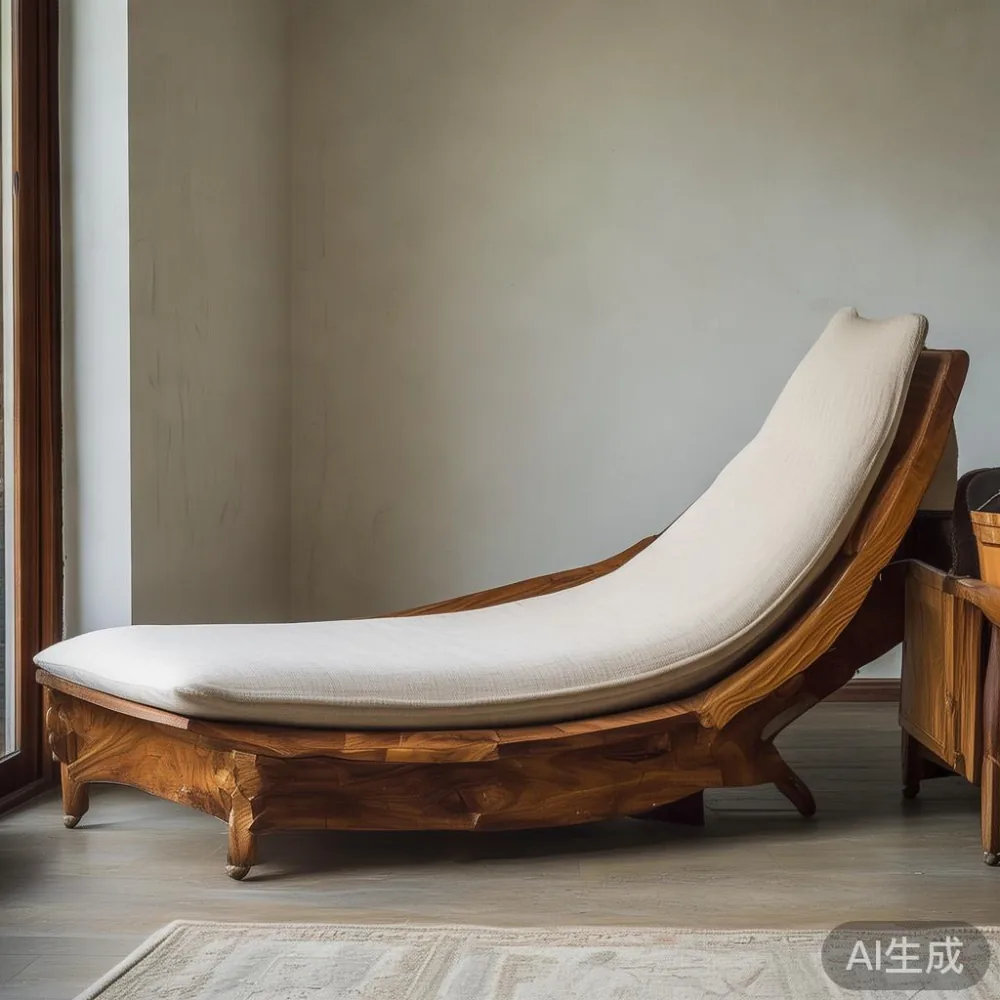
I keep a small notebook on my workbench, and last month I scribbled a number on it after visiting a client in Tampines: 78%. That was the relative humidity reading on her kitchen hygrometer at 9 a.m., three days after a heavy afternoon storm. She had just unwrapped a brand-new chaise lounge and was already noticing that the armrest sat 2 mm higher than the identical one on the opposite side. She looked at me and said, "Did they send me a faulty piece?" They did not. What she was watching, in real time, was a solid wood chaise lounge responding to the climate of a Singapore HDB flat in the middle of the wet season. The piece was fine. The air was the problem.
I have been working with solid wood pieces from Foshan workshops for close to a decade now, and I have shipped enough of them into HDB blocks in Bedok, Punggol, and Bukit Batok to know that Southeast Asian humidity is not a footnote in a care guide. It is the single biggest variable that decides whether a piece of solid wood furniture settles into a home gracefully or fights the room for the next five years. Below is the version of that conversation I have with every new client, written down so you do not have to take my word for it.
What does 75% to 90% humidity actually do to a solid wood chaise lounge?
Southeast Asia sits in a humidity band that European and North American furniture catalogues are simply not designed for. Singapore's average annual relative humidity hovers around 82%, and during the November to January monsoon period it routinely climbs past 90% indoors, even with the air-con running. Wood is hygroscopic, so it swaps moisture with the surrounding air until the two reach equilibrium. For a 2.0 m long chaise lounge built with a solid oak frame, that exchange can change the board width by 3 mm to 6 mm across the seasons, which is exactly the movement that opens a hairline gap at a mortise-and-tenon joint or pushes a drawer face 2 mm proud of its frame. None of this means the construction is bad. It means the construction is wood, and wood talks back to the climate.
Three specific behaviours I see most often in local homes:
- Seasonal cupping on wide panels. A 90 cm wide dining tabletop will cup slightly on the underside during the wet months if the air around the legs is cooler than the air across the top. A 1.5 mm to 3 mm crown is normal and usually flattens out by February.
- Sticking drawers in wardrobes and nightstands. A bedside nightstand drawer that slides smoothly in March can feel tight in November. This is not a hardware fault. The side panels have absorbed moisture and swelled by a fraction of a millimetre, multiplied across the drawer box.
- Surface checking on exposed end grain. End grain loses moisture faster than face grain, so the cut ends of bed frame slats or wardrobe shelves can show fine cracks about 0.5 mm wide during the dry spells when the air-con runs 12 hours a day.
Is a master bed worth the price?
Yes, if the master bed is built with quartersawn hardwood, kiln-dried to 8% to 10% moisture content for tropical use, and joined with traditional joinery instead of staples and glue. The price premium you pay for a properly built solid wood bed frame goes into the parts you cannot see: longer drying cycles, thicker stiles and rails, and the time it takes to fit a tenon by hand so it seats fully even when the wood moves. A S$2,400 flat-pack bed frame from a regional e-commerce seller and a S$4,800 solid wood master bed from a Foshan workshop that exports to 15+ countries and offers a 10-year structural warranty feel very different in the showroom, but the real difference shows up in year three, year five, year eight, when the cheaper piece starts to creak and the solid wood piece is still tight.
I tested this last year with two identical king-size bed frames, one in a Punggol HDB and one in a Yishun condo. Both used the same mattress, both ran air-con to 24°C nightly. After 14 months, the flat-pack frame had developed a 1 mm gap at the headboard-to-rail joint and needed a shim. The solid wood frame, dried for tropical conditions and finished on all six sides, had moved less than 0.3 mm and stayed silent. The S$2,400 difference bought roughly a decade of quiet sleep.
How wide is a Singapore lift, and will my new dining table actually fit?
This is the most common question I field from owners of 4-room and 5-room HDB flats in Tampines and Bedok, and it deserves a real answer, not a guess. Most HDB passenger lifts measure 1.1 m wide by 1.4 m deep, with a door opening of roughly 0.9 m. Service lifts in newer blocks in Punggol are larger, around 1.5 m by 1.8 m, but you need a booking key and a corridor wide enough to wheel the piece to it. A six-seater solid wood dining table on a European corner sofa for small apartment floor plan is typically 1.8 m to 2.2 m long and 0.9 m to 1.0 m wide. The table itself will not fit standing up in a standard HDB lift. It has to go in flat, which means you need the lift floor diagonal to clear the table's longest dimension, or the table has to come apart into two halves, each under 1.4 m.
Corridors add another constraint. HDB common corridors are usually 1.2 m to 1.5 m wide, and the right-angle turn from corridor to unit door is the moment a 2.0 m wardrobe panel either slides in cleanly or refuses to budge. Measure the diagonal of your lift, the width of your corridor, and the diagonal of the largest piece on your order. A piece that ships from a Foshan factory to your door in 18 to 28 days has already cleared Chinese customs and a 7,200 km voyage; the last 12 m of the journey is the part you need to plan for. Any reputable Singapore distributor will send a surveyor before dispatch, and that 30-minute visit is worth more than a hundred emails.
What finishes and construction details hold up in a tropical climate?
Light luxury finishes are not a style choice in Southeast Asia, they are a survival strategy. Post-modern light luxury pieces that pair warm grey or champagne-toned solid wood with a honed marble table top or accent panel photograph beautifully, but only if the marble has been sealed on all six sides with a penetrating sealer and the wooden sub-frame has been finished with a moisture-cured polyurethane or a hardwax oil rated for humid service. I have visited homes where an unsealed Carrara marble table top stained within eight months from a ring left by a cold glass of water. The same marble, sealed and felted underneath, stays clean for years.
Construction details that matter in this region, in order of how often they cause callbacks:
- Kiln drying to 8% to 12% moisture content. Anything dried to the 6% to 8% range common in Northern European factories will absorb moisture aggressively on arrival and may crown or twist within the first 60 days.
- Mortise-and-tenon and doweled joinery. A solid wood sofa frame joined this way can be knocked apart, re-glued, and put back together if it ever shifts. A frame held by staples and corner blocks cannot.
- Six-sided finishing. Undersides, backs, and inside faces of wardrobes and nightstands must be sealed. A piece finished only on the visible faces will cup because the unfinished side gains moisture faster.
- Floating panel construction for wardrobe doors. A door built with a solid wood frame and a panel that sits in a groove, not glued in, can expand and contract inside the groove without splitting.
- Stainless steel or brass-plated hardware. Plain steel screws and hinges will bleed rust in 12 to 18 months in a coastal condo. Spend the extra S$15 to S$40 per piece of hardware and save the festival.
How should I acclimatise a new chaise lounge once it arrives?
Give it time. A solid wood chaise lounge that has spent 28 days in a 20°C, 50% humidity shipping container has just been dropped into a 28°C, 80% humidity HDB living room, and it needs 7 to 14 days to settle before you sit on it for any length of time. Unpack it fully, remove all protective foam, and leave it in the room where it will live with the air-con running at your usual night temperature. Leave the drawers of the nightstand and the storage compartment of the chaise open for the first 72 hours so air can circulate inside the carcase. After a week, run a dehumidifier in the room for two to three hours a day for the first month if you can spare the kWh. The fixture power costs around S$0.35 to S$0.60 a day at current GST-inclusive rates, and it pays for itself in fewer callbacks.
If you live in a ground-floor Tampines flat that sits above a carpark ventilation shaft, or a high-floor Punggol unit that bakes in afternoon sun through west-facing windows, consider placing the chaise lounge and any solid wood sofa at least 30 cm away from the exterior wall. The temperature gradient between the wall and the centre of the room is the engine that drives cupping, and 30 cm of airspace cuts it roughly in half. A S$25 hygrometer on the side table, with a target of 50% to 60% indoor humidity, gives you a number to react to instead of a vibe to worry about.
What does a fair warranty actually look like for this region?
A warranty that means anything in Singapore has three numbers attached: a structural warranty of 10 years on the frame and joinery, a refinishing service that can be invoked at any point in the piece's life, and a returns window long enough for the wood to settle. The first two are easy to verify. The third is where I see customers get caught. A 7-day return window is not enough for solid wood furniture in this climate, because seasonal movement only shows up after the first humidity swing. 14 days is the minimum I would accept, and 30 days is better. Free shipping over a realistic threshold, somewhere in the S$350 to S$500 range depending on the brand, is a fair proxy for whether the seller has thought through the logistics or is just moving boxes.
MIDHILL, a Foshan maker I have visited in person, builds to these specifications: kiln-drying for tropical service, six-sided finishing, and a 10-year structural warranty backed by a lifetime refinishing programme. Pieces like their solid wood bed frame, dining table, and the chaise lounge I keep recommending to clients all ship in 18 to 28 days to Singapore with a 14-day returns window. That combination of drying schedule, warranty length, and return window is, in my experience, the shortest reliable answer to whether a factory has built for this region or just shipped into it.
Small habits that save a S$4,000 piece of furniture
I keep a list on my phone of the habits that show up in homes where solid wood pieces look new after eight years, and it is shorter than people expect. Wipe spills within five, not fifty, minutes. Felt every object that sits on a marble table top, including the laptop and the plant saucer. Run the air-con for at least two hours a day even when nobody is home, because stable temperature matters as much as stable humidity. Rotate the chaise lounge cushion 180 degrees every three months so the foam wears evenly and the frame loads symmetrically. Vacuum the inside of wardrobes with a soft brush attachment every fortnight, because dust holds moisture against the wood.
None of this is complicated. None of it is expensive. A roll of felt pads costs S$8. A decent hygrometer costs S$25. Two hours of air-con a day costs roughly S$1.10 at current Singapore tariff rates with GST. The total bill for a decade of careful ownership is well under S$5,000, which is less than the price difference between a poorly dried imported chaise lounge and a properly built one from a workshop that has been drying wood for Southeast Asian conditions since 2008. Spend the money once on the right piece, spend an hour a month on the habits, and the furniture will outlast the lease on the flat, the resale of the condo, and probably two of the three air-con units you own between now and then.