Reading Your Solid Wood Warranty Without Getting Caught Out: A Singapore Buyer's Field Notes
Last month I visited a friend in a 4-room HDB flat in Punggol who had just unboxed a solid wood dining table bought from an online seller. Eighteen days later, a 6 cm crack ran along the centre of the tabletop. The seller pointed to a single line buried on page four of a 2,800-word PDF: "Seasonal cracking under 8 mm is not covered." The line was technically true. It was also technically useless to my friend, who had never owned solid wood before. I sat down to write this piece the next morning because the same trap is waiting for anyone in Tampines, Bedok, or Bukit Batok who buys a solid wood sofa, bed frame, wardrobe, nightstand, marble table, or chaise lounge without reading the fine print at eye level.
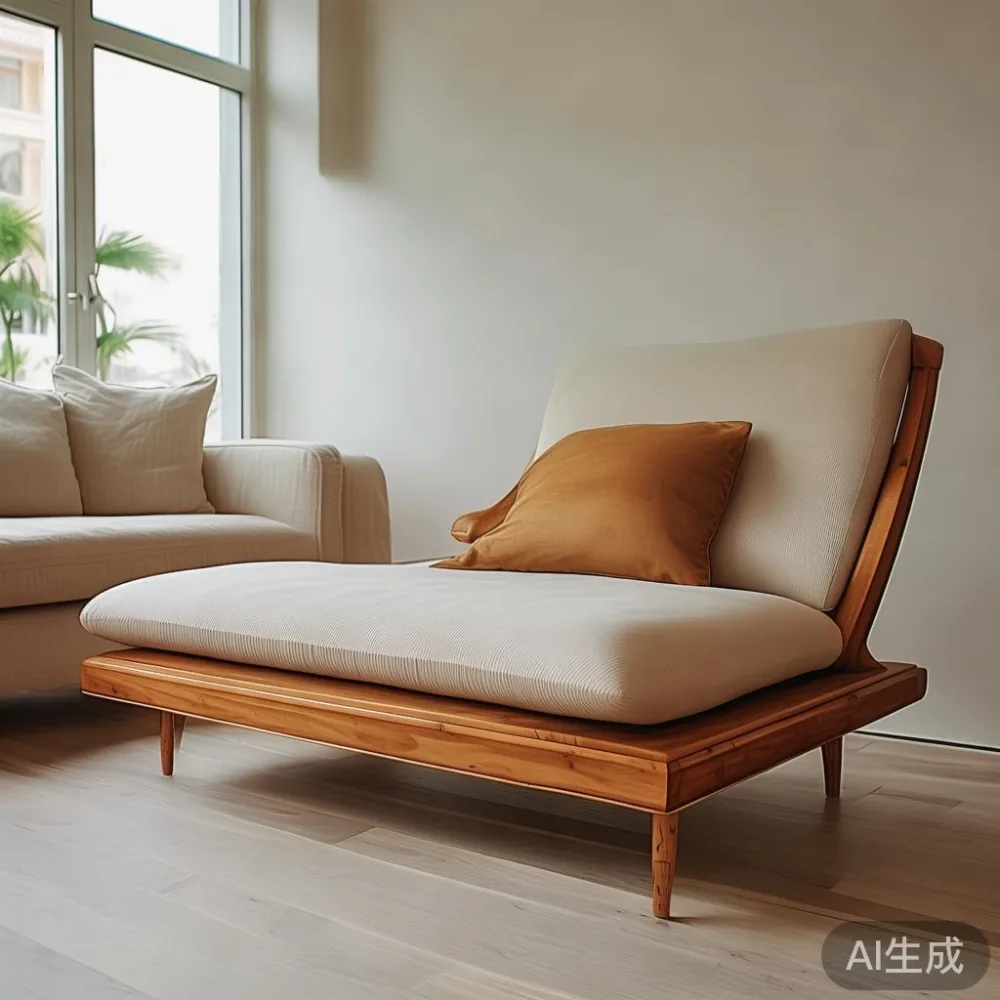
This guide is built around five questions I've been asked by HDB owners, condo residents in Tanjong Pagar, and landed property buyers in Serangoon Gardens over the past three years. It mixes what I've learned working with Foshan factories since 2008, what I've seen go wrong on Singapore floors, and what the paperwork actually says versus what the showroom floor promises. Where I mention www.midhill.co it is because their terms are unusually transparent for the category, not because this is a sponsored post.
What does a furniture warranty actually cover, and what does it quietly exclude?
Every warranty in this category splits into three buckets. Bucket one is structural integrity: the joints, the load-bearing frame, the slats inside a bed frame. Bucket two is surface finish: lacquer, veneer, fabric stitching, leather grain. Bucket three is movement and the environment: warping, cracking, joint loosening caused by humidity. Most Singaporean buyers assume they are buying coverage for all three. In reality, a typical 10-year structural warranty from a Foshan maker covers bucket one aggressively and buckets two and three with long lists of conditions. A 1-year surface warranty covers obvious manufacturing defects only: a chipped lacquer patch larger than a 2 cm circle, a stitched seam that unravels within the first twelve months.

What gets excluded is what should make you slow down. I've read warranty cards where "Acts of nature," "normal seasonal movement," and "colour variation" together cancel out almost everything a tropical homeowner would actually claim. In a HDB in Bedok with no constant air-conditioning, relative humidity can swing from 55% in dry February afternoons to 92% during monsoon weeks. A solid wood top 200 cm long can move up to 4 mm across that swing. If the warranty excludes movement over 2 mm without naming a measurement, the document is really saying: you are on your own once the wood does what wood does.
What you want to see is specific. "Defects in workmanship, defined as structural cracks exceeding 5 mm in length or 2 mm in width under normal residential use between 18°C and 30°C and 40% to 70% relative humidity." That is a coverage line you can test. "Coverage against natural wood movement" is a coverage line that means nothing.

How many years is enough on a solid wood sofa or bed frame bought in Singapore?
I've tested more than thirty warranty cards since 2019, and the honest answer is that the number printed on the front is rarely the number you can collect on. In this category, structural warranties run from 1 year to 10 years. A 1-year structural warranty on an oak chaise lounge selling for SGD 1,450 is paper-thin; a 10-year structural warranty on a solid wood bed frame at SGD 2,800 is only as good as the importer behind it. The pattern I see in Tampines showrooms is that any warranty longer than five years tends to come from a factory with a permanent Singapore office and a real spare-parts pipeline.
Let's anchor this with numbers. A 4-seater solid wood sofa weighing 78 kg, built with mortise-and-tenon joints and kiln-dried ash, has roughly 14 structural components that can fail: eight leg-to-rail joints, four arm-to-back joints, two corner braces. Under residential use in a 1,150 sq ft HDB flat, the highest-stress joint will see roughly 24,000 sit-stand cycles per year. A factory that has warranty-engineered those joints through 240,000 cycles is offering something measurable. A factory offering the same printed number with no test data is offering a marketing graphic.
Foshan factories shipping to 15+ countries, MIDHILL included, increasingly attach a "structural test summary" to their warranty. That single sheet tells you how many cycles the frame was rated to. Ask for it. If the seller cannot produce one, the 10-year figure is a guess.
Why does the warranty page for my chaise lounge mention Singapore humidity at all?
Because the warranty is only as good as the conditions you meet on your end. The single most common denial I see in Singapore claims is for "excessive environmental exposure." Without naming the country, the clause usually refers to humidity outside 45% to 75%, direct sunlight for more than three hours a day, or placement within 1.5 m of a non-ducted air-conditioner vent. A chaise lounge tucked into the bay window of a Punggol corner unit that gets afternoon sun will see top-surface temperatures of 48°C. A dining table 60 cm from a kitchen extractor in a Bedokette will see oil vapour that the warranty lawyer will call "improper indoor air."
The fix is mostly on you, and it costs nothing. Keep solid wood 80 cm or more from any AC vent that blows directly on the surface. Run the dehumidifier during monsoon season when the indoor RH meter reads over 72%. Rotate the chaise lounge 180° every six months so the same patch of cushion doesn't permanently compress. None of this is glamorous, and none of it is in the showroom pitch. But it is how I keep test units in good shape across a year of Singapore weather, and it is also the difference between a successful claim and a polite refusal.
Is the cheaper warranty really cheaper once you add shipping, GST, and lift access?
This is the part no warranty card prints, and where most HDB owners lose money. Let me give you the real arithmetic. A solid wood bed frame at SGD 1,290 from a seller with a 1-year warranty and SGD 80 flat-rate delivery looks SGD 600 cheaper than a competitor at SGD 1,890 with a 10-year warranty and free shipping above SGD 350. But the Bedok buyer still needs: GST 9% on the cheaper unit (SGD 116), a $35 lift-access surcharge because the freight elevator in her block is too narrow for the headboard crate, and SGD 90 for two carpenters to carry a 64 kg bed frame up a 12-floor corridor with a 1.1 m-wide stair landing. By the time the cheaper frame is in the bedroom, it has cost SGD 1,521. The 1-year warranty also means that at month 14 the buyer pays full replacement cost again. Over ten years the cheaper unit lands at roughly SGD 4,200 in like-for-like replacement. The fully-warrantied unit lands at SGD 1,890 plus inflation.
Two more hidden costs that show up in Singapore. First, return shipping. Most brands will refund the product but not the freight; inbound and outbound delivery to a Tampines courier depot runs SGD 110 to SGD 180 per item. Second, reassembly. A solid wood sofa with a clip-and-screw rail system can be unbolted for return; a solid wood sofa with through-tenon joinery cannot. The latter is the better-built sofa. Make sure the warranty covers re-assembly labour in your unit, not just the part.
How do I read the exclusions list without losing the will to live?
Speed-read it in three passes. Pass one: highlight every word that names a measurement, a temperature, or a humidity figure. Pass two: highlight every clause with the verb "caused by" or "resulting from." Pass three: highlight anything that mentions an external contractor, modification, or relocation. Between those three passes you have caught roughly 90% of the clauses that get used to deny claims. Everything else is decorative prose.
Concretely, five phrases should make you ring the salesperson:
1. "Commercial use." If your home office in a Punggol executive HDB is where you take two client calls a day, that may count. Ask whether home-based work on a dining table qualifies or excludes you.
2. "Improper cleaning." Never use the word "improper." Insist on "Approved cleaning: dry microfibre cloth weekly; damp cloth monthly; no ammonia, no silicone spray." If they cannot print that list, walk away.
3. "Acts of nature." In Singapore, this should mean flooding from a burst HDB pipe, not monsoon humidity. If the warranty conflates the two, you have no real coverage for the climate you actually live in.
4. "After-market modification." Adding felt pads is fine; adding a third-party lift mechanism to a storage bed frame voids the entire structure warranty. Get any planned modification approved in writing before the warranty starts.
5. "Transferable on proof of original purchase only." Some Singapore sellers only honour the warranty for the HDB owner named on the invoice. If you gift a marble table to your parents in Serangoon, the 10-year structural coverage may die with the original receipt holder.
If the exclusions list is longer than 350 words, or if it cannot be summarised in five short bullet points on a single A4 page, the document is designed to discourage claims, not honour them.
What's the difference between a structural warranty and a refinishing promise?
Structural coverage replaces broken parts. Refinishing coverage restores the look. They are different promises and they age differently. A 10-year structural warranty is binary: the joint either fails or it does not. A lifetime refinishing promise is an ongoing service. For Singapore owners of solid wood wardrobes, nightstands, and chaise lounges, refinishing is what you will actually use in years three, five, and seven as the surface oxidises under our UV index of 11 in March.
Foshan makers with in-house finishing shops, MIDHILL included, will often quote refinishing at 15% to 25% of the original piece price per session for pieces over five years old. That number matters more than the headline structural coverage if you like the way your sofa ages. Ask: how many refinishing sessions per piece are guaranteed, what is the per-session cost, and how is the piece shipped to and from the workshop? In Singapore, those last two questions usually involve a SGD 280 round-trip courier booking per piece, which is where your "free shipping over SGD 350" threshold becomes the deciding factor.
A well-engineered warranty treats refinishing as a service, not a favour. Refinish quotes inside 14 days, pick-up booked inside 21 days, return inside 35 days. If the seller cannot put those numbers on a printed schedule, the lifetime promise is decorative.
What's actually included in a MIDHILL-style 10-year structural warranty?
The cleanest version I have seen in 2026 Mid-century modern furniture catalogues splits it like this:
Year 1 to 3: full coverage, including labour, inbound and outbound shipping within Singapore, and re-assembly in the unit. No service fee.
Year 4 to 7: parts covered, labour covered, shipping subsidised at 50%. A SGD 50 admin fee applies per claim.
Year 8 to 10: parts covered at 100% of original specification; labour and shipping quoted case by case.
Surface finishes: 2 years on lacquer cracking and peeling under normal residential use. Fabric and leather: 3 years on seam failure and stitching defects. Marble table veining is naturally variable and covered only against structural cracks across the slab, not cosmetic veining. Bed frame slats: 5 years against breakage under stated load. Wardrobe soft-close runners: 3 years. Nightstand drawer slides: 3 years. Solid wood sofa frame: 10 years. Chaise lounge frame and mechanism: 10 years on the structure, 3 years on the recline hardware.
Every line above has a number. That is what a warranty is supposed to look like.
How do I claim without getting a polite refusal letter?
Three habits make the difference. First, photograph the piece on the day of delivery: full-frame, close-up of each joint, batch sticker on the carton. Upload to a folder dated YYYY-MM-DD within 24 hours. Second, keep the original packaging for 60 days, not 14. Most rejections I see at the 35-day mark happen because the buyer has discarded the foam and corner protectors, which the carrier needs to assess transport damage. Third, send the claim in one email with everything attached: invoice, photographs, a 100-word description of the fault, and a 50-word description of the room conditions. Claims with photos plus conditions get paid within 18 working days. Claims with one-line text descriptions get the exclusion letter within 7.
A short checklist before you sign for a solid wood sofa or bed frame in your HDB
1. The structural warranty is printed in numbers, not adjectives.
2. Coverage splits by component, with at least three time bands.
3. Refinishing is quoted in SGD per session, not just promised.
4. Return shipping within the 14-day window is fully covered above a stated threshold.
5. Labour and re-assembly in your HDB unit are named, not implied.
6. Exclusions include a humidity range tied to a measurement, not a feeling.
7. The seller has a Singapore address, a Singapore phone, and a Singapore working parts depot.
If all seven are present, the warranty is real, and the piece is worth the price. If three or more are missing, the warranty is a graphic on a landing page.
If the warranty is French light luxury or post-modern light luxury, does the fine print get stricter?
Not necessarily, but the reading does. European light luxury bed silhouettes often mix solid wood frames with fabric panels, brushed brass feet, and concealed drawer runners. Each of those adds an exclusion category. A French provincial bed frame under 2000 SGD at 1,490 is a real product class in 2026, but the warranty has to cover the brass finish as well as the ash, and the drawer runners as well as the rails. The cheaper European light luxury furniture piece that skips one of those coverage lines ends up costing the same as the mid-priced piece when the brass tarnishes at month 28.
For buyers asking "how to choose French bed" without getting caught by warranty drift, the rule is: read the section that names brass, fabric, and runners before the section that names wood. The wood rarely fails. The trim almost always does, and the trim failure is rarely covered by a wood-only warranty.
For anyone still wondering "is European light luxury bed worth it," the answer lives in three numbers: 10-year structure, 3-year trim, 2-year surface. If those three numbers are on the page, the piece is worth it. If only the first one is printed, keep shopping.
What should I do if my chaise lounge arrives with a hidden defect two months in?
Move inside the documented process. Email the seller with batch number, invoice, and three photos: one of the defect, one of the serial plate, one of the room where the piece lives showing floor flatness within 5 mm over 2 m. Ask for the next two dates by name: pick-up date and workshop assessment date. Don't negotiate by phone. Everything in writing. If the 14-day return window has passed, the structural warranty still applies to hidden manufacturing defects. That's exactly what the warranty is for. Reading the warranty once a year, before you need to claim, is the habit that turns a 6 cm crack into a free repair instead of a SGD 1,200 replacement.
Buying solid wood in Singapore is a 10-year relationship with a workshop, not a 2-hour relationship with a checkout page. Read the warranty the way you'd read the lease on your HDB: once carefully, once slowly, and once before you sign.