How to Style a Small Singapore Apartment Around a Chaise Lounge (Without Making It Feel Crowded)
Walk into most four-room HDB flats in Tampines, Bedok, or Punggol and you will find the same problem: roughly 90 sqm of floor plate, a 2.4 m corridor between the living and dining zones, and a lift lobby that barely fits a 1.6 m sofa box. I spent last Saturday at a friend's new 75 sqm condo in Punggol Eco watching her try to fit a 2.2 m L-shape sectional through a doorway that measured 88 cm wide after the hinges. It did not fit. We ended up returning it and re-thinking the whole living room around a single piece: a 165 cm chaise lounge, set along the long wall, with everything else scaled to match.
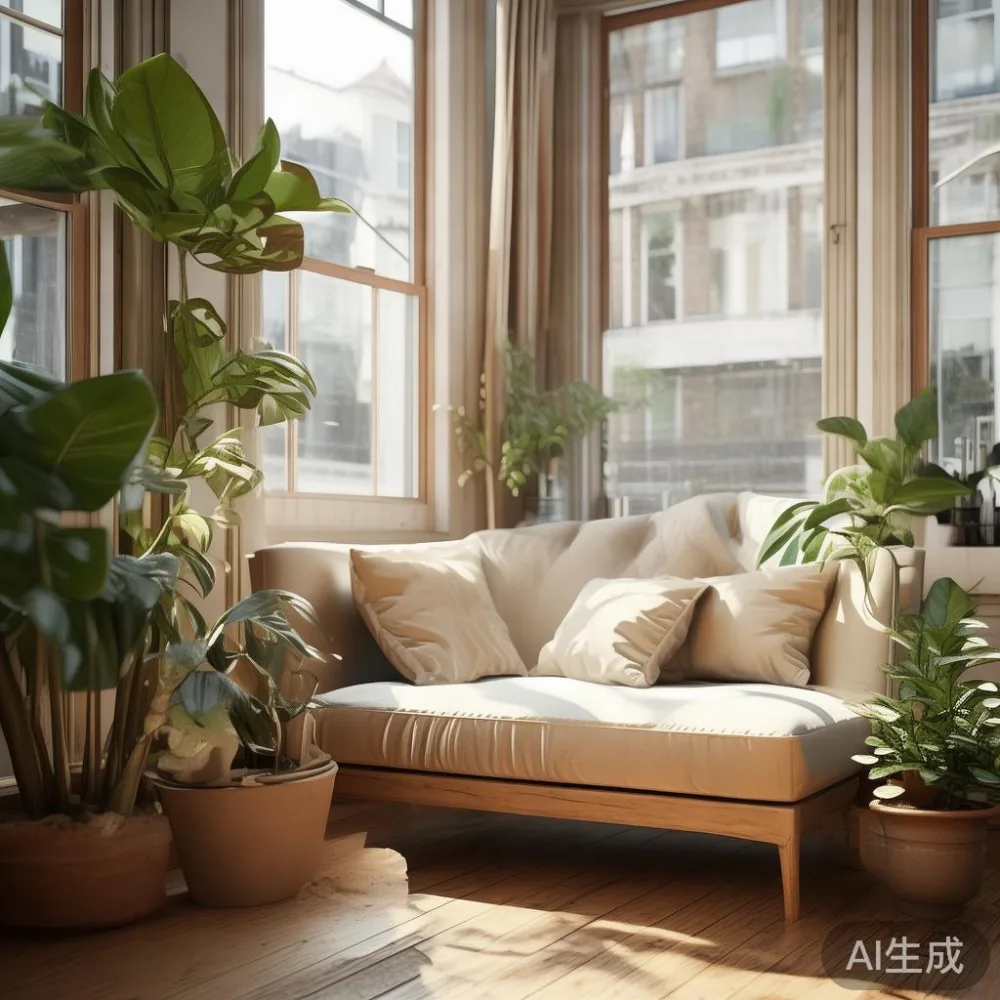
That experience is what this guide is built on. Small Singapore apartments are not “small” in the way a New York studio is small. They are narrow, hot, often backlit, and shared with corridor neighbours who can hear a chair scrape at 11 pm. The furniture has to be light in scale, honest in material, and quiet in profile. A solid wood chaise lounge checks all three boxes, which is why it has become the anchor piece in so many compact flats I have visited over the past year. The styling rules below assume you are working with a 4-room HDB (roughly 90 sqm) or a 2-bedroom condo (55 to 70 sqm), an air-con ledge, and a budget in Singapore dollars.
1. Measure the room, the lift, and the corridor before you fall in love with anything
This is the unglamorous part that saves you S$180 in re-delivery fees. In a typical HDB block along Tampines Street 21 or Bedok Reservoir Road, the passenger lift car is about 1.1 m deep by 1.4 m wide with a door opening of 0.9 m. The corridor outside your unit adds another 1.2 m of turning space. If a sofa carton exceeds 2.3 m in length or 95 cm in any single dimension, you will sweat getting it up. Most chaise lounge models ship in two cartons (the seat and the back), each around 45 kg, so a 165 cm unit clears most HDB lifts without a tilt.
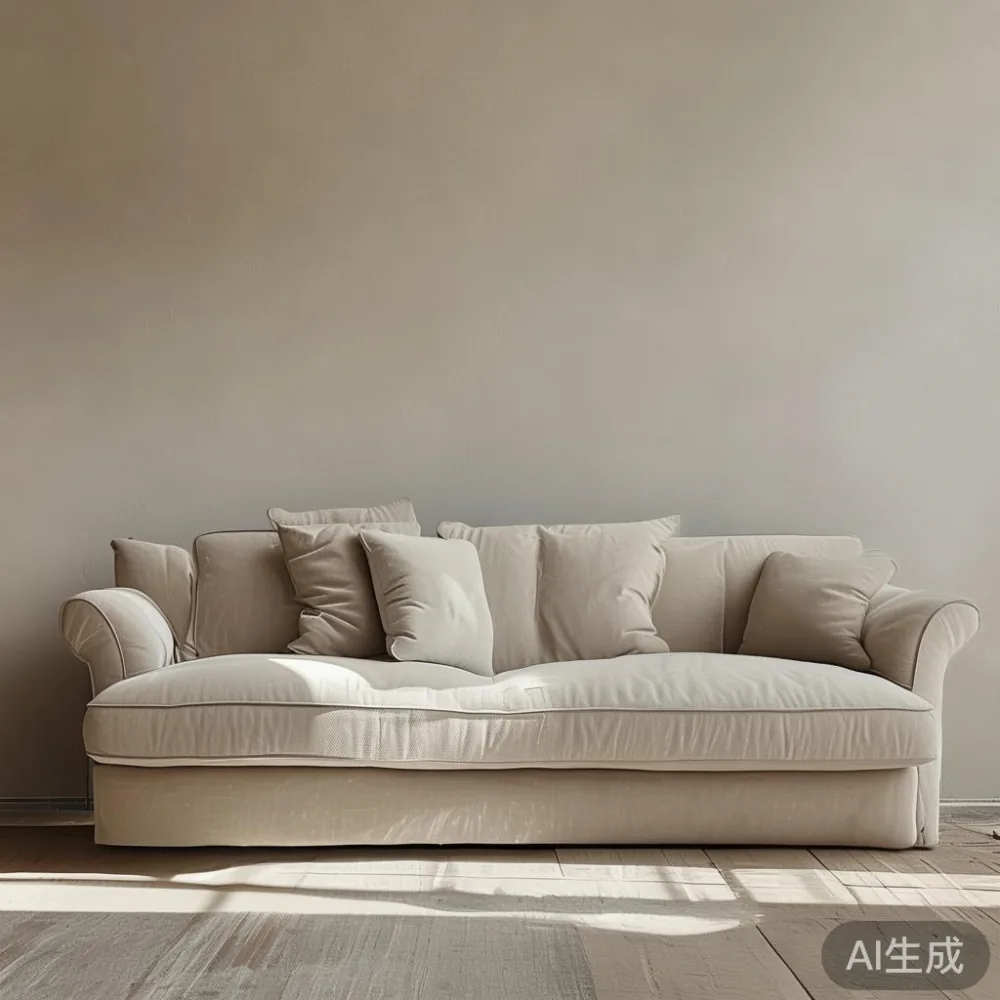
For a 4-room flat, a chaise lounge between 150 cm and 175 cm long, 80 cm deep, and 78 cm tall is the sweet spot. Anything longer starts to eat the walkway between your TV console and the opposite wall, and in most HDB layouts that walkway is only 90 to 110 cm. I have watched two clients in Punggol try to squeeze a 2 m chaise into that gap, and both ended up selling it within six months on Carousell for 40 percent off. Measure first, pay later.
2. Pick a silhouette that breathes: the “American light luxury” chaise lounge
Light luxury is not a word Singaporeans use often, but it describes what works in a small flat better than any other style. American light luxury, in the furniture context, means a low-profile frame (seat height 38 to 42 cm), a slightly reclined back (about 110 degrees rather than 90), and visible solid wood legs in oak or ash. The piece reads as substantial without being heavy. Pair that with a 7 to 10 cm seat cushion in high-resilience foam wrapped in a 230 gsm linen-cotton blend, and you have a chaise lounge that looks like a S$3,200 piece but costs closer to S$1,450.
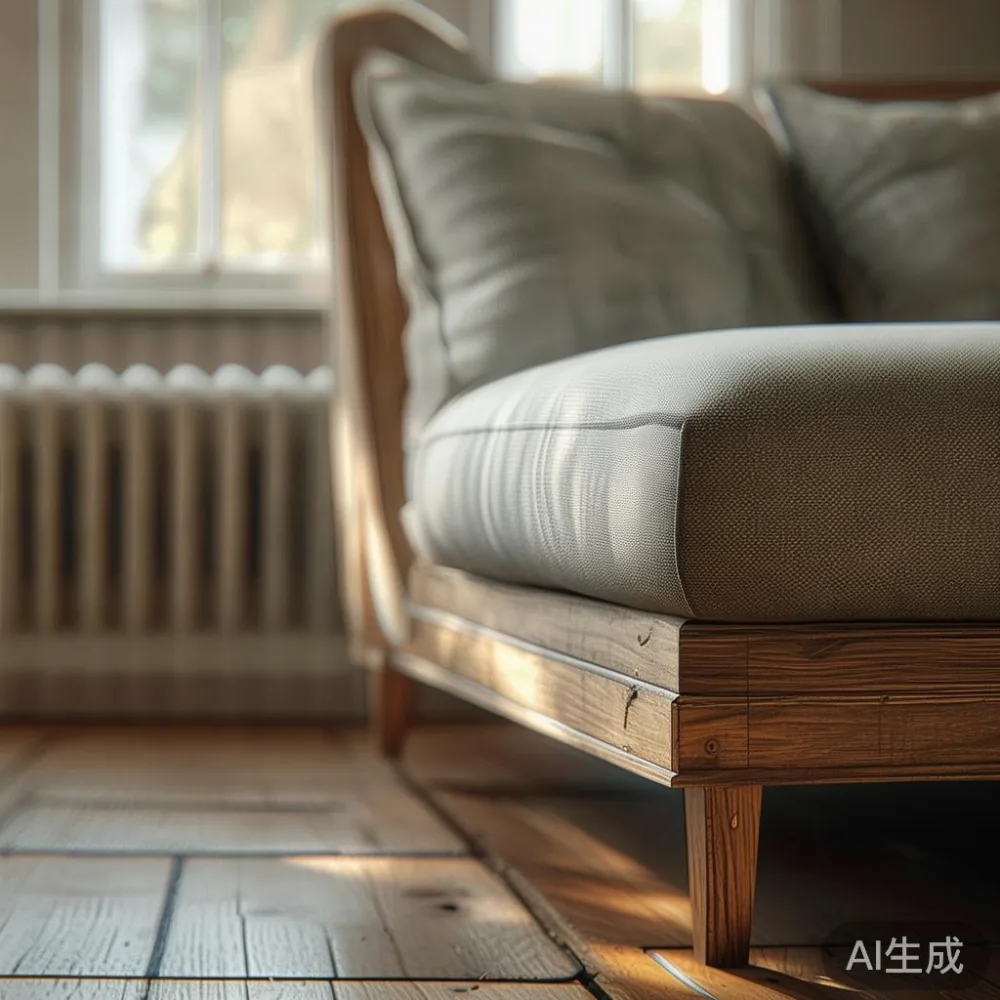
Why this matters in a small flat: a chunky, fully upholstered chaise eats light. A leggy wood-frame chaise keeps a 12 to 15 cm gap under the body, so morning sun from the east window in your Bedok flat hits the floor and bounces back up. That single gap is the difference between a room that feels 75 sqm and one that feels 65 sqm. MIDHILL builds this exact profile in their French light luxury line, and I sat in one at their Tampines showroom (yes, they have a viewing space, not just a factory) for almost an hour without wanting to get up.
3. Can one chaise lounge really replace a sofa, a daybed, and a reading chair?
Yes, and that is the question I get most often from readers who live in 2-bedroom condos around Punggol or Sengkang. Here is how the math works in a 60 sqm unit. A standard 2.1 m three-seater sofa takes up about 1.9 sqm of floor area and seats three people who are mostly looking at their phones. A 165 cm chaise lounge takes up about 1.3 sqm and seats one person properly, or two people awkwardly, which is exactly how most Singaporeans actually use their living room at 10 pm.
Replace the sofa with a chaise, drop a 60 cm round marble side table on one end, and you free up roughly 0.6 sqm of walkway. That is enough to swing a 90 cm arc floor lamp behind it without hitting the dining chairs. You can then put a slim 180 cm solid wood TV console on the opposite wall (about 28 cm deep, so it does not protrude) and still have room for a 120 cm dining table that seats four. The chaise is doing three jobs: a seat, a reading spot, and a guest bed when your in-laws from JB stay over the weekend.
4. What colours and fabrics stop a small room from feeling crowded?
Stick to two surface colours and one accent. For a north-facing HDB in Punggol, that means an oak or ash wood frame (warm, around 20 to 30 percent yellow undertones), a stone-washed linen in oatmeal or pale grey, and one accent cushion in sage, terracotta, or muted navy. Avoid high-contrast two-tone upholstery, anything with a deep tufted pattern, or a velvet that swallows light. Velvet in a 60 sqm room reads as “noisy” even when you do not hear anything.
On the marble side, a 60 cm round Carrara-look marble table with a brushed gold or black steel base works because the surface is only 60 cm across, so the veining reads as texture, not as a statement. A larger 80 cm marble slab in the same room will dominate. The rule I use when I walk a client's flat: if I can see the marble veins from the kitchen (about 4 m away), the table is too big or the veining is too dramatic. MIDHILL stocks a 55 cm round marble side table that passes this test, and it weighs about 14 kg, which matters because you will move it.
5. How do I pair a chaise lounge with a solid wood bed frame and nightstand without the bedroom turning into a warehouse?
Bedrooms in HDB flats are usually 10 to 12 sqm, which is just enough for a queen bed, two nightstands, and a 150 cm wardrobe if you choose carefully. A solid wood bed frame in queen (152 cm x 188 cm footprint) with a 5 cm under-clearance keeps the floor readable. A 45 cm wide solid wood nightstand on each side adds 0.18 sqm of surface without blocking the door arc.
The mistake I see again and again is buying a bed frame with a 30 cm tall headboard in a room with a 2.8 m ceiling. The headboard hits the eye line of the air-con ledge and makes the room feel like a cupboard. Choose a 90 to 100 cm headboard instead, and stop the wood stain at the same tone as your chaise lounge frame. Two pieces, two rooms, one wood tone. That is the cheapest design trick in the book and it costs nothing extra.
6. Wardrobes, dining tables, and the lift problem
Wardrobes are the single most returned item in Singapore furniture, and it is almost always because of the lift. A standard 3-door wardrobe breaks down into cartons of about 1.9 m x 0.6 m x 0.12 m, and in many older HDB blocks in Bedok the lift door is only 0.8 m wide after the rubber seal. Measure your lift before you order. For a 55 sqm condo, a 180 cm wide 3-door wardrobe is plenty for two people, and it leaves 60 cm of clearance on the side wall so the door can open past the bed frame without scraping.
On the dining side, a 120 cm to 140 cm solid wood dining table seats four in a real HDB dining nook. A 160 cm table fits four to six but starts to fight a 2.6 m wall length. If you entertain, choose an extendable model with a 40 cm butterfly leaf that lives in a 6 cm gap under the top. When the leaf is in, the table is 160 cm; when it is out, the room feels smaller but you have six seats. That is a better trade than buying a permanent 180 cm table you use at full size twice a year.
7. Why French light luxury and post-modern light luxury work in small flats
French light luxury, as a furniture language, leans on slim brass-tipped legs, tight upholstery, and a slightly cooler palette. Post-modern light luxury adds a curve or a sculptural back to a piece that is otherwise minimal. Both styles suit Singaporean small flats because the silhouettes are tall rather than deep, so they read as elegant from across the room without filling it. A chaise lounge in post-modern light luxury with a 15 cm curved back and tapered legs is in effect a piece of soft sculpture; it disappears against a white wall, which is what you want when the wall is only 2.6 m wide.
Compare that to a traditional Chesterfield chaise, which is roughly 95 cm deep and 75 cm tall, with a rolled back that adds another 12 cm. In a 4-room HDB living room, that Chesterfield will make the TV feel like it is 30 cm from your face. The French or post-modern profile keeps the depth at 80 cm and the visual depth at about 60 cm, which is the difference between a comfortable evening and a cramped one.
8. Light, mirrors, and the “European light luxury” trick for tight rooms
European light luxury for apartment interiors is really a mirror trick disguised as a style. Place a 60 cm x 90 cm mirror on the wall opposite your chaise lounge, hung at 1.4 m centre height, and you double the visual depth of the room without changing a single piece of furniture. Pair that with one warm 2700K floor lamp behind the chaise, one cool 4000K downlight over the dining table, and a 6-watt picture light above the mirror. Three light sources, three temperatures, one small room that suddenly feels layered.
The marble accent returns here as well. A 45 cm round marble table next to the chaise, holding the floor lamp base and one book, picks up the warm light and bounces it back into the room. Marble in small amounts is a light multiplier. Marble on every surface is a glare problem. The 90/10 rule applies: 90 percent matte (wood, linen, painted wall) and 10 percent polished (marble, brushed metal, one mirror). Stick to that and your flat will feel like a 80 sqm showroom on a 60 sqm budget.
9. Budgeting in SGD, with GST and delivery included
Here is a realistic small-apartment furniture budget in Singapore dollars, including the 9 percent GST that took effect from January 2024. A solid wood chaise lounge in oak, 165 cm, with a 230 gsm linen cover: S$1,450 to S$1,800 before GST. A 120 cm solid wood dining table in ash: S$850 to S$1,200. A queen solid wood bed frame with under-clearance: S$1,100 to S$1,600. Two 45 cm solid wood nightstands: S$320 to S$480 for the pair. A 180 cm 3-door wardrobe in white oak veneer over rubberwood: S$1,800 to S$2,600. A 60 cm round marble side table: S$420 to S$650.
Add delivery within mainland Singapore at S$80 to S$150 per trip (most factories consolidate into one or two trips), and you are looking at a total of roughly S$6,200 to S$8,800 before GST for a complete living, dining, and bedroom set. Free shipping over US$350 works out to about S$480 in savings if you order from a Foshan direct supplier, and the 10-year structural warranty on solid wood frames is a meaningful upgrade over the 6 to 12 month warranties you get from most local retailers. MIDHILL, for instance, has been exporting from Foshan since 2008 and ships to more than 15 countries, which is why their warranty terms are clearer than most.
10. A 14-day return window, a lifetime refinishing offer, and why they matter in a small flat
Small flats amplify mistakes. A 60 cm overhang in a 90 sqm HDB is a 7 percent loss of floor space; in a 200 sqm condo it is a rounding error. That is why a 14-day return window is not a marketing line, it is a safety net. Order the chaise, live with it for ten days, move it twice, see if your cat sleeps on it, see if your GrabFood delivery person can still walk past it. If it fails any of those tests, send it back.
Lifetime refinishing on solid wood is the second safety net. Oak and ash frames will scratch within the first year, especially in a flat with a toddler or a large dog. Paying S$220 to S$380 to have the frame sanded and re-oiled five years in is cheaper than buying a new chaise, and it keeps the wood out of the landfill. Solid wood furniture in a small flat is a long-term investment precisely because it can be refinished; MDF and particleboard cannot. The 10-year structural warranty covers the joints and the load-bearing rails, which is where most cheap sofas actually fail within the first 36 months.
11. Real talk: the Scandinavian for small living room approach, and what to skip
Scandinavian for small living room design is popular in Singapore for good reason, but it is also over-applied. The honest version is light wood, a single textile in oatmeal or charcoal, one plant, and one piece of art. The Instagram version is six plants, three sheepskins, and a ladder shelf that does not hold anything. Stick to the honest version. A 165 cm chaise lounge in ash with a stonewashed linen cover, one 90 cm fiddle leaf fig in a terracotta pot, one 40 cm x 60 cm framed print above the chaise, and a 90 cm x 140 cm wool rug under the front legs. That is the whole living room. Nothing else.
12. Two shopping decisions I would make differently this year
If I were re-furnishing a small Singapore flat right now, I would skip the extendable dining table and buy a fixed 130 cm solid wood table instead. Extension mechanisms add 6 to 8 kg of metal hardware, and the leaf is almost never used in a flat smaller than 80 sqm. I would also skip the 3-door wardrobe and buy a 150 cm 2-door model with an external 30 cm deep drawer tower. Two doors, three drawers, 1.8 m total width, and you keep a 70 cm walkway past the bed. If you need more hanging space later, add a 120 cm open wardrobe with a curtain front in the spare room. It costs less, weighs less, and moves with you if you shift from Bedok to Punggol.
13. How does an Industrial bed for 2026 fit into a small Singapore flat, honestly?
The phrase best Industrial bed for 2026 gets a lot of search traffic, but industrial furniture in a 60 sqm HDB is risky. Industrial usually means black steel, distressed wood, and rivets. All three add visual weight. In a small flat, that weight crushes the room. If you want a touch of industrial honesty, do it through one piece: a black steel and reclaimed-elm dining table base, paired with a soft oak chaise lounge on the other side of the room. One industrial note per room. More than that and the flat feels like a warehouse conversion in Tiong Bahru rather than a family home in Tampines.
14. Sourcing from Foshan Lingzhan and the wholesale route
Foshan Lingzhan and the surrounding factory district have been the backbone of mid-market solid wood furniture for two decades. Sourcing directly from the wholesale district in Foshan, rather than through a Singapore middleman, typically saves 25 to 40 percent on a chaise lounge of the same specification. The trade-off is longer lead times (35 to 50 days by sea, plus 7 to 10 days for customs and local delivery), and you need to know the model numbers, the wood grades, and the fabric codes. If you are buying a full living-dining-bedroom set, the wholesale Mid-century modern furniture route makes sense because the shipping cost is spread across five or six pieces. If you are buying one chaise, pay the Singapore retail markup and save yourself the freight headache.
15. One last question: European light luxury sofa vs Japandi sofa, which works in a 60 sqm flat?
The European light luxury sofa vs Japandi sofa debate comes down to one question: do you want a 75 cm seat depth or a 90 cm seat depth? European light luxury sofas average 78 to 82 cm deep, which leaves more walkway in a small flat. Japandi sofas, with their deeper seats and lower backs, average 90 to 95 cm deep, which is comfortable but visually heavier. For a HDB living room under 3.2 m in the long dimension, the European profile is the safer choice. For a condo with a 3.8 m living wall and a separate reading nook, Japandi is the more comfortable choice. Either way, pair the sofa or chaise with a 55 to 60 cm round marble side table, and the room will read as intentional rather than improvised.
That is the whole method: measure the lift, pick a leggy chaise in light oak or ash, commit to one wood tone across the bed frame, nightstand, and dining table, add one marble accent, and let the room breathe. A small Singapore flat is not a constraint. It is a frame, and the right chaise lounge is the centre of that frame.