Chaise Lounge Cost: Factors in Singapore's Solid Wood Furnishings
Solid wood furniture can look deceptively straightforward: a solid wood sofa, a bed frame, a dining table, a wardrobe, a nightstand, or a marble table should simply show wood, joinery, and a finished surface. The price on the catalogue tells only part of the story. The more useful question is what you are paying for after the piece reaches a Singapore home.

For Singapore buyers, that includes more than timber and hardware. HDB flats and condos impose practical limits such as lift dimensions, corridor turns, and door widths. GST adds 9% to the displayed selling price, while delivery timing can affect how quickly a renovation or move-in schedule proceeds. Style also matters: French light luxury, American light luxury, and post-modern light luxury can use similar materials while charging very different amounts because of proportion, detailing, finish, and production method.
This guide breaks down the actual price drivers, from timber selection and moisture control to joinery, finish, logistics, and warranty. It also explains why a chaise lounge is often more expensive than its dimensions suggest, and how to judge whether the difference reflects useful construction or merely presentation.
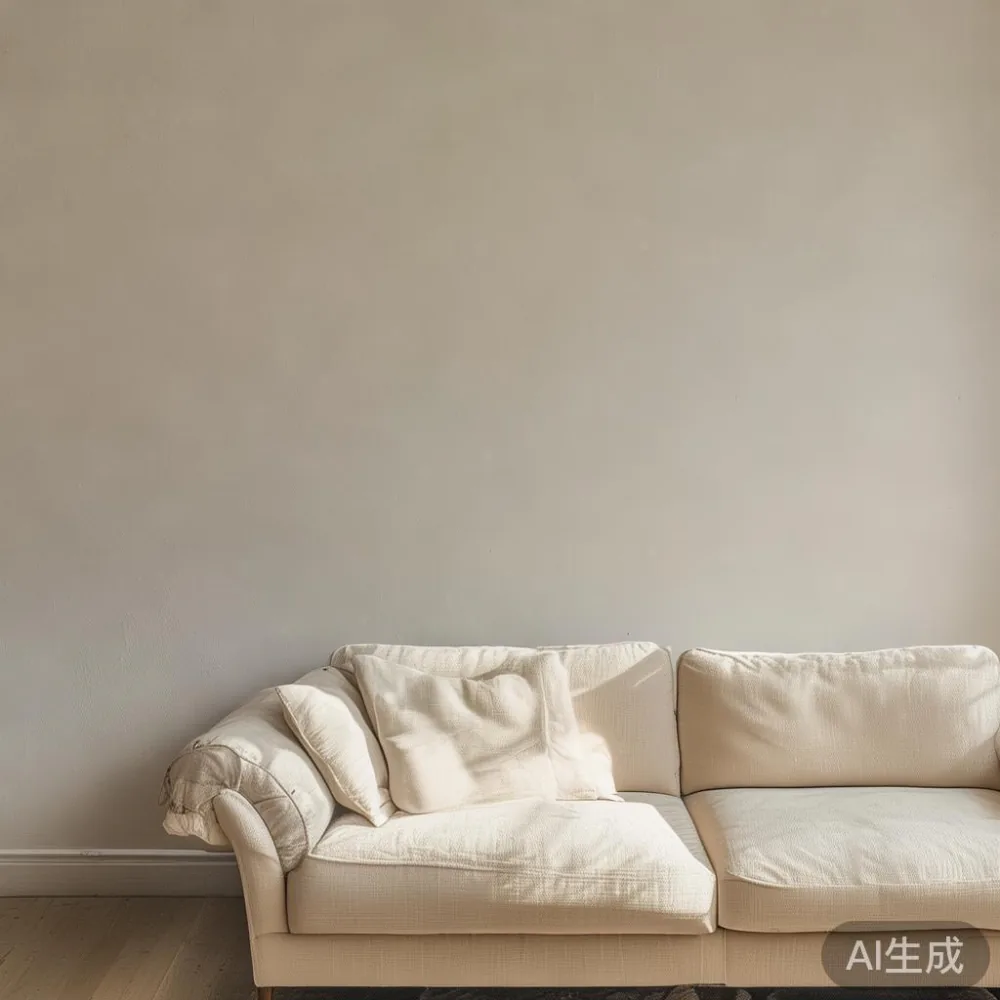
What determines the price of solid wood furniture?
The starting point is the timber itself, but “solid wood” is not one specification. Species, grade, thickness, and cutting method all influence cost. A frame made from kiln-dried oak may carry a different price from one using rubberwood, beech, ash, or mixed hardwoods. Dense, attractively figured boards can cost several times more than standard grades because larger usable sections are harder to source consistently.
Thickness is especially revealing. Replacing a 18 mm apron with a 22 mm apron increases timber volume, machining time, and weight. On a dining table, this may mean about 15% more wood in the apron and substructure, although the final price increase need not be exactly 15%. Weight also affects freight and handling. A 220 cm dining table might weigh 65 kg, while a more substantial version can reach 85 kg or 100 kg.
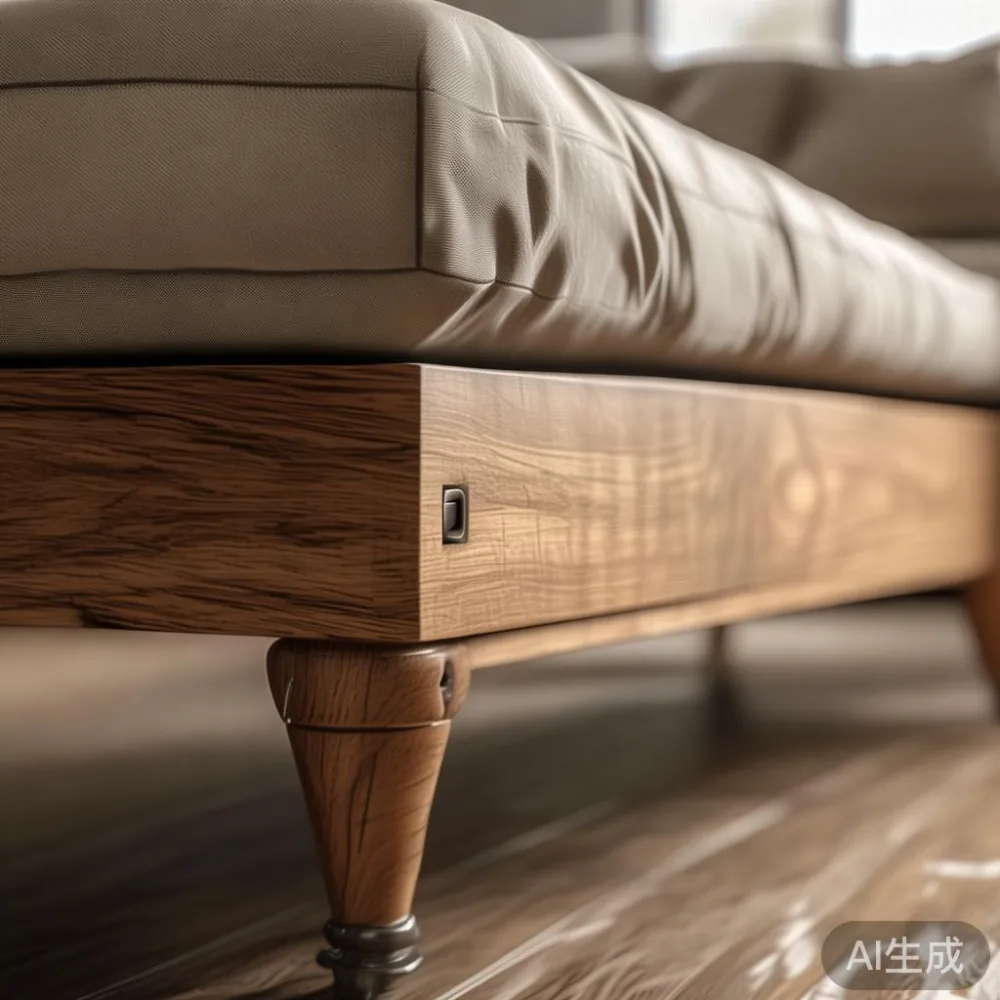
Grade is another invisible price driver. A clean selection without knots, splits, large colour variations, or sapwood inclusions requires more careful planning. In commercial production, selection affects yield: a board with major defects may have only 35% usable area, compared with 65% on a better board. That offcut has to be paid for through either material cost or labour.
Construction then determines how efficiently the timber becomes furniture. Mortise-and-tenon joints, dowels, screws, concealed hardware, and engineered corner blocks serve different purposes. A solid wood sofa may combine a hardwood frame with a plywood or solid-wood base, webbing, foam, and fabric. The timber specification matters, but the suspension system determines whether the sofa feels supported after 3 years of daily use.
This is where a chaise lounge becomes a useful example. A standard chaise lounge measuring 165 cm long and 80 cm wide may contain a hardwood frame, 35 to 50 kg of foam, webbing or springs, and a fitted cover. Its shape requires curved rails or shaped components, and the long seat needs support across a wider span than an ordinary chair. More cuts, more reinforcement, more padding, and tighter tolerances all add cost.
MIDHILL positions its solid wood furniture around reliable construction and long ownership rather than disposable pricing. That context matters because the cheapest visible option is rarely the least expensive option over 10 years. A low-cost finish may need renewal every 2 years, whereas a well-prepared surface may remain serviceable for 8 years or longer.
How much should timber moisture control add to the price?
Moisture control is a practical requirement, especially in Singapore’s humid climate. Relative humidity in many HDB and condo rooms ranges from roughly 60% to 80%, while air-conditioned interiors may sit closer to 50% to 60%. Solid wood responds to those conditions through small dimensional changes, so stable joinery and correctly prepared finishes are not decorative extras.
Wood should be conditioned for the destination rather than simply dried once at the factory. A moisture content around 8% to 12% is commonly considered for many indoor furniture applications, although the appropriate figure depends on species and service conditions. Rapid drying can create internal stress, while insufficient acclimatisation can lead to movement after delivery. The price should therefore include slow, controlled drying and adequate rest periods, not only a moisture-meter reading.
Singapore buyers should also watch for movement. A solid wood bed frame may expand or contract by several millimetres across its width as humidity changes. Proper joints should allow controlled movement without splitting. Drawer bottoms should be designed to fit within a carcass instead of being trapped between two rigid panels. These details add design time and production care, but they protect the piece in a local environment.
Ask the supplier what the timber was dried to, how it was stored, and whether solid wood components were acclimatised. A meaningful answer includes numbers and methods, not just the claim that everything is kiln-dried. For example, the supplier might state that oak was dried to 10% moisture content, rested for 14 days, and packed after final sanding. That level of specificity gives a buyer something useful to compare.
Why do joinery and structural design affect the price?
Joinery is where material cost becomes durability. A visible mortise-and-tenon joint uses more accurate cutting and fitting than a simple concealed screw joint, but it can distribute loads more effectively. Dovetails, bridle joints, and dados each have a purpose. The appropriate choice depends on the load, the direction of stress, and whether the customer expects the furniture to be disassembled during a move.
Load paths are particularly important in a bed frame. A king bed measuring 180 cm by 200 cm supports two occupants and often includes a mattress of 25 to 40 kg. The centre rails, corner posts, and slat spacing determine whether the frame feels stable. A slat support spacing of 5 cm may support the mattress more evenly than 12 cm spacing, but it also requires more slats and more fastening work.
Consider the question “is Japanese bed worth it” when comparing frame types. A Japanese-style bed may use a broad slatted platform and low visual profile, which can suit a compact Tampines or Punggol bedroom. Its appeal depends on the slat system, centre support, and assembly quality rather than the word “Japanese.” A frame may look minimal while relying on 14 simple fasteners, or it may include 30 hardwood slats and 6 metal support brackets.
A wardrobe presents another structural challenge. A 180 cm-wide, 210 cm-high wardrobe is difficult to deliver through a narrow corridor and cannot always be tilted into a lift. Its carcass may need to split into 2 or 3 sections. That creates additional jointing, hardware, alignment, and finishing steps. It may also require 35 mm or 38 mm panels, heavier doors, and runners rated for 25 kg to 40 kg per door.
The useful comparison is not simply solid wood versus veneer. It is material thickness, joint type, movement allowance, hardware rating, and factory tolerances. Those factors explain a price difference more clearly than an undefined “premium” label.
How does finish quality change the price?
Finish is one of the most visible price drivers and one of the easiest to overlook. There is a major difference between a surface-coloured topcoat and a finish that has been sanded, filled, sealed, and built up in controlled layers. The latter may require 5 to 8 sanding and coating stages. Each stage adds labour, floor space, drying time, and quality-control requirements.
Hardwax oil and matte lacquer can both suit solid wood, but they create different maintenance expectations. An oil finish may need refreshing every 1 to 3 years, depending on use and exposure. A quality lacquer may be more resistant to stains but can show scratches differently and may be harder to repair locally. A marble table introduces another layer: the stone itself, its thickness, cut-outs for power sockets, edge treatment, and the cabinet or base supporting it.
Colour matching also costs time. If a wardrobe and a nightstand are supposed to match, small differences in batches, grain direction, and sheen can become obvious beside a bed frame. A manufacturer that controls samples and records finish schedules has to manage more than a single production run.
Finish should be evaluated by touch as well as appearance. Check whether the surface feels even, whether the grain remains visible, and whether edges and joints have been treated. A daystand with 2 drawers should open without rubbing, close cleanly, and have consistent gaps. A dining table edge should feel smooth across 4 to 6 cm of thickness. These small details reveal how much attention was paid at the final stage.
Do hinges, drawers, and suspension justify a higher price?
Hardware often contributes less to a solid piece’s cost than timber and labour, but it changes daily performance. Soft-close hinges, full-extension ball-bearing drawer runners, and metal connectors are not merely premium labels. Their price depends on load rating, mechanism, finish, and installation requirements.
A bed frame with 4 drawers may require 8 runners, 16 screws, and reinforced rails. If each drawer holds 15 kg, the frame should distribute that load through the side panels and rear structure. On a nightstand with 1 drawer, a compact runner may be enough. On a wardrobe, heavier lift-up hinges or 3-way adjustable hinges may support doors weighing 15 kg to 25 kg.
For a solid wood sofa, suspension has an even greater effect on perceived value. Eight-way hand-tied springs, a resilient webbing system, or a high-density foam-and-foam combination can change both the initial price and the way the sofa feels after 5 years. A chaise lounge also needs reinforcement where the seat transitions into the reclined section. That junction can flex if it is supported only by decorative framing.
Test the movement directly. Open and close every drawer, sit on the front and rear of a sofa, and lie across the junction of a chaise lounge. A premium should not be accepted merely because a mechanism is listed. It should behave as described under normal household loads.
How do French, American, and post-modern light luxury affect pricing?
Style affects price through form, not just marketing language. French light luxury often uses refined profiles, softened corners, curved arms, pale woods, and upholstered surfaces. American light luxury commonly emphasises generous scale, deeper comfort, substantial seating, and layered upholstery. Post-modern light luxury may combine clean geometry with selective curves, mixed materials, and visible design rhythm.
These styles can use the same oak, but they do not require the same labour. A curved chaise lounge with a continuous upholstered back, 2 armrests, and a long reclined seat is harder to frame than a rectilinear bed frame. A French-style solid wood sofa with a shaped apron needs templates and repeated checking. An American-style sectional may contain more foam, more fabric, and larger frame sections.
Fabric itself introduces meaningful variables. A 70% linen and 30% cotton blend may cost less than a solution-dyed or high-performance textile. Abrasion ratings are useful, but they do not replace care instructions. The same upholstery may behave differently in a sunlit Bedok condo and a shaded HDB room.
Interior decisions also depend on spatial constraints. Anyone searching for Mid-century modern for hotel may appreciate the clean lines, but a hotel-style bed frame often needs a larger 200 cm or 220 cm footprint. The search for how to style Japandi bed in apartment should begin with the 90 cm clear width beside a queen bed, not with a catalogue image. Likewise, how to choose Japandi sofa should account for HDB lift doors of about 80 cm to 90 cm and corridors that cannot accommodate a wide boxed sofa.
Scandinavian for guest room is another useful starting point, especially for a 100 cm by 200 cm room. A compact daybed with a 35 cm back, slim arms, and solid wood legs may fit better than a deep lounge chair. Light colours can reduce the visual weight, but the frame and mattress support still need to suit frequent use.
What do Singapore delivery conditions add to the cost?
Delivery can add both money and risk. A standard HDB lift may have a door width around 80 cm and a cabin depth of roughly 130 cm to 160 cm, although building specifications vary. A condo corridor may include tight corners, glass door closers, and security-managed access windows. A 210 cm wardrobe, a 220 cm dining table, or a 190 cm chaise lounge may need to arrive in sections or be assembled inside the room.
White-glove delivery should be priced by the work involved. Carrying a flat-packed dining table to the 12th floor may take 15 minutes; dismantling a large wardrobe, moving it through a 90 cm doorway, assembling 5 components, and removing packaging may take 2 to 4 hours. If the building has a loading bay reservation, that adds coordination rather than physical effort.
Protection also matters. A finished table should have a fitted cover, corner guards, and separate protection for legs. Stone tops need especially careful handling because a marble table top weighing 45 kg to 80 kg can crack if lifted by the wrong edge. The delivery quote should state whether stairs, unpacking, room placement, assembly, and packaging removal are included.
Custom production may require a deposit of 30% to 50%, followed by a balance before dispatch. The stated lead time may be 6 to 10 weeks, plus 3 to 7 delivery days within Singapore. Longer lead times can sometimes reduce direct freight cost because production is consolidated. Buyers should confirm whether the quoted delivery period is a firm appointment or an estimate, and whether delays are communicated before dispatch.
MIDHILL offers free shipping on orders over US$350, subject to the stated destination terms, but Singapore buyers should still confirm the local quoted amount, GST treatment, and delivery scope. A 14-day return policy is useful only if the condition rules and assembly responsibilities are clear, so those details should be reviewed before ordering.
How can I compare two solid wood pieces fairly?
Compare specifications in a fixed order: material and species, dimensions, thickness, construction, hardware, finish, warranty, delivery, and after-sales support. Ask for drawings if the listing contains only lifestyle photography. A 200 cm dining table should have a stated top thickness of at least 20 mm to 25 mm, but the apron and leg construction also need inspection. A bed frame should show its slat spacing and centre support. A wardrobe should state internal dimensions, drawer or hanging capacity, and whether the back panel is solid or engineered.
Weight can act as a rough clue, though it is not proof of quality. A 150 cm solid wood sofa may weigh 55 kg to 75 kg, while a very large chaise lounge can reach 95 kg. A marble-top dining table can exceed 100 kg. Heavier construction may indicate more material, but it can also create an unnecessarily difficult delivery.
Price per year is useful when warranties and refinishing are genuine. A dining table priced at SGD 3,200 with a 10-year structural warranty and lifetime refinishing has a different ownership profile from an SGD 1,200 table with a 1-year warranty. Divide the purchase price by the expected ownership period, then estimate maintenance. A finish costing SGD 180 every 3 years becomes SGD 60 per year, excluding application labour.
For a wardrobe, include the space it uses. A 240 cm-wide unit may hold more hanging space than 2 separate 120 cm units, but a narrow corridor may make delivery difficult. For a nightstand, consider drawer travel and a 45 cm height rather than visual elegance alone. For a solid wood sofa, test seat depth: 58 cm to 62 cm can suit relaxed sitting, while 52 cm to 56 cm is easier for shorter users in a compact living room.
Style-specific research still helps. A question such as “best European light luxury wardrobe for 2026” may sound trend-driven, but the practical answer depends on climate, dimensions, finish, and hardware. European light luxury often works well with pale oak, walnut accents, integrated pulls, and restrained handles. The price is justified when those details are resolved in the factory rather than added loosely at installation.
Which costs should not be confused with solid wood quality?
Several charges are real but do not directly measure timber quality. Delivery to a remote floor, assembly, inside delivery, storage, and special timed access may cost SGD 80 to SGD 350 or more. GST at 9% applies where applicable. Installation of 8 to 12 wardrobe components may add another SGD 150 to SGD 450. These costs should be quoted separately so the product price remains comparable.
Likewise, decorative veneer, routed edges, and complex carving can increase appearance without increasing structural capacity. A solid wood sofa may have a hardwood frame and upholstered external surfaces; that construction can be entirely appropriate. The buyer should look for a frame specification and joint details instead of assuming every visible component must be solid timber.
Factory origin is another imperfect shortcut. A high production facility may spend more on automated sanding, CNC routing, finishing booths, and dimensional inspection. A smaller workshop may offer excellent hand finishing at a lower volume. The relevant comparison is whether tolerances and repeatability are consistent. Check that drawer gaps remain within about 2 mm to 3 mm, door alignment is even, and the finish is uniform across 3 or 4 sides.
Wuhan Lingzhan may appear in supplier discussions as a place associated with furniture production and manufacturing, but origin alone does not answer the quality question. Ask who controls the timber drying, who performs the final inspection, and what happens if a component arrives damaged. These are more useful questions than a city name attached to a catalogue.
What should a Singapore buyer confirm before paying?
First, confirm the full dimensions against the route to the room. Measure the lift door, lift car, corridor turns, staircase, and home entrance. Add at least 10 cm of working clearance when a large piece must be turned. For a 200 cm dining table, a 180 cm top may be much easier to move than a 220 cm top, even if it seats fewer people.
Next, confirm the material schedule. It should identify the species, thickness, finish, backing panels, upholstery composition, foam density, and hardware type. A solid wood bed frame may use 20 mm side rails and 25 mm legs, with a slat spacing of 6 cm to 10 cm. A wardrobe may use 18 mm sides, 25 mm shelves, and adjustable hanging rails. Exact specifications vary by design, but the quotation should be specific.
Check what the warranty covers. A 10-year structural warranty should distinguish frame and joinery failures from accidental damage, finish wear, or misuse. Confirm whether movement, cracking from climate exposure, and hardware replacement are treated differently. Lifetime refinishing is valuable, but ask about eligibility, transport responsibility, turnaround time, and whether the service applies to every wood colour.
Finally, establish the timeline in writing. Allow 6 to 10 weeks for many made-to-order pieces, 3 to 7 days for local delivery after dispatch, and 2 to 14 days for return assessment once the item is eligible. Photograph the piece on arrival, check corners and undersides, and retain the packaging until the inspection is complete.
A fair price is not the lowest number or the largest number on the page. It is the amount tied to measurable timber, stable construction, coherent design, controlled finishing, careful packing, and a clear after-sales promise. For a chaise lounge, solid wood sofa, bed frame, dining table, wardrobe, nightstand, or marble table, those measurable factors are where the real story of price begins.