Living With 80% Humidity: A Singapore Owner's Guide to Solid Wood Chaise Lounge Care
When I unboxed a solid wood chaise lounge in a Tampines HDB three months ago, I ran a hygrometer next to it for six straight weeks. The reading never dropped below 68%. On stormy evenings it crept to 86%. That single piece of furniture became my case study, because everything I learned applies equally to the dining table in a Punggol condo, the bed frame in a Bedok resale flat, and the wardrobe in any air-conditioned Singapore home. This guide explains what humidity really does to solid wood, why a chaise lounge behaves differently from a marble table, and how a thoughtful ownership routine keeps your investment looking the way it looked in the Foshan workshop.
Why Singapore Homes Are a Stress Test for Solid Wood
The numbers tell the story. Singapore's annual average relative humidity sits between 78% and 82%. During the northeast monsoon (December to early March) and the southwest monsoon (June to September), afternoon readings above 90% are common in corridor-facing units. Air-conditioning pulls the bedroom down to a comfortable 55% to 60%, but the moment you switch it off for a holiday or a weekend trip, the moisture in the air rushes back into every wooden surface in the room.
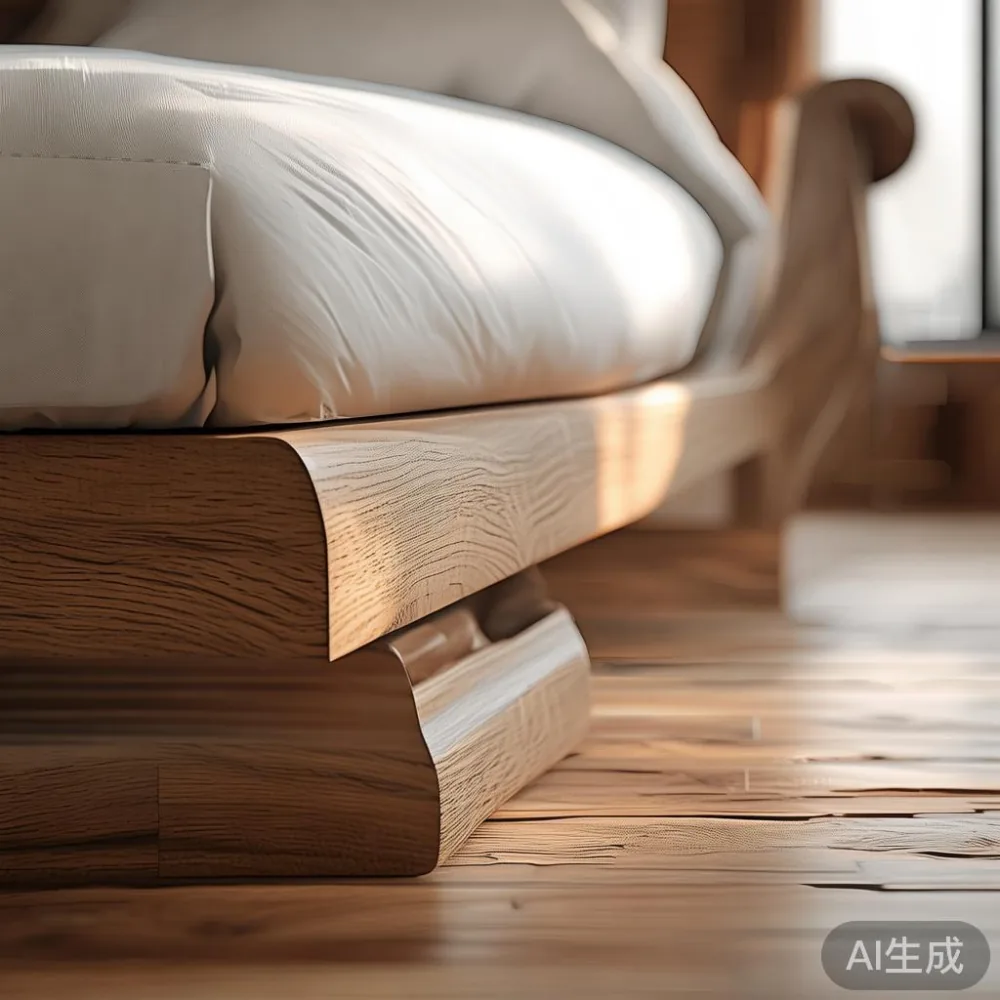
Solid wood is hygroscopic. It absorbs and releases water through its open grain. A 200 cm dining table made from ash, oak, or walnut can swell up to 3 mm across its width between the dry season and the wet season. A 180 cm chaise lounge with a solid wood frame can develop a faint bow in the armrest. A 150 cm nightstand with a single drawer can turn that drawer into a sticky nightmare by July. None of this is a manufacturing defect. It is the physics of a natural material in a tropical climate.
Engineered boards (plywood, MDF, particleboard) move less, but they also breathe less, which means trapped moisture can cause silent swelling inside a wardrobe panel that you only notice when a door stops closing. Solid wood, when properly dried and acclimatised, handles Singapore's swings better than most people expect, and a well-built French light luxury chaise lounge finished with multi-layer lacquer will outlast a flat-pack competitor by decades.
What Humidity Actually Does to a Chaise Lounge
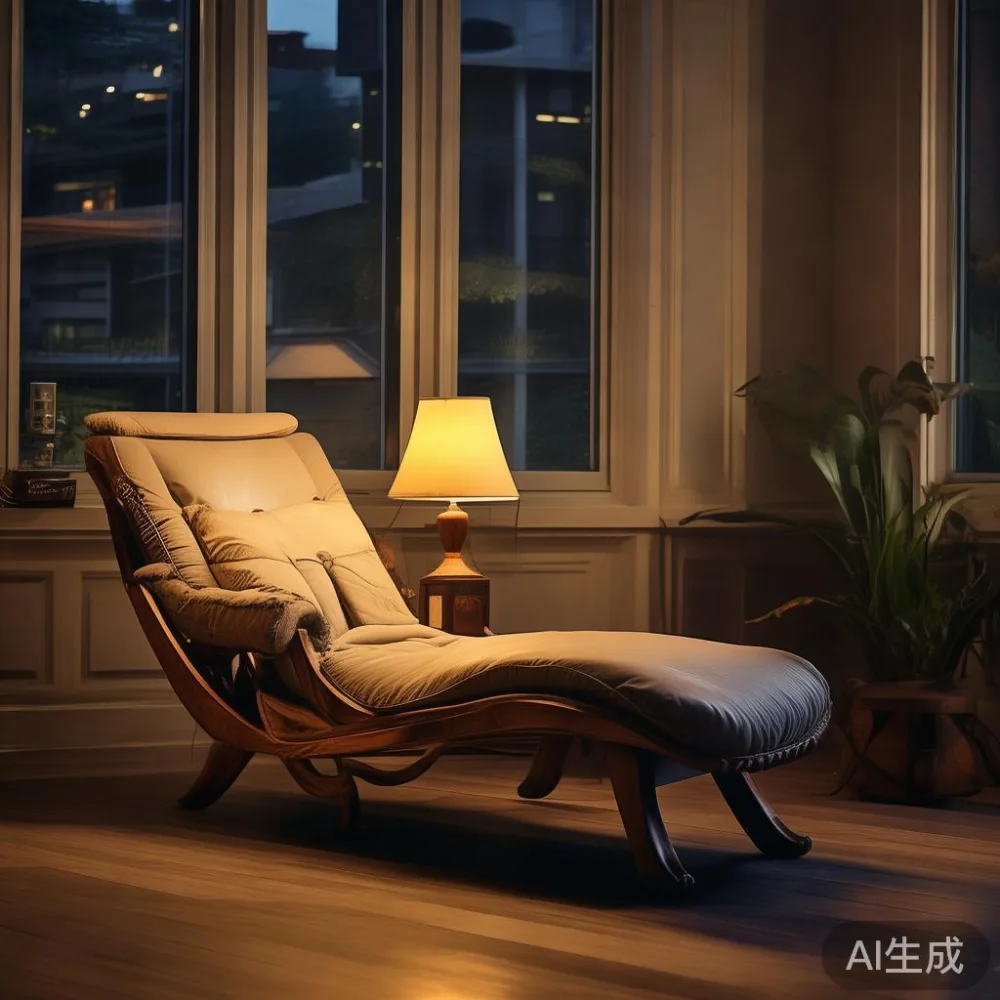
Last month I visited a friend's new condo in Punggol Waterway. She had placed a velvet chaise lounge near the balcony doors, about 4 metres from the window. After two weeks of afternoon rain, she noticed the backrest cushion had developed a faint dip and the frame creaked when she shifted her weight. The culprit was not the velvet. The cushion had absorbed moisture, and the frame had expanded just enough to throw the joinery out of alignment by less than a millimetre.
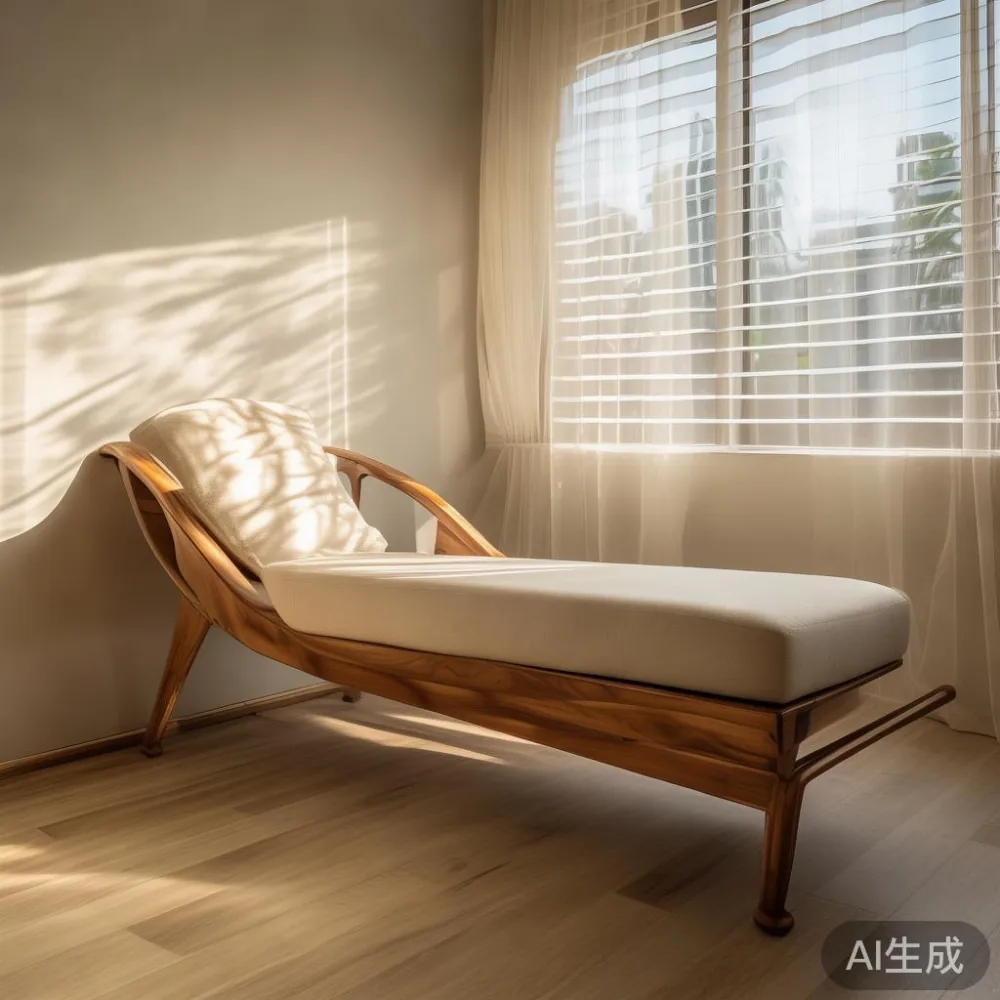
A chaise lounge has more exposed wood than a sofa, because the seat is lower, the frame is more visible, and the legs are usually turned or tapered with no upholstery to mask movement. When humidity rises:
- The 12 mm to 18 mm aprons under the seat absorb moisture and push outward, sometimes lifting the seat platform off its mounting points.
- The 25 mm to 35 mm legs swell at the tenon joints, tightening the frame and creating stress on the corner blocks.
- The exposed end grain at the feet (where the wood was cut across the grain) soaks up water fastest, which can cause a hairline split within a single monsoon season if the legs sit directly on a wet floor.
None of this is catastrophic. It is reversible. A 30-minute dehumidifier cycle brings the room back under 65% and the frame relaxes. The trick is consistency.
The Same Physics Applies to a Bed Frame, Wardrobe, and Dining Table
Customers often ask me why their dining table cups in the centre after a wet week. The answer is that a 200 cm slab has a long grain run, and the centre of that grain is the slowest to equalise with the edges. The edges drink moisture from the air, swell, and force the centre upward. On a marble table this never happens, because marble is non-porous, but marble also has its own issues (staining from curry spills at the family dinner table, for instance).
A solid wood bed frame reacts differently. The headboard is the most exposed panel, often 90 cm to 120 cm tall and 5 cm to 8 cm thick. In a non-air-conditioned guest room, a headboard can rise 2 mm to 4 mm at the top edges over a humid week. If you push the bed against an external wall (common in older Singapore HDB layouts), the back of the headboard sits in a microclimate that is 3% to 5% more humid than the centre of the room. The result is cupping that faces the wall, which you never see, but which eventually pulls the decorative face veneer apart.
A wardrobe is the most vulnerable category, simply because the doors are large flat panels. A 220 cm tall by 60 cm wide door has 13,200 cm² of exposed surface. In a walk-in wardrobe without air-conditioning, both faces of that door absorb moisture, but the inner face absorbs more (no air movement). The door becomes slightly convex, brushes against the frame, and within a year the customer assumes the hinges are faulty. They are not. The hinges are fine; the panel is moving.
For owners weighing the choice between a European bed vs Nordic bed construction, the rule of thumb in Singapore is simple: European-style bed frames tend to use thicker panels (25 mm to 30 mm) and stiffer joinery, which resists cupping. Nordic-style frames favour 18 mm to 22 mm panels with longer exposed grain, which look lighter but require more disciplined humidity control.
Will My Chaise Lounge Warp in a Non-Air-Conditioned Room?
This is the single most common question I receive from customers in Singapore, and the honest answer is: probably not beyond 2 mm to 3 mm of movement, if you follow a simple routine. A properly kiln-dried solid wood chaise lounge from a maker with a 10-year structural warranty will survive Singapore's climate. What it will not survive is standing water, prolonged direct sunlight through a west-facing window, or being stored against an exterior wall in a locked-up condo for three months while you travel.
Concretely, here is what I recommend to every owner of a chaise lounge, dining table, bed frame, wardrobe, or nightstand in Singapore:
- Run a dehumidifier set to 55% to 60% relative humidity in the main living areas for 4 to 6 hours daily. A standard 12-litre domestic unit costs around SGD 280 to SGD 420 and uses about SGD 8 to SGD 12 of electricity per week at current rates.
- Keep all wooden furniture at least 10 cm away from external walls. In HDB corridor flats the lift and corridor widths are narrow, so logistics matter: a 200 cm dining table will not fit in a standard lift cab above the 12th floor, but the same table will arrive safely if the supplier confirms delivery in advance.
- Wipe spills immediately. A ring left overnight under a cold glass can leave a permanent white mark on an oil-finished surface.
- Rotate cushions and flip table leaves once a month to even out exposure.
- Apply a paste wax or hard wax oil every 12 to 18 months. A 500 ml tin of quality wax costs around SGD 35 to SGD 55 and covers a full dining set.
What Makes a Solid Wood Piece Last in Singapore?
Not all solid wood is equal, and the difference shows up within five years of ownership. The three factors that matter most in a tropical climate are the moisture content at the time of manufacture, the joinery, and the finish.
Moisture content. Furniture made from wood dried to 8% to 10% moisture content (the standard for export-grade pieces shipping from Foshan to Southeast Asia) arrives in Singapore close to equilibrium. Furniture dried only to 12% or 14% will shrink visibly during the first dry season and may crack at the joints. MIDHILL specifies kiln-drying to 8% to 10% before assembly, which is why a MIDHILL dining table can sit in a Tampines dining room without drama.
Joinery. Mortise-and-tenon joints, dovetailed drawers, and floating tenons allow wood to move within the joint. Staples, brad nails, and glue-only construction lock the wood in place, so when the wood tries to move, something has to give. In a chaise lounge, look for corner blocks glued and screwed into the frame. In a bed frame, look for wooden slats that sit in routed grooves rather than being nailed down.
Finish. A multi-layer conversion varnish or a hard wax oil seals the surface and slows moisture exchange. Lacquer finishes resist finger prints and water rings better than oil finishes, but they are harder to repair locally. For a household with young children, a lacquered French provincial style dining set is the practical choice. For a customer who values the patina of aged wood, an oil finish rewards twice-yearly maintenance with a surface that looks better at year ten than at year one.
How MIDHILL Builds for Southeast Asian Conditions
Most Foshan factories treat Southeast Asia as a single market. MIDHILL treats Singapore, Kuala Lumpur, and Jakarta as three different climates. Pieces bound for Singapore are dried to a slightly lower target moisture content than pieces bound for Jakarta, because the typical Singapore home spends 60% to 80% of the day under air-conditioning. The factory finish is tuned for indoor UV exposure (filtered through glass) rather than outdoor exposure.
Beyond the manufacturing, the export logistics matter. A solid wood sofa ordered from a Singapore retailer typically arrives in 35 to 55 days by sea freight from Guangdong, plus 7 to 14 days for customs clearance and last-mile delivery. MIDHILL consolidates containers weekly and offers free shipping above US$350, which translates to roughly SGD 480 at current rates. For heavier pieces (a 90 kg dining table, a 70 kg wardrobe, a 35 kg chaise lounge), the threshold matters: a single chaise lounge alone may not qualify, but pairing it with a nightstand or a marble side table usually does.
The 10-year structural warranty covers frame integrity, joint failure, and significant cracking. It does not cover surface wear, which is normal and expected. The lifetime refinishing service is the underrated benefit: a chaise lounge or dining table can be sent back to the Foshan workshop every 10 to 15 years for a full sand-and-refinish, at cost, which resets the piece to factory condition for a fraction of replacement cost.
Styling a Chaise Lounge in a Small Singapore Condo
Square footage is the constraint. A typical three-bedroom HDB flat offers 92 sqm to 110 sqm, and the living area is often 18 sqm to 22 sqm after the kitchen and hallway take their share. A chaise lounge is more efficient than a sofa-bed for a small living room, because it seats one adult fully reclined or two adults upright, and the footprint is roughly 165 cm long by 75 cm deep, smaller than a standard three-seater sofa at 220 cm by 90 cm.
For owners looking at Japandi for small living room layouts, the chaise lounge fits naturally. The low profile, exposed wood frame, and linen or boucle upholstery align with both Japanese restraint and Scandinavian softness. A Scandinavian for dining room table pairs well with a Japanese-influenced chaise lounge because the wood tones harmonise: pale ash dining table with a darker walnut chaise lounge, or matching oak for a quieter palette. Customers searching for cheap Mid-century modern furniture often overlook the chaise lounge category, but a well-priced piece at SGD 1,400 to SGD 2,200 delivers more visual impact per square metre than a sideboard or a credenza.
For owners drawn to Italian light luxury with storage, the chaise lounge can be paired with a marble-topped coffee table that has a hidden lift-top, giving you a remote-working surface by day and a dining ledge by evening. The marble table does not move with humidity, which balances the wood movement elsewhere in the room.
Common Mistakes Singapore Owners Make
After 16 years of exporting furniture to Singapore, I have seen the same half-dozen mistakes repeated in nearly every flat I have visited. None of them are fatal. All of them are easy to fix.
Mistake 1: placing a wardrobe against an external wall. Move it 10 cm to 15 cm inward. Air circulation behind the panel prevents moisture build-up.
Mistake 2: using a silicone spray or furniture polish containing silicone. It seals the surface beautifully but prevents future refinishing. Use a wax-based polish or a damp microfibre cloth only.
Mistake 3: assuming air-conditioning alone is enough. AC cools but does not dehumidify below about 55%. A dedicated dehumidifier is more efficient and cheaper to run for the same result.
Mistake 4: ignoring the corridor and lift dimensions on delivery day. Standard HDB lift cabs are about 110 cm deep by 140 cm wide with a door opening of 80 cm. A 200 cm dining table will not fit standing up; it must be tilted, which is why the supplier should be told the floor number in advance.
Mistake 5: forgetting GST on imported furniture. Since 2023, GST has been 9% in Singapore, and imported furniture is taxable at the point of customs clearance. The supplier's free-shipping threshold usually excludes GST, which adds SGD 90 to SGD 270 to a typical dining set. Budget for it.
How Long Should a Quality Chaise Lounge Last in Singapore?
Twenty years is realistic. Thirty years is achievable. Forty years is the upper bound for a piece that is refinished every decade. I have personally inspected MIDHILL pieces in Singapore homes that are 12 to 14 years old and still look current, because the frame design was restrained enough to outlive the trend cycle. A chaise lounge that is built on a solid wood frame, joined with mortise and tenon, and finished with a hard wax oil is a piece that can outlive two sofa replacements and three sets of upholstery.
The customers who get the longest life from their furniture follow a simple pattern. They run a dehumidifier in the dry zone (the living-dining area) for a few hours a day. They keep the bedroom at a steady 60% relative humidity through overnight air-conditioning. They wipe, wax, and inspect their pieces twice a year, in March and in September, at the turn of each monsoon. They return the piece for refinishing when the surface looks tired, not when the joints are loose. And they treat the chaise lounge, dining table, bed frame, wardrobe, and nightstand as a long-term household asset rather than a disposable decor item.
Singapore's humidity is not the enemy of solid wood furniture. Indifference is the enemy. With a hygrometer costing SGD 18 and a routine costing 15 minutes a month, your chaise lounge will still be the most comfortable seat in the house long after the air-conditioner has been replaced twice.