Humidity, HDB Corridors, and the Solid Wood Chaise Lounge: A Practical Guide for Singapore Homes
I still remember the afternoon I spent in a 12th-storey flat in Tampines with a client who had bought a beautiful solid wood chaise lounge from a regional catalogue just six months earlier. The chaise lounge sat beside her window, where the afternoon sun warmed the glass, and the air around it felt heavier than the air in the corridor outside. When she ran her hand along the top rail, she said it felt "sticky," and a faint seam had opened along one of the mortise-and-tenon joints. That single visit is what pushed me to write this guide, because her problem is shared by thousands of owners across Singapore, Johor Bahru, and Kuala Lumpur, where relative humidity routinely sits between 75% and 90% for half the year.
If you have ever unboxed a flat-packed bed frame in a Punggol condo, carried a marble table up a 1.1-metre-wide lift door, or pushed a solid wood wardrobe through a 1.2-metre corridor, you already know that getting furniture into a Southeast Asian home is only half the story. The other half is keeping it stable once the monsoon rolls in. MIDHILL, a Foshan-based maker that has shipped solid wood pieces to more than fifteen countries since 2008, sees the same questions arrive from Singaporeans every wet season: is light luxury wardrobe worth it when the air feels like soup, is French wardrobe worth it in a tropical climate, and what actually happens to a chaise lounge when the hygrometer reads 85%?
This guide walks you through the physics of wood movement, the specific constraints of an HDB or condo lift, the realities of buying a solid wood sofa or dining table online, and the small habits that decide whether your chaise lounge still looks good in year ten. Prices are quoted in Singapore dollars, including the 9% GST, and references to MIDHILL's 10-year structural warranty, lifetime refinishing service, and free shipping over US$350 (roughly S$480) are woven in where they are useful, not as a sales pitch.
Why Southeast Asia Humidity Hits Wood Harder Than a European Climate
Wood is hygroscopic, which is a polite way of saying it drinks water from the air and swells when it does, then exhales and shrinks when the air dries. In London, where the annual swing in relative humidity is roughly 55% to 80%, a 2-metre-long oak rail will move about 4 millimetres across the grain over a year. In Singapore, where humidity can climb from 65% on a dry February afternoon to 92% during the December monsoon, that same 2-metre rail can move 7 to 9 millimetres. Multiply that by every rail on a French provincial-style headboard, every apron on a dining table, every stile on a wardrobe, and you start to see why joints crack and drawer fronts stop sitting flush.
The second issue is salt. Sea air carries chloride ions, and chloride ions accelerate the corrosion of steel screws, hinges, and the brass cup-hooks you might find on a traditional nightstand. The third issue is heat. When the sun heats a window pane to 48°C in the afternoon and the air outside sits at 31°C with 85% humidity, the surface of any piece sitting 30 centimetres from the glass can hit 40°C while the shaded side stays at 28°C. That 12°C differential is enough to cup a 60-centimetre-wide solid wood tabletop by 2 millimetres in a single afternoon.
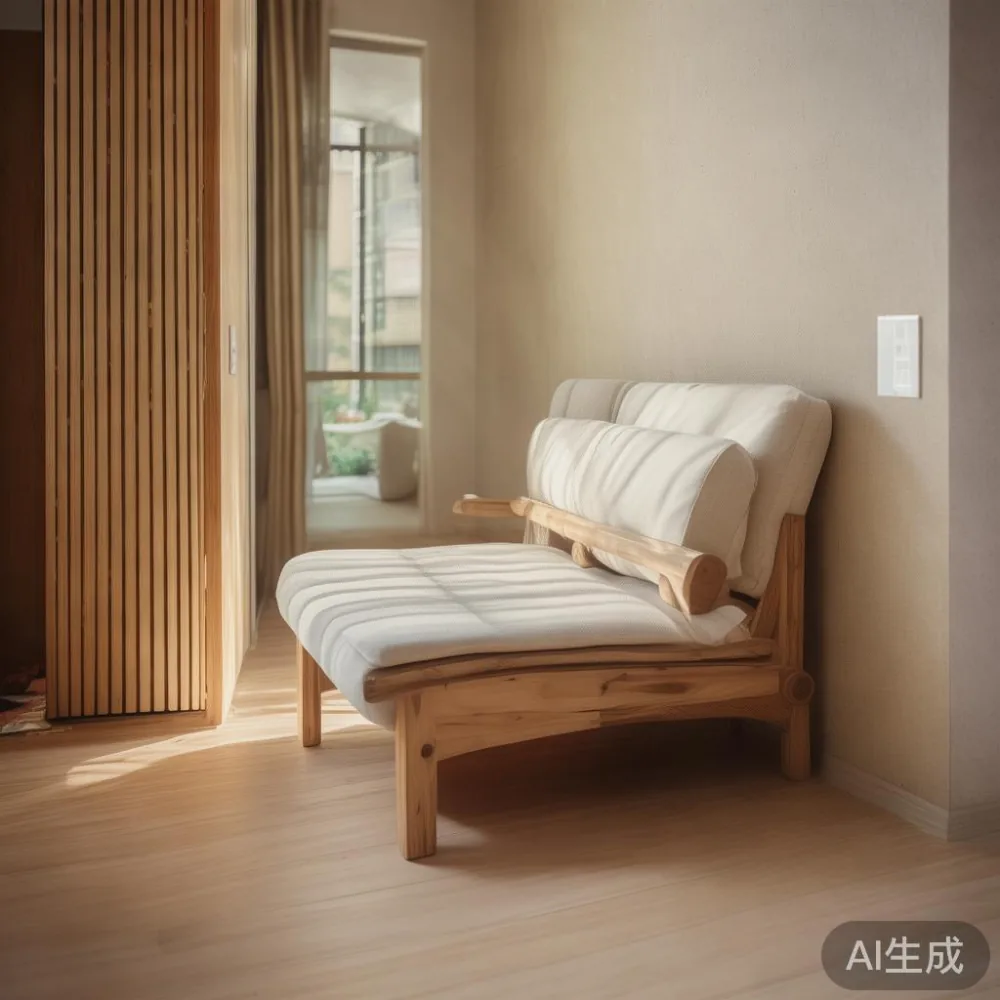
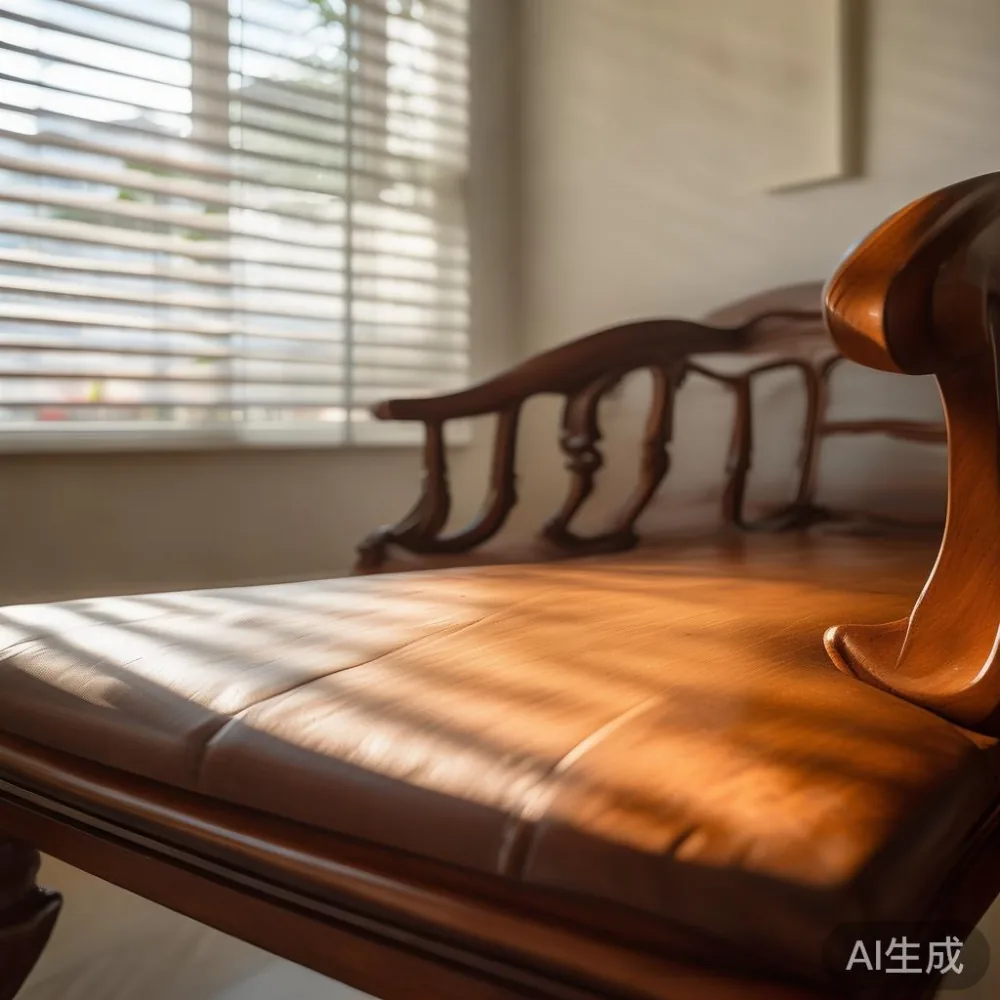
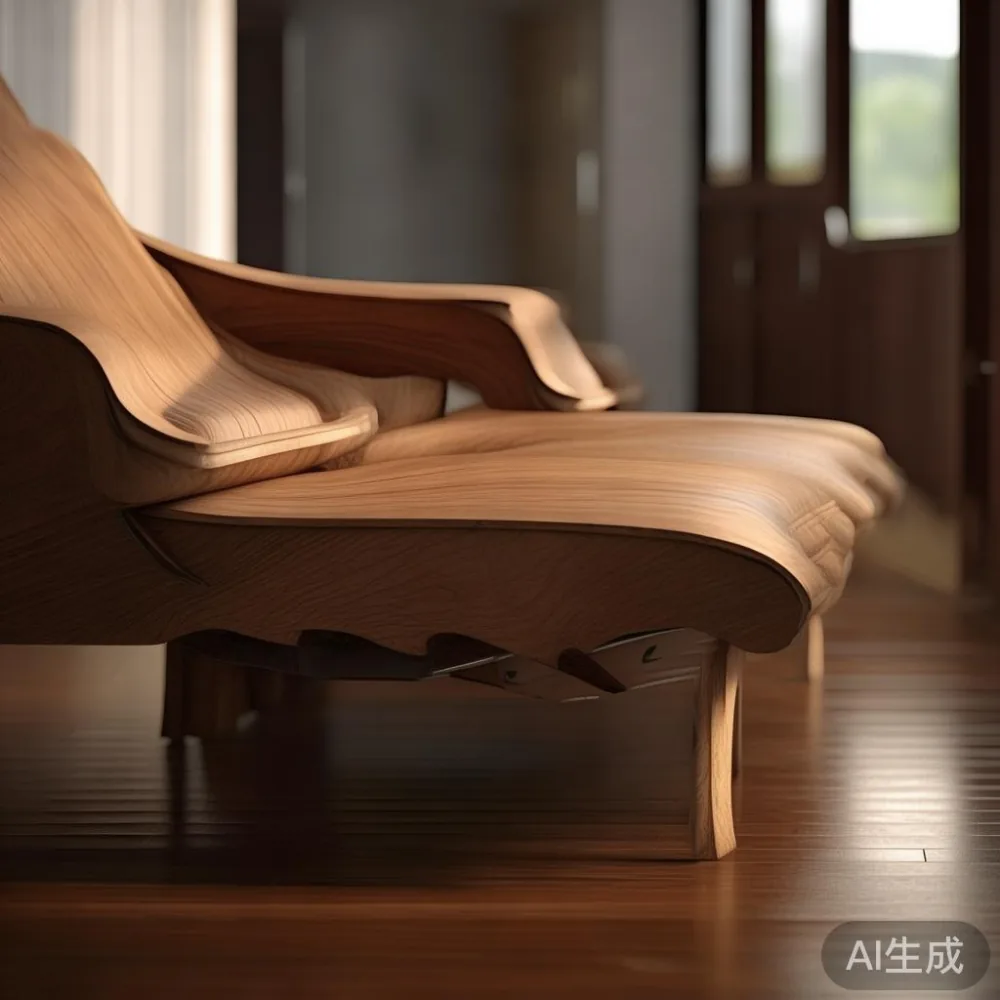
A solid wood chaise lounge is a particularly honest test piece because it combines long, exposed rails (often 1.4 to 1.8 metres), thin curved arms, and a large flat upholstered seat. The frame carries the load; the upholstery hides the cracks. By month eight, the cracks have nowhere to hide.
How Tight HDB Lifts and 1.2-Metre Corridors Change the Way You Buy
Let me give you the numbers, because this is where most Singaporeans discover the hard way that "furniture shopping" is also "logistics planning." A standard HDB lift door in a block built after 2010 measures roughly 0.9 metres wide by 2.1 metres tall, and the internal cabin is about 1.1 metres deep by 1.5 metres wide. A newer condominium lift, especially in Punggol or Bedok, often opens to 1.0 metre wide with a 1.6-metre-deep cabin. Corridor widths on the residential floor tend to measure between 1.2 and 1.5 metres, and you usually have a 90-degree turn within 4 metres of your front door.
Those numbers matter because the typical fully-assembled solid wood chaise lounge is 165 to 185 centimetres long, 75 to 85 centimetres wide, and 85 to 90 centimetres tall. That is too tall to angle through the lift if the cabin depth is only 1.5 metres, and too wide for a flat carry down most corridors. The solutions a sensible buyer in Tampines uses:
- Modular frames. Pieces that ship in two halves and bolt together in the home. A good supplier will quote a maximum single-module weight of 35 kg so two people can carry it up a stairwell if the lift fails.
- Flat-pack with engineered cores for the panels only. A solid wood bed frame with engineered-wood inner panels keeps the visible grain solid oak or ash while reducing the mass of each box from 60 kg to under 28 kg.
- Detachable marble table tops. A 1.4-metre Italian marble top in Carrara white weighs about 78 kg on its own; shipping it on a separate pallet and bolting it to the base on site avoids both the lift problem and the cracked-corridor-tile problem.
I have stood in a Punggol service yard with a delivery driver who looked at the packaging of a 45 kg nightstand and said, simply, "Cannot." That is why MIDHILL and a few other Foshan factories now publish per-box dimensions and per-box weights on every product page, and offer to split a single bed frame order into four boxes of under 22 kg each.
What Actually Happens to a Chaise Lounge During the December Monsoon?
Let us take a concrete case: a 170-centimetre French provincial-style chaise lounge with a curved backrest, two exposed side rails, and a removable linen-wrapped foam seat. The frame is solid ash, the finish is a hand-rubbed matte lacquer, and the bolts are zinc-plated steel. From delivery in March to the December peak monsoon, here is what the piece experiences:
March to June: humidity averages 72%. The frame absorbs moisture slowly and the rails expand roughly 1.2 mm across the grain. The lacquer stretches with it, so there is no visible change. July to September: a brief dry spell caused by the southwest monsoon tail, humidity drops to 60% at night. The rails shrink back, and a hairline gap of about 0.4 mm opens at the mortise joints. The owner notices a faint squeak when she sits down. October to December: humidity climbs back above 85% and stays there for eight to ten weeks. The rails swell to their maximum, the bolts are now under compression rather than tension, and the lacquer, which has already been stretched once, develops micro-cracks along the grain. By Chinese New Year, the owner sees two things: a faint whitish bloom along the joints (called "blushing" in the trade) and a slight bow in the seat platform.
None of this is a manufacturing fault. The wood is doing exactly what ash, oak, and walnut do in the tropics. The question is whether the piece was built to accommodate it. A well-built chaise lounge from a workshop that has been exporting to Southeast Asia for more than a decade will use floating joinery on the seat platform, mortise-and-tenon with a 1 mm glue gap rather than a glue-tight fit, and a finish that is vapour-permeable so the wood can still breathe. A poorly built chaise lounge will be glued and dowelled tight, finished in a thick polyurethane that traps moisture, and will start to crack by month six.
Is Light Luxury Wardrobe Worth It in a Singapore Bedroom?
This is the question I get asked most often, and the honest answer depends on three things: how much wall you have, how much air you can give the wardrobe, and whether you actually open the doors more than twice a week. A light luxury wardrobe in the Italian or post-modern light luxury sense usually means a 2.2-metre-tall, four-door piece with solid wood carcass, brass-tipped handles, and either a marble or a hand-lacquered top. Prices for the imported kind run from S$4,800 to S$11,000 after GST, and the weight of a fully assembled unit sits between 180 and 260 kg.
For a 4-room HDB flat in Bedok with a master bedroom of 3.6 metres by 3.0 metres, a 2.2-metre wardrobe fits with about 60 centimetres of clearance at each end. That clearance is enough air to let the back panel breathe, which matters because a wardrobe pushed flat against a condensation-prone wall will trap moisture and develop black mould along the back within eighteen months. Lift access is the other constraint: a 2.2-metre wardrobe will not fit into a 1.5-metre-deep lift lying flat, so it must be tipped on its side, which means the side panels must be reinforced with a solid wood internal frame rather than a thin MDF core. When the description on the website lists "solid wood frame, engineered back panel," you are reading the right paragraph.
So, is light luxury wardrobe worth it? Yes, if the supplier builds for tropical humidity, ships the piece in modular sections weighing under 40 kg each, and offers lifetime refinishing. The refinishing matters because the front face of a wardrobe door is the part that gets the most UV and the most handling, and after seven to ten years a satin-lacquered door will oxidise to a warmer tone that no longer matches the side panels. A supplier that will sand and re-lacquer the doors in your home for a service fee (or free under warranty) is the kind of supplier you want.
Is French Wardrobe Worth It for HDB Bedrooms?
The French wardrobe sits in a different category, because the styling cues come from 19th-century provincial carpentry: fluted columns, panelled doors, and a slightly taller, narrower silhouette (often 2.3 metres tall by 1.6 metres wide rather than 2 metres wide). For buyers looking at wholesale French provincial furniture through a Singapore agent, the question is not whether the style works — it does, especially in a Punggol condo with a 3.2-metre ceiling — but whether the supplier still uses solid wood for the door frames or has quietly substituted medium-density fibreboard to hit a price point.
Tap the door with a knuckle. Solid wood gives a sharp, resonant knock. MDF gives a dull thud. Tap it again at the corner where the moulding meets the stile; if the moulding is a separate piece of solid beech glued onto an MDF core, you will hear a slight difference in pitch, and over time that glue line is the first thing the humidity will attack. A genuine French wardrobe with solid wood frames and engineered panels in the door centres is the configuration I recommend, because the engineered centre panel moves less than solid wood across a 60-centimetre span, while the solid frame still looks and feels like a French piece.
The other thing to check is the back panel. A wardrobe with a 9 mm plywood back screwed into rebate grooves will survive a decade in Tampines; a wardrobe with a 3 mm hardboard back stapled on will belly out within two wet seasons and never sit flat again.
Mid-Century Modern for Small Living Room: Why a Chaise Lounge Helps
Homeowners in 3-room HDB flats often tell me they cannot fit a chaise lounge because the living room is only 3.0 metres by 3.4 metres. The opposite is true. A compact Mid-century modern for small living room layout works best when you give up the idea of a three-seat sofa and a separate armchair, and replace them with a single 1.7-metre chaise lounge plus a small two-seater. You free up roughly 1.1 square metres of floor space, and you give yourself a proper reading corner without buying a second piece. The same logic applies to a dining table: a 1.2-metre round solid oak table seats four comfortably and tucks into a corner; a 1.8-metre rectangular table seats six and dominates the room.
For readers asking how to style French provincial sofa in bedroom, the trick is restraint. One statement piece, two solid neutrals, and one texture. A French provincial sofa in pale ash linen, a washed-linen chaise lounge cover in oat, and a hand-knotted wool rug in ivory will read as light luxury without crowding a 9-square-metre bedroom. Add a single Italian light luxury nightstand — solid walnut, brass cup-pull, a small marble top — and you have the kind of bedroom a Tampines three-room flat rarely gets credit for.
Practical Habits That Add Five Years to a Solid Wood Piece
Beyond the build quality, what you do in the first month matters as much as what the factory did in the first month of the piece's life.
- Let it acclimatise. Leave the packaging open in the room for 48 hours before bolting anything together. The wood will equalise to your indoor humidity.
- Run a dehumidifier in the bedroom. Set it to 55% relative humidity. A 12-litre compressor unit costs S$220 to S$320 and uses about 180 watts. Running it 12 hours a night for a month costs roughly S$4 in electricity at the current tariff.
- Keep 25 centimetres of clearance behind a wardrobe. Air needs to move. If the back panel cannot breathe, mould will.
- Rotate the chaise lounge 90° every quarter. The side facing the window sees more UV and more humidity swing; rotating evens out the wear.
- Re-oil the exposed wood once a year. A 250 ml tin of hard wax oil costs S$38 to S$55 and takes 45 minutes to apply. The factory finish lasts longer if you top it up.
What a Sensible Return and Warranty Policy Looks Like
Singapore's Consumer Protection (Fair Trading) Act gives you a baseline, but for a S$5,000 solid wood piece you want more than the baseline. Look for a 14-day return window that covers colour and finish as well as structural defects, a written 10-year warranty on joinery, and a lifetime refinishing promise. MIDHILL publishes all three on every product page, and the refinishing is the part most buyers forget to ask about. After year eight, when the lacquer has oxidised and a few small dings have appeared, the option to have the piece sanded and re-finished in your home for a S$180 service fee (waived if the damage is structural) is what turns a one-off purchase into a thirty-year piece of family furniture.
For a chaise lounge ordered through MIDHILL's Singapore distributor, the standard lead time from the Foshan workshop to a Tampines flat door is 28 to 35 days by sea, plus 3 to 5 days for last-mile delivery up the lift. Orders over US$350 (about S$480) ship free; under that, freight adds roughly S$85. Returns within 14 days are collected from your door at no charge, which matters because reversing the logistics of a 65 kg chaise lounge on your own is not something you want to attempt on a Sunday morning.
Where the French Provincial Chaise Lounge Fits in a Singapore Home
There is a quiet trend in newer Punggol and Bedok condos where the homeowner pairs a French provincial chaise lounge in the master bedroom with a simple platform bed frame and a pair of Italian light luxury nightstands. The combination reads as light luxury without tipping into formality, and it works because every piece is solid wood and every finish is matte rather than gloss. A marble table in the living room — a 90-centimetre round Carrara piece on a brass base — adds the cool surface the wood tones need in a tropical climate. A wardrobe in the same pale ash as the chaise lounge pulls the bedroom together. A dining table in solid white oak, 1.6 metres long, seats six comfortably and survives the wet season without drama.
The numbers tell the rest of the story. A bedroom set in this style, ordered piece by piece from a Foshan workshop that exports to more than fifteen countries, lands in Singapore for between S$7,200 and S$12,400 after GST, depending on whether you choose ash or walnut. A solid wood sofa in the same palette adds S$3,400 to S$5,200. A dining table in white oak, 1.6 metres long, adds another S$2,100 to S$3,300. Stack those numbers against a local showroom quote and the savings typically sit between 30% and 45%, which is the margin that lets you put a real marble table on the shopping list instead of a laminate one.
Is Buying a Solid Wood Chaise Lounge Online Without Seeing It Worth the Risk?
This is the question I hear from buyers who have only ever bought furniture from a local showroom. The honest answer is that buying a solid wood chaise lounge from a Foshan workshop you have never visited carries three real risks: the colour will be slightly different from the photo, the lacquer sheen will not match the sample swatch perfectly, and the assembly will require two people and an Allen key. The honest counter is that a workshop shipping to fifteen countries has solved all three problems with detailed swatch packs, CAD drawings with dimensions in centimetres, and pre-drilled frames that bolt together in 20 minutes without glue.
The single habit that protects you is the 14-day return window. Unbox the chaise lounge, assemble it, sit on it for a week, and decide. If the colour reads too warm against your existing nightstand, send it back at no cost. If the joinery is loose, photograph it, send the photos, and claim under warranty. A supplier that has shipped thousands of chaise lounges to Singapore, Malaysia, and Indonesia has already processed returns like yours, and the logistics are solved.
The other habit that protects you is to ask for the per-box dimensions and per-box weights before you pay. A 170-centimetre chaise lounge should arrive in two boxes, each measuring under 180 centimetres long and weighing under 32 kg. If the factory quotes one box at 1.9 metres long and 58 kg, that box will not fit in your lift and you will be paying for a stair-carry at S$120 to S$200 per floor. Reading the spec sheet takes ten minutes and saves a headache on delivery day.
Closing Notes for the Tampines, Bedok, and Punggol Buyer
A solid wood chaise lounge in a Singapore home is not a luxury that the climate will punish; it is a piece of furniture that, with the right build and the right habits, will outlast three sofa replacements and two dining table upgrades. The key is to buy from a workshop that builds for tropical humidity, to plan the lift and corridor logistics before you pay, and to run a dehumidifier in the bedroom during the December monsoon. The style can be French provincial, post-modern light luxury, or American light luxury — the engineering underneath is what decides whether month twelve looks like month one.
If you are pricing a bedroom set this weekend, write down the per-box dimensions and weights, the joinery description, the finish type, and the warranty terms. Spend an extra S$200 on a dehumidifier. Order a swatch pack before you commit to a colour. And remember that a chaise lounge is not a small sofa; it is a long, low reading chair that earns its floor space by being the one piece in the room you actually use every evening for thirty years.