A 5-Year Cost Comparison: Veneer and Solid Wood Chaise Lounges for Singapore Homes
A chaise lounge sounds simple until you compare the purchase price, delivery, care and likely repair work over 5 years. In a Singapore HDB flat or condo, the fit can be as demanding as the material. A 168 cm chaise may look generous in a showroom, yet a 92 cm corridor, a 210 cm lift opening or a tight turn beside the front door can decide whether the piece is practical at home.
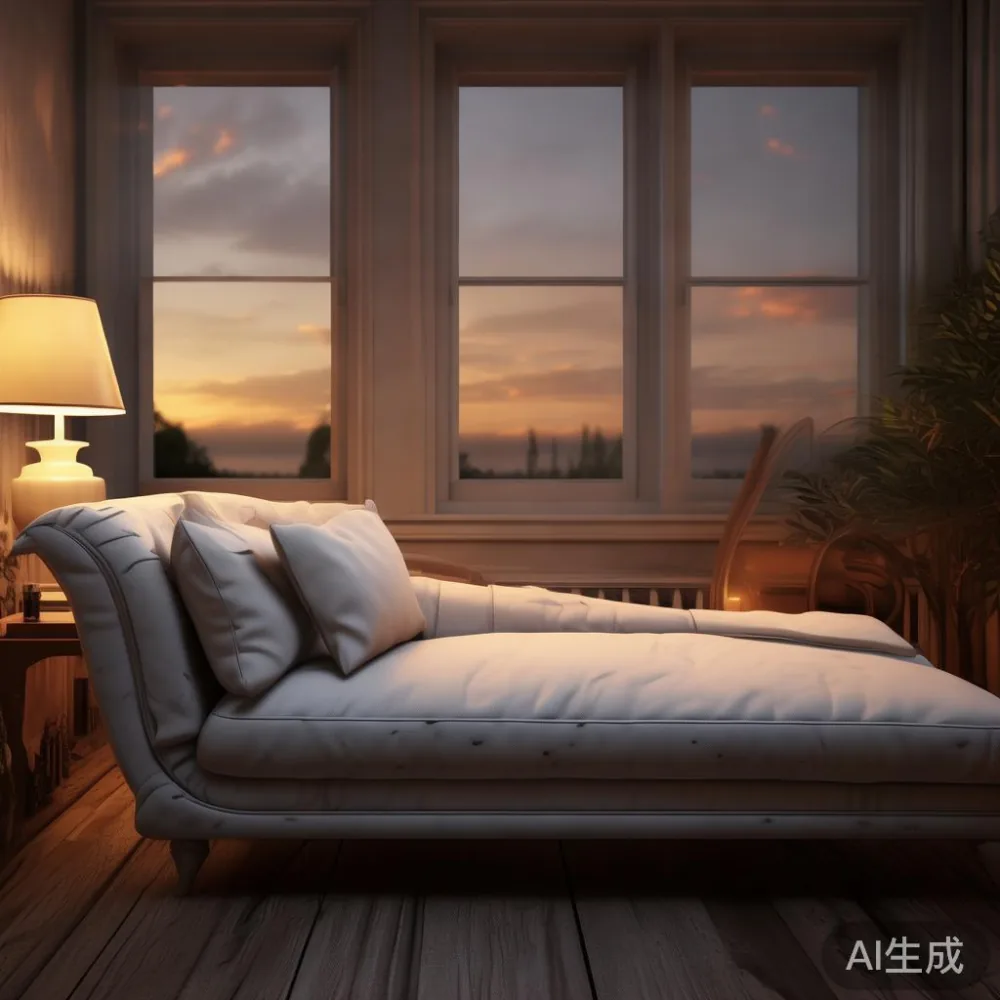
This comparison covers a made-to-order chaise lounge in two constructions: kiln-dried solid wood with a padded seat, and quality veneer over engineered timber with comparable upholstery. The figures use Singapore dollars, include 9% GST where applicable and estimate ownership from years 1 through 5. Actual quotations can change with dimensions, timber, finish and upholstery grade.
MIDHILL is a Foshan solid wood furniture maker established in 2008, exporting to more than 15 countries and offering a 10-year structural warranty, lifetime refinishing, free shipping above US$350 and 14-day returns. Its Singapore pricing below is an indicative budget rather than a live quotation.
What does a chaise lounge cost to own in Singapore?
A representative solid wood chaise lounge measures 168 cm long, 78 cm wide and 82 cm high, with a timber frame weighing approximately 34 kg. The comparable veneer version weighs 27 kg, a 7 kg difference that may matter when carrying it through corridors or lifting it into a lift. Both examples use 120 cm of visual width at the back and allow 88 cm of leg extension.
The solid wood model is estimated at S$2,680 before GST, while the veneer version is S$1,980 before GST. At the prevailing 9% GST, these become S$2,921.20 and S$2,158.20 respectively. A Singapore order commonly takes 21-35 days for production and delivery, while a ready-made or lower-complexity item may arrive in 10-18 days.
For a first-level HDB home in Tampines, Bedok or Punggol, delivery is usually straightforward if the lift has at least 210 cm of internal depth. For a high-floor condo, check the lift dimensions before ordering; a 200 cm tall item may need to stand diagonally, and the delivery team should confirm that the service lift is usable on the moving date.
The first-year outlay includes more than the invoice. Budget about S$80 for a protective felt pad set, S$60 for delivery above the free-shipping threshold if it applies in the quoted currency, and S$40 for assembly. With GST, the solid wood opening cost is roughly S$3,101.20 and the veneer version roughly S$2,338.20.
Is a veneer chaise lounge cheaper over 5 years?
Yes, under normal indoor use and with competent refinishing, the veneer chaise lounge has the lower 5-year cost. The calculation below includes acquisition, delivery, routine care and one repair allowance.
For solid wood, purchase with GST is S$2,921.20. Delivery and assembly add S$100, while care products and professional refinishing reserve S$180 across 5 years. One repair is allowed at S$250, mainly for a loose joint, scratched arm or damaged rail. The estimated total is S$3,451.20, or about S$690.24 per year.
For veneer, purchase with GST is S$2,158.20. Delivery and assembly add S$100. Care and one veneer repair allowance total S$320; edge banding or a small panel replacement could cost about S$220, while a joint repair is estimated at S$100. The estimated total is S$2,578.20, or about S$515.64 per year.
The difference is therefore S$873 over 5 years, or S$174.60 per year. A useful break-even point falls near year 4: if the veneer chaise has one major edge repair and the solid wood piece needs no structural work, the two totals become much closer. If the timber frame develops a failing joint, veneer usually remains less exposed to that repair cost.
This is not a promise that every solid wood chaise costs less after 5 years. It is a practical budget for one specified product in one home. Humidity, pets, direct sunlight and moving practices all affect the result.
How much do Singapore humidity and sunlight change the calculation?
Singapore's humid climate makes material specification important. The room should sit near 45-55% relative humidity, and the chaise should not touch an exterior wall that remains damp. Leave 5-8 cm behind the back for airflow and use felt pads rather than metal sliders, which can mark timber or print on a smooth floor.
Solid oak or ash expands and contracts with humidity, so an untreated frame may need minor adjustment. Quality veneer is less prone to visible seasonal movement, but its edges and surface still need protection. Direct sun through a west-facing condo window can fade upholstery and dry a finish faster than in a shaded bedroom.
Estimate 10 minutes of vacuuming every 2 weeks, 15 minutes of surface care each month and a professional check every 12 months. For solid wood, an oil or lacquer refresh every 24-36 months is a sensible allowance. Veneer may need touch-up in high-wear areas after 30-48 months, although full replacement is not normally necessary if the substrate remains sound.
Humidity does not automatically make veneer the safer choice. Cheap adhesive, poor edge sealing and repeated damp exposure can cause bubbling or delamination. Ask for the veneer species, substrate, adhesive type and edge treatment. For solid wood, ask about kiln-drying, joinery and the moisture level intended for tropical conditions.
Will the chaise lounge fit through my HDB or condo?
Measure before paying, because a 168 cm chaise lounge can arrive boxed at 174 cm long. The box may not fit into a 210 cm deep lift even if the bare frame would. Check the lift door width, internal cabin width and the diagonal from the lift lobby to your flat entrance.
In many Tampines and Punggol homes, the key restriction is the route rather than the lift capacity. A 90 cm corridor with a 90-degree turn requires careful angling and, for some tapered chaise designs, partial unpacking. Bedok high-rise corridors are often more spacious, but service-lift bookings may add 2-4 days to the delivery schedule.
Record at least 3 clear dimensions: the shortest route width, the narrowest turn clearance and the lift door opening. Compare them with the supplier's packed dimensions. If the packed chaise exceeds a lift opening, request an unpacking service and confirm whether it is included in the quotation. A 34 kg solid wood frame may need 2 people and a lifting strap; a 27 kg veneer version is somewhat easier to handle but still should not be dragged along floors.
Protection rules also affect long-term cost. A S$25-60 floor protector used from day one can prevent scratches that would otherwise appear in year 2 or 3. For a 10-year structural warranty, keep the receipt and product serial number, and photograph the joints and finish at delivery.
Which material suits a light-luxury living room?
Light luxury works best when the chaise has a calm silhouette, warm natural texture and controlled detailing. A solid wood frame with a slender arm can support French light luxury, while a broader upholstered profile may fit American light luxury. Post-modern light luxury often pairs clean geometry with mixed materials, such as timber, linen and stone, provided the joints and proportions remain disciplined.
A marble table nearby can make veneer look modest, but material quality and finish still carry the room. Pair a solid wood chaise with a warm oak or matte walnut tone rather than a high-gloss finish. If you are comparing a French sofa vs Modern sofa, the same principle applies: the frame should be durable, while the chaise should remain visually quieter than the main sofa.
For bedroom layouts, the question “how to style European sofa in bedroom” is relevant only if the chaise functions as a daybed. Leave 60 cm for a bedside table or a 45 cm passage where the back is used. A French bed vs Italian light luxury bed comparison also comes down to texture: pale timber and woven upholstery create a lighter effect than dark veneer and heavy borders.
Before choosing, search “where to buy sofa from MIDHILL” to review the maker's construction information, warranty terms and delivery rules. The chaise lounge should share the sofa's timber tone and leg height, not merely its fabric.
What repair costs should I reserve for each construction?
Solid wood can be repaired locally. A loose dowel or mortise-and-tenon joint may cost S$120-250, a replaced rail S$180-350, and a refinished surface S$220-450. These are Singapore workshop estimates, including labour but excluding GST unless stated. Deep scratches may be sanded only if enough material remains; otherwise, the repair cost rises.
Veneer repair depends on access to matching stock. A small edge chip may cost S$90-180 after a colour match. Replacing a large sheet can cost S$220-450 if a compatible panel is available. Bubbling caused by moisture may require removal of the surface layer, re-gluing and refinishing, which can cost S$250-500.
Allow about S$200-300 per year for unexpected household damage in either option if children, pets or frequent moving are factors. A water ring from a hot mug is not structural damage; blot it within 15 minutes and avoid silicone-based polish. For spills, use a pH-neutral cleaner and test an unseen area for 24 hours.
A wood frame should generally not be treated with a generic household cleaner. Solid wood benefits from a product approved for its finish, while veneer needs a non-abrasive cleaner that will not soften the edge seal. Record the finish type and maintenance interval on the delivery invoice.
Do the terms “solid wood” and “solid wood sofa” always mean the same thing?
No. A solid wood sofa may use solid timber for the visible frame and some structural rails, while secondary panels, back boards or decorative layers may be plywood or another engineered product. A solid wood bed frame, dining table, wardrobe, nightstand or marble table can similarly combine different materials within one product.
For the chaise lounge comparison, define the load-bearing frame as solid timber from front leg to back rail, with the seat deck selected for stable support. Plywood or engineered panels may be acceptable below the cushion if the maker discloses their specification. Veneer over an engineered substrate should be described accurately as a veneer chaise lounge, not as solid wood.
That distinction affects resale perception and repairability. After 5 years, a well-maintained solid wood frame can be sanded and refinished, while a damaged veneer sheet may require matching stock. MIDHILL's lifetime refinishing applies to qualifying solid wood pieces under its stated policy, so obtain the product-specific terms before assuming a chaise is covered.
Wood care extends to related furniture. Use coasters on the nightstand, place a dining table away from air-conditioning vents and inspect a wardrobe's runners twice a year. A marble table needs a separate pH-neutral cleaning routine; acidic liquids can etch the surface regardless of the chaise material.
Is Japanese solid wood worth the higher chaise lounge budget?
For some homes, yes. A Japanese-inspired solid wood chaise lounge can use restrained joinery, a low profile and a breathable natural finish, which suits post-modern light luxury without looking visually heavy. The attraction is not a national label but visible construction, stable joints and a finish that can be maintained in a humid apartment.
When asking “is Japanese bed worth it”, compare the same points used for the chaise: frame composition, moisture treatment, hardware, warranty and repair access in Singapore. A matching Japanese bed may use Japanese fabric or construction, but its price does not prove that a chaise frame will last longer. Local timber availability, spare parts and after-sales service often matter more over 5 years.
For a sectional bed in an HDB flat, measure the 168 cm chaise projection and allow 60-75 cm on the open side. For a condo, consider whether the chaise can be separated for moving. Two modules of 80 kg may be more practical than one 95 kg unit, although the quotation should state the actual gross weight.
Buyers also search for the best Vintage wardrobe for 2026 when matching a bedroom. A vintage-styled wardrobe can use solid wood doors with plywood or engineered internal panels; those are legitimate combinations if they are clearly labelled. The same transparent approach should be applied to every larger furniture order.
How do I compare quotations fairly?
Request 2 written quotations using identical dimensions and upholstery specification. Each should show the chaise lounge's frame material, veneer species if applicable, finish, cushion density, gross weight, packed size and delivery charge. Add GST only once, and confirm whether it appears in the displayed price.
Use this 5-year worksheet:
Solid wood: S$2,921.20 purchase with GST + S$100 delivery and assembly + S$180 planned care + S$250 repair reserve = S$3,451.20.
Veneer: S$2,158.20 purchase with GST + S$100 delivery and assembly + S$220 care + S$100 repair reserve = S$2,578.20.
Divide each total by 5 for the annual figure. Then test sensitivity by adding S$300 to the veneer repair reserve and S$100 to solid wood care. The veneer total becomes S$2,878.20, while solid wood becomes S$3,551.20, leaving a difference of S$673. This is more useful than assuming the repair estimate will be exact.
Factor in the 10-year structural warranty and lifetime refinishing service when available, but exclude their future value from the 5-year calculation unless the contract provides a measurable cash benefit. The 14-day return window should also be used carefully: check the packed dimensions and access route immediately, then inspect the finish, joints and upholstery under normal light.
What is my 5-year decision after testing the two constructions?
Last month I visited my colleague in Bedok to compare a solid wood chaise lounge with a veneer version in the same 168 cm footprint. The lift opening was 210 cm, and the corridor narrowed to 88 cm at one turn. The solid wood unit needed a more careful angle and two people, while the lighter veneer unit was easier to pivot. That hands-on visit confirmed why route measurements belong in the purchase budget, not only the product catalogue.
The solid wood chaise lounge remains the stronger choice for a home expecting frequent moving, pets, exposed joints and long-term refinishing. It starts around S$763 higher after GST and carries a heavier 34 kg frame, yet the premium buys repairable timber and a finish that can be renewed.
The veneer chaise lounge suits buyers who want a softer initial budget, lighter handling and less routine maintenance. At an estimated S$515.64 per year over 5 years, it saves S$873 against the solid wood example, provided the edge finish and substrate remain sound.
For most Singapore interiors, spend the first S$40 on a tape measure, then spend the remaining budget on transparent construction. Check the lift, corridor and turning clearance; compare the 5-year totals; and choose the piece that can be serviced locally. That is the practical definition of light luxury: not excess, but proportion, material honesty and a chaise lounge that still feels well made after 60 months.